
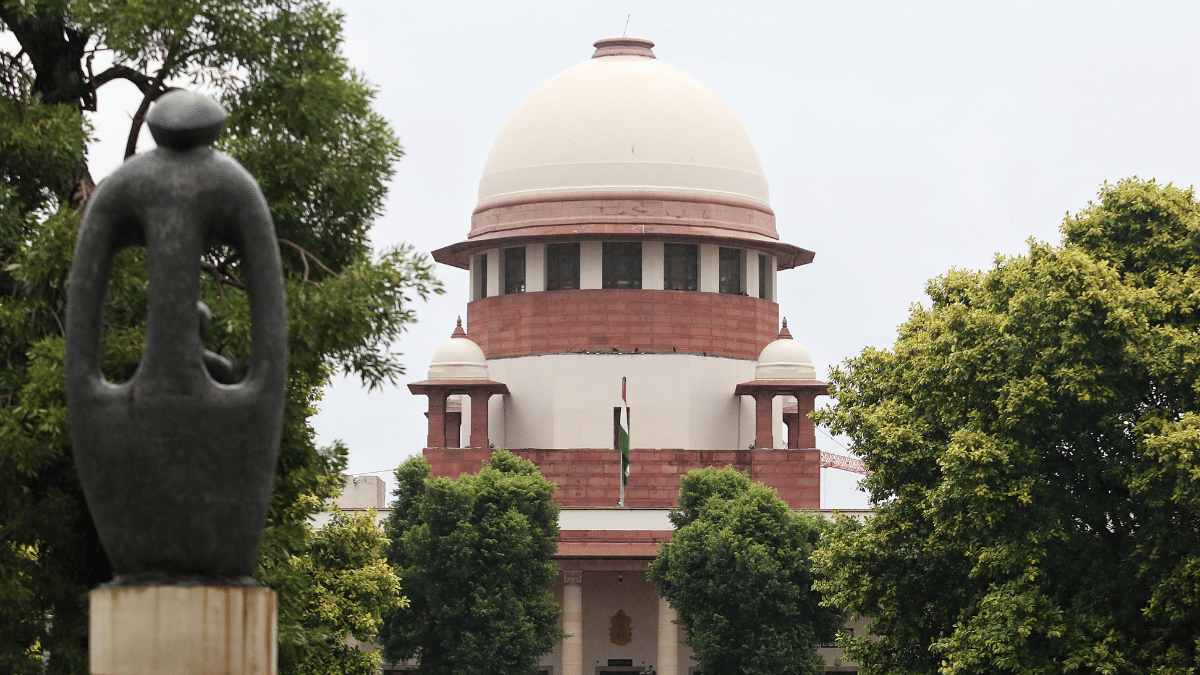
The Supreme Court restored Crystal’s registration for importing and manufacturing a pesticide, cautioning against judicial interference in expert regulatory decisions. The court said, "The Registration Committee is the expert body to decide such technical matters." This ruling overturned a Delhi High Court order that had previously cancelled the company's permit.
What was Crystal seeking approval for?
Crystal had sought registration to import Halosulfuron Methyl Technical 98%, the technical-grade chemical, and manufacture Halosulfuron Methyl 75% WG, a formulated pesticide, in India.
The company had obtained a permit in 2011 to import a sample through Fertiagro Pte Ltd, Singapore, for testing. However, in its subsequent registration application, filed in 2016, it identified Chinese firm Jiangsu Agrochem Laboratory Co Ltd as the original manufacturer.
Crystal maintained that Fertiagro was an intermediary and Jiangsu the actual manufacturer. To establish the relationship between the two entities, it relied on an agreement dated 8 December 2010 between Jiangsu and Fertiagro.
Dhanuka disputed this explanation, arguing that the sample imported for testing had been sourced through a different entity and that Crystal had not adequately established its connection with the manufacturer named in the registration application.
It also questioned whether Jiangsu had the requisite authorisation in China to manufacture Halosulfuron Methyl Technical 98% at the relevant time.
Why did HC cancel registration?
The Registration Committee examined Crystal’s application and sought clarifications on the source of the chemical. After considering the company’s explanation and supporting documents, it granted registration in July 2021.
Dhanuka subsequently approached the Delhi High Court.
A single judge dismissed the petition and upheld the registration. However, a division bench reversed that decision.
The division bench found that Crystal had not established a clear link between the sample imported in 2011 and Jiangsu, the manufacturer named in its subsequent registration application.
It examined the Chinese registration documents submitted for Jiangsu, which showed registration for 95% Halosulfuron Methyl in December 2013 and 98% in October 2018. The bench rejected Crystal’s explanation that the 95% specification represented a minimum purity level.
It also questioned the agreement dated 8 December 2010 between Jiangsu and Fertiagro. The agreement referred to Jiangsu manufacturing the 98% chemical, although the documents showing its registration for that concentration related to a later period.
The bench further found that the Registration Committee’s minutes did not adequately explain how the discrepancy concerning the sample’s source had been resolved. It consequently quashed the registration for both importing the technical-grade chemical and manufacturing the formulation.
Why did SC disagree?
Crystal challenged the division bench’s ruling before the Supreme Court. During the proceedings, the Union government filed a compliance affidavit detailing the steps taken by the Registration Committee to verify the chemical’s source.
The affidavit stated that the Central Insecticides Laboratory had tested the sample and found its purity to be 98.53%. It also referred to the agreements and other documents submitted by Crystal, as well as the Committee’s examination of the company’s explanation.
The Supreme Court held that the High Court division bench had effectively acted as an appellate authority by re-examining the technical material and substituting its assessment for that of the expert regulatory body.
It observed that judicial review of executive decisions, particularly those granting commercial licences challenged by business rivals, is limited. Courts cannot reassess technical conclusions reached by expert authorities merely because the material could support a different interpretation.
The Supreme Court also considered whether Dhanuka could challenge Crystal’s registration under Section 10 of the Insecticides Act. It held that the provision provides a right of appeal in cases involving non-registration or cancellation of registration, but does not allow a commercial competitor to appeal against the grant of registration to another company.
The Court accordingly set aside the division bench’s judgment and restored Crystal’s registration.