
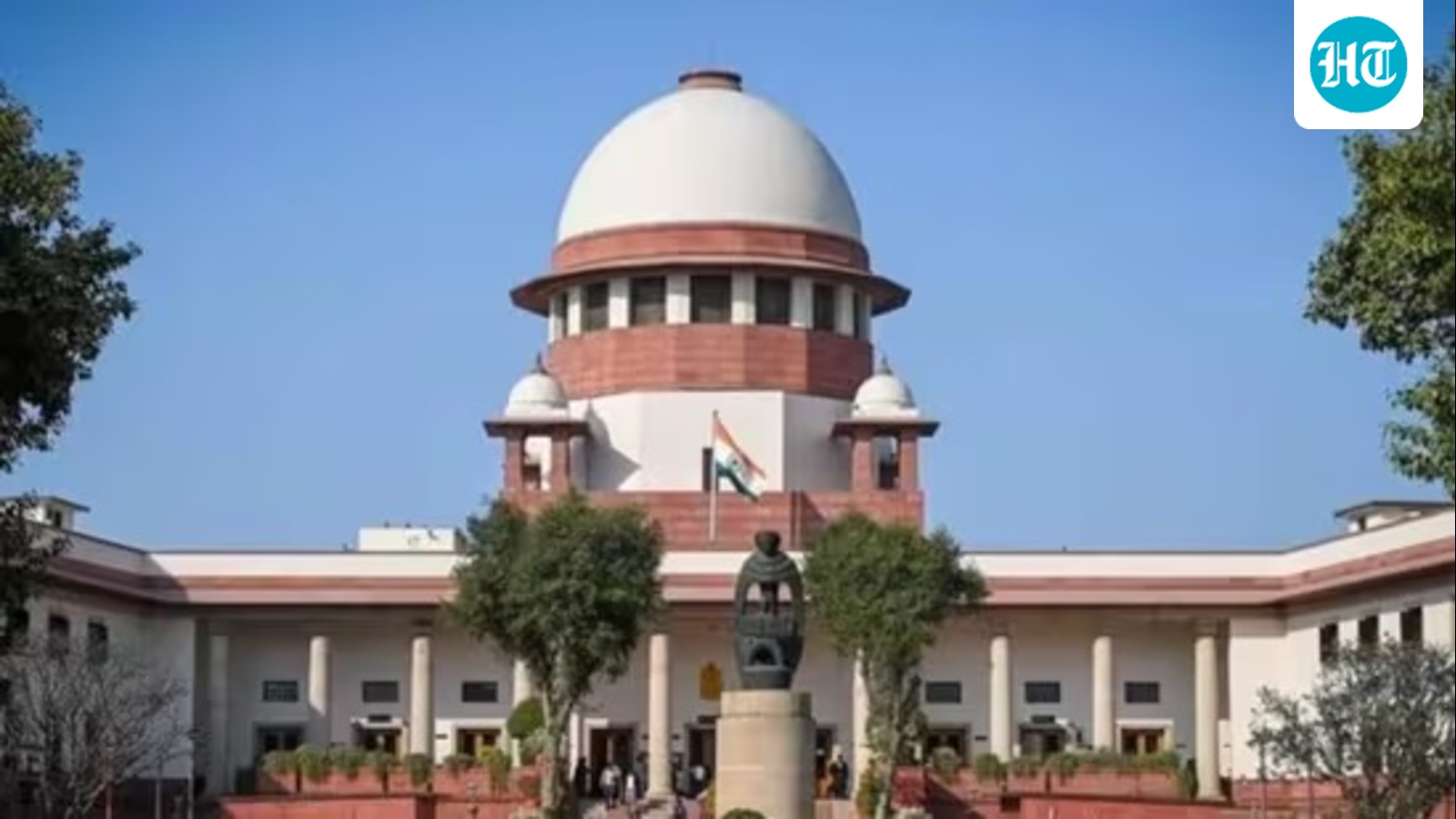
The Supreme Court allowed Parsvnath homebuyers to execute sale deeds for completed projects. A bench of Chief Justice Surya Kant and Justice Joymalya Bagchi passed this order. The court also modified its July 13 order to allow payment of electricity, water, and employee dues before the upcoming Diwali festival celebrations.
The relief has come at a time when the top court is examining the mode for reviving construction of the unfinished residential projects of the real estate group, which has been accused of diverting funds of homebuyers and is currently facing insolvency proceedings.
A bench of Chief Justice of India (CJI) Surya Kant and justice Joymalya Bagchi passed the order in a batch of petitions filed by distressed homebuyers seeking refund or completion of construction.
The bench also reserved the orders on whether a committee should be constituted or the matter be sent back to the insolvency process.
The bench directed that in all such projects where construction is complete and occupation certificates have been issued, the original allottees will be permitted to execute sale or conveyance deeds.
The court also modified its July 13 order freezing all accounts of Parsvnath Group to allow payment of electricity and water dues and partial payment of dues of over 180 employees ahead of the Diwali festival.
The homebuyers, led by advocate ML Lahoty and Anchit Sripat, told the court that it would favour having an independent committee to execute the projects under the court’s monitoring, alleging that the committee of creditors under the Insolvency and Bankruptcy Code “does not favour the interest of homebuyers”.
The bench stated, “This is what is bothering us that in many cases, the resolution professional takes the position of financial creditors and not homebuyers. If we form a committee, there will be assets of the company which are either unsold or partially complete that can be utilised to generate more funds. This can satisfy the claims of the creditors and ensure completion of projects.”
The suspended director of Parsvnath Developers, represented by senior advocate Shyam Divan, submitted a proposal for revival of the projects.
Divan said that the company proposes to invest ₹500 crore through a third-party investor, which will be paid in tranches of ₹100 crore each, and will provide for phase-wise handover of flats to the affected homebuyers, refund payment, and payment of dues of creditors and statutory authorities.
The court did not consider the proposal as homebuyers objected to the plan, observing that ₹500 crore will hardly satisfy the requirement for completion of the existing projects.
The company has claimed that Parsvnath Group had planned construction of approximately 27,000 units across over 100 projects. Out of 27,000 units, it has sold approximately 24,000 units and offered 21,000 units for possession, with roughly 3,000 units pending for offer of possession.
The court had directed freezing of bank accounts of Parsvnath Hessa Developers Pvt Ltd, Parsvnath Developers Ltd and their directors while taking up petitions filed by homebuyers, many of whom were senior citizens who invested their life savings into the project. The court had even issued bailable warrants against the company’s management in view of the severe hardship faced by allottees made to run from pillar to post. Senior advocate Priya Hingorani, representing several such buyers, pointed out that the petitioners have been waiting for possession since 2005-07.
The court noted that some projects are 70-90% complete while built projects lack basic amenities. The proceedings first arose in a petition filed by Rita Tikku, a cancer survivor, and her husband, who booked a flat in the Parsvnath Exotica residential project in Sector 53, Gurugram and have waited since 2006 for its completion.
The court said that in the past, it has directed stressed projects of Amrapali and Unitech to be revived and completed by either appointing a receiver or a board of directors. In the stressed Supernova project of Supertech, the court formed an independent committee headed by a former high court judge to work out modalities for completion of the projects.