
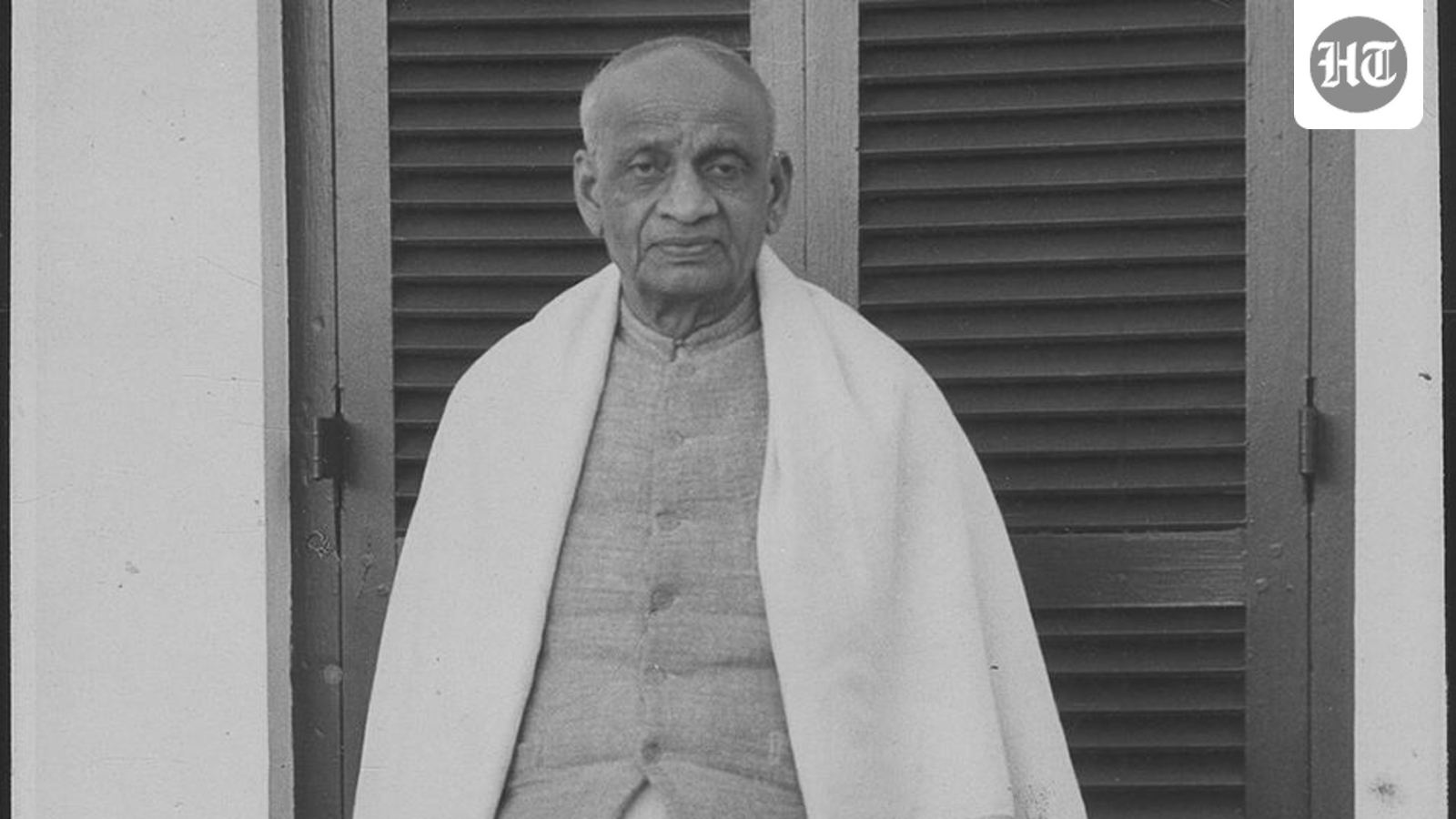
Every year on October 31, India remembers Sardar Patel for uniting the country. Beyond maps, he empowered women to join the freedom movement. In 1928, women became the backbone of the Bardoli tax fight. Later, Patel championed equal rights, ensuring that the Constitution promised all citizens equality before the law.
Every year on October 31, India remembers Sardar Patel as the man who joined hundreds of princely states into one country. We picture maps, deadlines and signatures. We rarely ask a simpler question: What did all this mean for the women of India? The honest answer is he built something every woman's right in India depends on i.e. one country, one Constitution, one legal system. And long before 1947, he trained thousands of village women to stand up to the colonial government. These stories matter in the present times.
In 1928, when the Bombay government raised land tax by 22% in Bardoli, in Gujarat, farmers asked Vallabhbhai Patel to lead their fight. Patel led the movement with a simple agenda to refuse to pay, but also at the same time stay peaceful and united. The key highlight of this movement was that women were the backbone of it. Mithuben Petit, Bhaktiba Desai and Maniben Patel, Vallabhbhai's daughter, went from village to village, holding meetings especially for women. At first, many women were resistant about joining. But later, women reportedly outnumbered men in the movement.
Finally, when the campaign won, the women of Bardoli accredited Patel with the title Sardar, meaning chief. Even though Bardoli was about tax, it showed millions of women that public life was something they could join and be part of India's freedom movement. Then later in Bihar in December 1929, Patel told farmers that keeping women behind the veil was no proof of strength. He also criticised the habit of wearing heavy brass ornaments as a burden on women's freedom.
Another milestone in the history of pre-Independence India is the Karachi session in 1931. The Congress met in Karachi with Patel as president and this was a landmark session as the Congress for the first time explicitly defined what swaraj meant linking political freedom with economic justice. The Congress adopted the Fundamental Rights framework, along with the National Economic Programme, which heavily influenced the drafting of Parts III and IV of the Constitution of India.
The question then is what these rights meant for women of India? These rights promised that all citizens would be equal before the law irrespective of caste, creed or sex along with Universal Adult Suffrage. This is important as many countries, especially western countries, took decades to let women vote. It is also interesting to note that Patel moved a resolution in the general body of the Ahmedabad Municipality in 1919 when a law in the Bombay Presidency barred women from becoming members of a municipality. This is an early example of a leader taking up a women's civic and political right. Additionally, Patel spoke against the tradition of child marriage and promoted the idea of widow remarriage.
Patel is often remembered for his incredible journey to unite more than 500 princely states. Uniting India meant all women became citizens of the same republic. Before 1947, large parts of the subcontinent were run by rulers, each with their own rules. Some states, like Travancore and Mysore, were ahead on girls' schooling. Others had little. A woman's legal protection depended on which side of a border she was born on. When these states joined India, women gained the same fundamental rights, same vote, and the same right to go to court. Though not specifically directed for women, the unity brought all the citizens together. Every later reform, from the law against dowry to workplace harassment rules to one-third seats for women in village councils, applies nationwide because the nation is one.
Patel was also the initial stalwart to advise on the vision of forming cooperatives. In the mid-1940s, when dairy farmers in Kaira district were fed up with a private company that controlled the milk trade, they approached Patel to resolve the crisis. Patel advised them to form their own cooperative and sent Morarji Desai to help organise them. This union was formally registered in December 1946, which then grew into Amul. Dairy work in rural India, even in present times, is largely done by women, and the cooperative model has become one of the main ways rural women continue to earn a steady income. Therefore, the idea Patel envisioned still matters for women's livelihoods today. Here it is also important to note that Patel strongly advocated for women's education via his support to Vitthal Kanya Vidyalaya and Kanya Vidya Bhavan
A 151 years after his birth, the questions which affected women's lives during Patel's era have not gone away. A united India gave every woman the same rights on paper. In practice, issues of child marriage, women education, employment or representation still remains an unfinished agenda. Parliament passed the Women's Reservation Act in 2023, promising one-third of Lok Sabha and Assembly seats for women, but it still takes effect only after a fresh census and delimitation of constituencies. Reservation is the promise that, for now, is still waiting. Even India's female labour force participation was about 34% in July 2026, and the rural figures are higher than urban areas. The best way to honour Sardar Patel is to finish the job his unity made possible: An India where a woman's rights do not depend on her religion, caste, region or income. The map was added in 1947. Making every woman a full citizen of that map is still work in progress.