
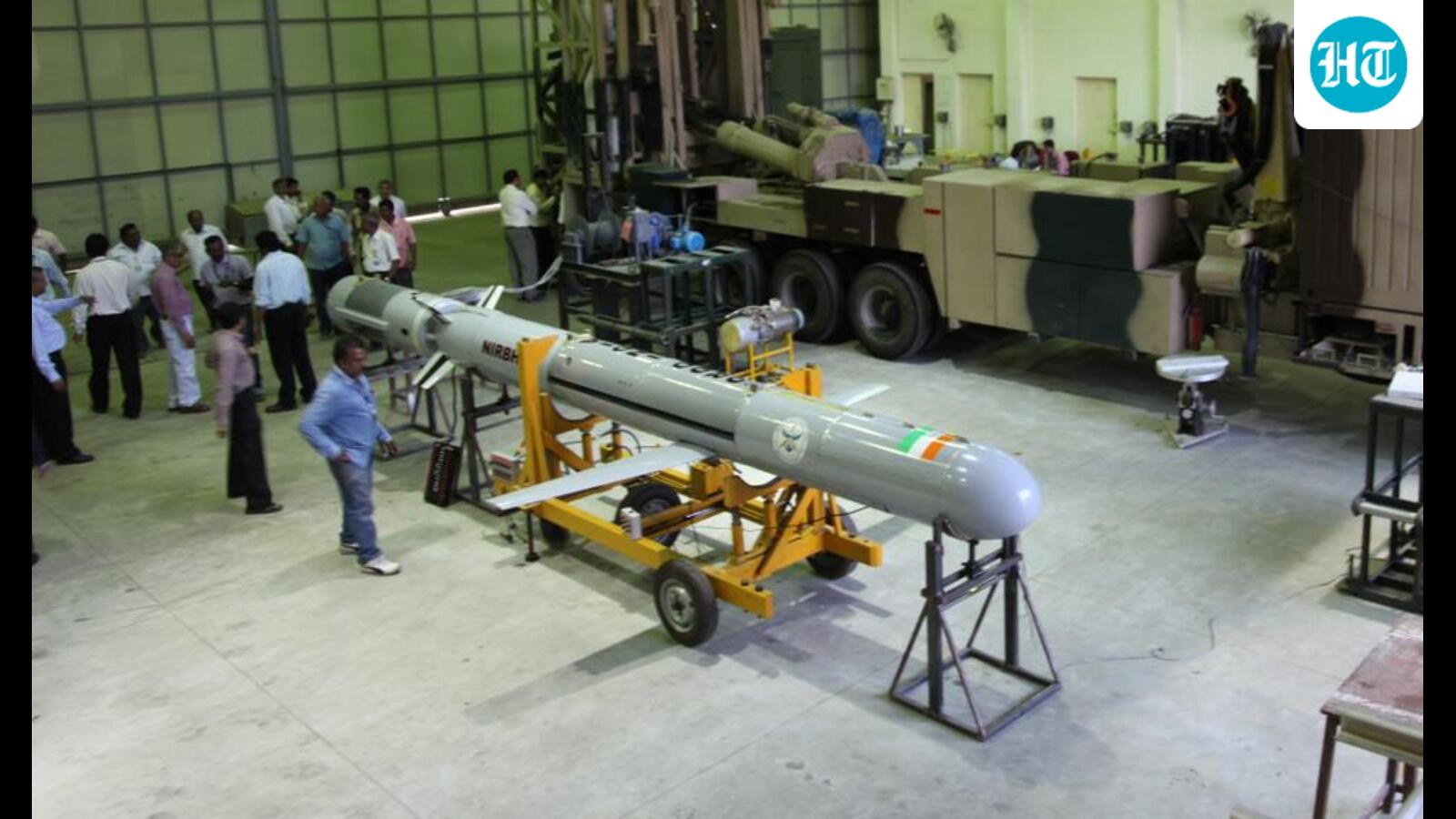
The international community will discuss lethal autonomous weapon systems at the Seventh Review Conference of the Convention on Certain Conventional Weapons in Geneva from November 16-20 this year. Experts worry that machines making lethal decisions lack human judgment, which once saved the world from a nuclear strike in 1983.
In March this year, the Donald Trump administration announced that American policy didn't prohibit the "development or employment" of lethal autonomous weapon systems (LAWS). A few months later, it admitted to positioning weapons in space. Both instances set precedents for other countries and raise several questions about what is acceptable in a war.
Every technological revolution in warfare has tested the rules, customs, and moral restraints that seek to limit its consequences. For centuries, war was governed by conventions grounded in the understanding that even conflict must have limits. These reflected fundamental distinctions between combatant and civilian, military necessity and unnecessary suffering, and what could be and couldn't be done. Aerial warfare in the 20th century eroded these boundaries. The 1937 bombing of Guernica by the Nazis became the defining symbol of this shift, demonstrating that urban populations could become targets of aerial devastation. Furthermore, the trajectory of US conduct illustrates how quickly moral restraint surrenders to military utility. In September 1939, President Franklin D Roosevelt appealed to European governments to renounce the aerial bombardment of civilians and unfortified cities. Yet, within six years, the very power that pleaded for restraint rained atomic destruction on Hiroshima and Nagasaki. Today, it is pioneering the weaponisation of space and artificial intelligence (AI).
Whenever mankind discovers newer ways to subdue an adversary, the response is rarely to outlaw the technology. Instead, armies adapt to it until devastation becomes routine. History, thus, offers an unyielding lesson: Technology does not wait for law.
AI now threatens to cross an even more perilous boundary -- the divide between the human who decides and the machine that acts autonomously. Outsourcing lethal decisions to algorithms strips away the vital safeguard of human judgment, doubt, and moral restraint. The dangers of this approach were demonstrated by the Petrov Precedent in 1983. When a Soviet early-warning system erroneously reported incoming American nuclear missiles, Lieutenant Colonel Stanislav Petrov banked on his instinct and professional reason, judging the computer alert to be a false alarm. His human hesitation prevented an immediate retaliatory nuclear strike. An automated system, bound to algorithmic logic, would have launched.
During November 16-20 this year, the international community will confront these questions at the Seventh Review Conference of the Convention on Certain Conventional Weapons (CCW) in Geneva. The concluding session of the Group of Governmental Experts (GGE) on Lethal Autonomous Weapon Systems (LAWS) in September 2026 brought this debate to a critical juncture. It made important strides on human accountability, system predictability, and testing, but ended without consensus on a negotiating mandate for a legally binding treaty. The international community must not wait for LAWS to become embedded in military doctrines before deciding what must never be delegated to a machine.
In 2017, India chaired the very first Group of Governmental Experts on LAWS under the CCW. Nearly a decade later, multilateral debates have progressed from abstract future scenarios to technical parameters around predictability, reliability, command accountability, and national legal reviews of emerging weapons. India helped launch this conversation, and it now must help steer where it concludes.
The lesson from previous technological disruptions is that strategic restraint must be codified before systemic outcomes become irreversible. India's own history with the global nuclear order provides a road map. Following its 1974 nuclear test, the creation of the Nuclear Suppliers Group and subsequent export regimes placed severe restrictions on access to advanced materials and dual-use technology: While New Delhi preserved its strategic autonomy, it incurred steep costs and spent decades negotiating re-entry into global commerce. It learned that influence requires a seat inside rule-setting architectures.
Strategic autonomy cannot be confused with strategic isolation. Autonomy means possessing the domestic capability and diplomatic leverage to make sovereign decisions, including proactively shaping the multilateral regimes that govern emerging technologies. India can't afford to wait for others to draft the regulations and then spend decades negotiating exceptions.
At the same time, its caution regarding premature treaties is well grounded. India has consistently resisted parallel, stand-alone negotiation tracks, often pursued outside consensus-based multilateral bodies. These produce aspirational bans that bypass key military powers, disregard legitimate security imperatives, and divide the international community without creating workable security architectures. While India remains open to legally robust frameworks within the CCW, it rightly rejects hollow prohibitions that sacrifice strategic reality for symbolic consensus.
The CCW Review Conference must avoid devolving into an oversimplified binary between an outright ban on killer robots and unregulated military AI. Not everything autonomous should be prohibited, but some forms of autonomy must be. The real challenge is determining which applications of autonomy align with International Humanitarian Law, strategic stability, and command responsibility, and which do not. Multilateral diplomacy must establish lifecycle governance that enforces compliance from initial algorithm design and simulation through deployment and retirement. It requires rigorous, standardised test and evaluation protocols to verify system predictability in complex, degraded or dynamic operational environments. Above all, it demands mandatory human agency, prohibiting any weapon system that can't be used in compliance with the principles of distinction, proportionality, and precaution, or where legal accountability cannot be traced back to an identifiable commander. However, a State cannot shape international verification or testing standards for systems it cannot independently evaluate.
India must establish tighter coordination among the Armed Forces, DRDO, technical universities, defence industry partners, and legal and diplomatic cadres. This ecosystem requires sovereign testing, verification and validation ranges for autonomous and algorithmic capabilities, alongside robust domestic legal review processes for emerging weapons. Crucially, it calls for military doctrines detailing where automation is permissible and where human judgment is non-delegable.
Technological sovereignty does not necessitate complete autarky. It means ensuring that India never becomes strategically dependent on black-box systems whose operational logic, failure modes, and systemic biases cannot be independently verified. At Geneva, it should work with like-minded countries to build an effective, consensus-based international framework that secures both technological capability and humanitarian restraint.