
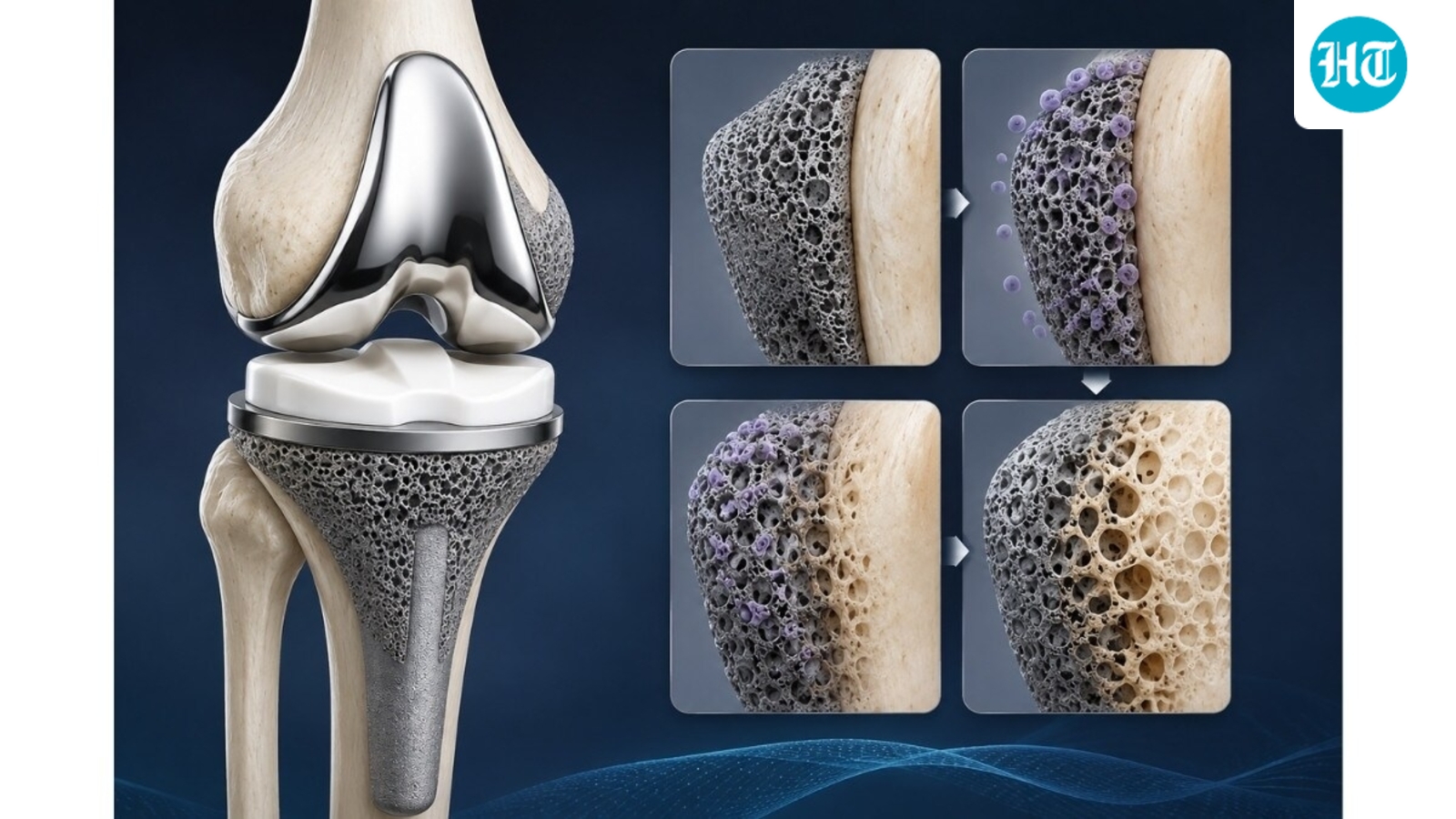
Orthopaedic care in India is changing as younger, heavier patients seek knee replacements. Surgeons now use cementless fixation to help patients stay active for decades. This method uses porous surfaces to encourage bone growth. Data shows high success rates, offering a durable choice for those needing long-term joint health.
As younger and more active patients undergo knee replacement, orthopaedic care must evolve beyond a one-size-fits-all approach to implant selection.
For an orthopaedic surgeon, a successful knee replacement is about much more than replacing a damaged joint. It is about helping a patient return to walking comfortably, climbing stairs, participating in daily activities and, ultimately, living with greater independence. The real measure of success is not simply whether the surgery goes well, but how well the implant performs over the decades that follow. That consideration has taken on new urgency as the profile of the knee replacement patient in India shifts in ways the field must actively respond to.
Approximately 20% of Indians under 50 carry the burden of osteoarthritis, with India's obesity incidence now at 40.3% - higher in urban populations and in those over 40. These trends are converging to create a patient who is younger, heavier, more demanding of their implant, and likely to outlive a fixation strategy not designed with them in mind.
It is in this context that cementless knee fixation has emerged as a clinically meaningful addition to the orthopaedic toolkit; not a replacement for cemented fixation, but an important extension of treatment choice for the right patient cohort.
When a patient in their forties or fifties undergoes knee replacement, the surgeon must plan for the decades of functional demand that follow. Revision surgery is complex and carries greater risk than primary arthroplasty. The fixation decision at primary surgery is therefore among the most consequential choices in the patient's long-term orthopaedic journey.
Cementless fixation represents a meaningful advance in implant technology. Rather than anchoring through bone cement, cementless designs use precision-engineered porous surfaces that encourage the patient's own bone to grow into the implant, achieving biological fixation that may offer a more durable long-term interface in appropriately selected patients. Contemporary implants incorporate 3D-printed titanium architectures, hydroxyapatite coatings, and additively manufactured components, supported by a growing body of long-term registry evidence. The Australian Joint Registry reports 95.5% all-cause survivorship for cementless femoral components at 15 years. In patients under 50, cementless cohorts report 100% all-cause survivorship at four years with improved functional outcomes.
Obesity presents a distinct and growing clinical challenge in knee arthroplasty. A Mayo Clinic analysis found patients with BMI ≥35 faced almost double the risk of aseptic tibial loosening in well-aligned cemented TKAs. In morbidly obese patients with BMI ≥40, cementless fixation has demonstrated survivorship of 99.1% at eight years, compared to 88.2% for cemented fixation in the same cohort.
With India's obesity burden growing fastest among urban, working-age adults, precisely the cohort now presenting for knee replacement, fixation choice in obese patients is an increasingly mainstream clinical question.
Cemented fixation has an established, well-earned record and remains the appropriate standard for a large proportion of patients. Cementless fixation adds to that choice. The decision between the two should be driven by individual patient factors: bone quality, age, activity expectation, BMI, and implant-specific evidence made by a surgeon with the freedom to exercise that judgment.
Equally important is the distinction between the availability of a technology and its suitability for a particular patient. Surgeons can make better-informed decisions when multiple clinically appropriate options are accessible and India's healthcare system, serving a diverse population, needs both established, dependable technologies and the ability to adopt meaningful advances in orthopaedic care.
India has made meaningful progress in expanding access to joint replacement, and affordability will always remain essential. But affordability and clinical appropriateness are not competing priorities. Pricing frameworks that do not account for the differentiated technology and clinical evidence behind innovations like cementless fixation risk limiting access for the patients who stand to benefit most. The goal must be to pursue both, ensuring patients across India can access not just knee replacement, but the right knee replacement for their individual needs.
The right implant, for the right patient, at the right time. India's orthopaedic community deserves the evidence, the clinical freedom, and access to the technologies that make that possible. As India's knee replacement patients grow younger and heavier, ensuring that clinically appropriate treatment choices including cementless fixation for those who stand to benefit are accessible and available must become a shared priority across the clinical, policy and healthcare ecosystem
*Attribution:* Dr. Anoop Jhurani, Senior Director, Robotic Knee & Hip Replacements, Fortis Escorts Hospital, Jaipur.
Note to readers: This article is part of HT's paid consumer connect initiative and is independently created by the brand. HT assumes no editorial responsibility for the content, including its accuracy, completeness, or any errors or omissions. Readers are advised to verify all information independently.