
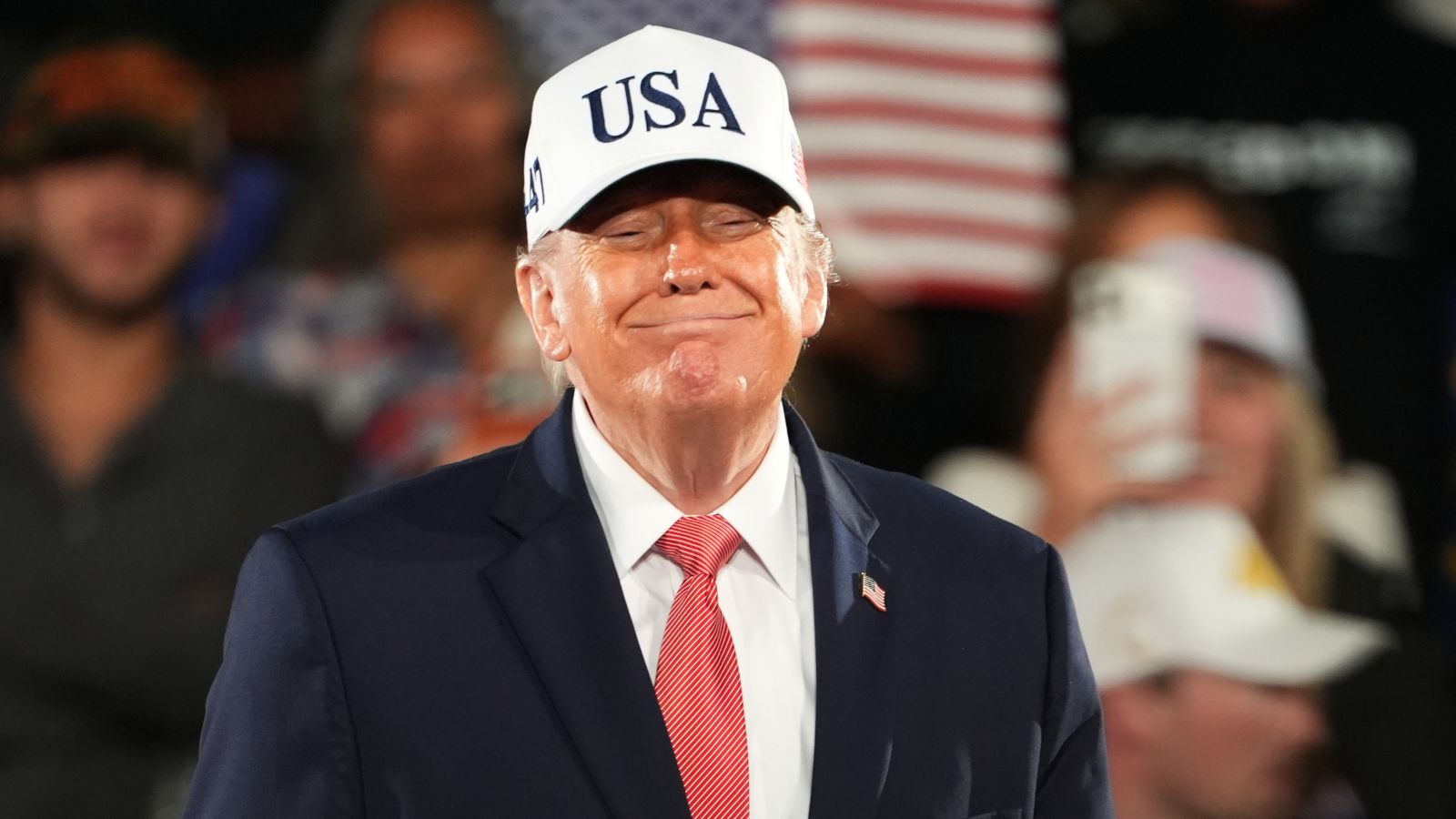
As the US heads for midterms next week, there is hardly any support or sympathy for Donald Trump in India. Trump used pressure tactics and harsh tariffs against India, causing a trust deficit. Many now predict that the Republicans will lose their majorities in both the House and the Senate.
As the US heads for midterms, there is hardly any support or sympathy for Trump in India. Many predict that the Republicans will lose their majorities in both the House and the Senate
Six years ago, when the US presidential election took place in November 2020, fans of Donald Trump in India were going to temples, praying for him to win a second term. He lost that election and accused the Democrats of stealing the mandate. There were many in the US who believed Trump's accusations. There were some in India, too, who sympathised with him and believed he was probably wronged by the Left-Liberal cabal. Four years later, when Trump registered a thumping victory in 2024, many watchers of US-India relations sincerely believed a golden age in bilateral relations would return.
But the past 20-odd months have proved a big disappointment, not only for Trump's admirers in India but also for pragmatic geopolitical analysts. Trump has resorted to an unprecedented weaponisation of trade. He has employed pressure tactics against India, subjecting it to harsh tariffs for its energy imports from Russia, and shown inexplicable bonhomie with Pakistan, the global epicentre of terrorism and an arch-enemy of India. The Republican Party's obsession with immigration issues has impacted Indians working in the US under the H1-B visa regime. There have been occasional racist outbursts with offensive phrases, such as Vice President J D Vance referring to H1-B visa holders as "indentured servants". All these have resulted in compounded unease, if not outright distrust, with the country once described as a "natural ally". As a result, as the US heads for midterms next week, there is hardly any support or sympathy for Trump in India. On the contrary, many sneeringly predict that the Republicans will lose their majorities in both the House and the Senate.
It is Trump's brinkmanship that has brought the US-India relationship, assiduously built over the last 25 years, to this situation. When Prime Minister Narendra Modi visited the US in February last year to greet the newly elected President, he carried an ambitious agenda concerning what the foreign ministry mandarins call the "US-India Compact". Defence, trade, critical and emerging technologies, nuclear energy, critical minerals, space and Indo-Pacific affairs -- many such sectors were on the table.
But since then, the relationship has witnessed an enormous trust deficit. The US was party to the disruption caused to critical energy supply routes like the Strait of Hormuz through its war against Iran. That war plunged the whole world into an energy crisis. Oil production from the Middle East continues to be down. China, the major energy guzzler in the world, is feverishly importing oil from available sources, putting more pressure on the energy market. The resultant crisis sent inflation levels soaring in many European countries. It has acted as a catalyst for the people, already aggrieved by high food prices, stagnant wages and unaffordable housing costs, to hit the streets in several European cities. If India was able to thwart such a crisis, it was primarily due to the foresight of its leadership in ensuring energy security for its 1.4 billion people through imports from Russia, besides other sources. The US Congress and the White House seek to punish India for this.
The double standards are hard to miss. While threatening India with 100 per cent punitive tariffs, the US Congress was busy granting waivers and exemptions to its European allies. Worse still was the US's own agreement with Russia earlier this month for the import of 36 million barrels of diesel in the name of lowering domestic fuel prices. What is good for the goose is not good for the gander?
Despite such disappointments, all is not lost. Bilateral trade grew by 12 percent in 2025 to reach $240 billion. The defence partnership is robust and growing. Major American AI companies have pledged to invest close to $70 billion in India. On February 28, the day the US attacked Iran, the headline should instead have been the opening of US chip giant Micron's first assembly and test facility in India. Cooperation is substantially growing in space, critical technologies and minerals, and intelligence-sharing. There is an overt downturn in ties for sure, but beneath the surface, there is optimism for collaborative progress, seen in Ambassador Sergio Gor targeting $500 billion in bilateral trade by 2030.
you may like
We will know the verdict of the American people regarding Trump's two years on November 3. But what the world thinks about it was firmly conveyed by PM Modi recently: The "weaponisation of trade, technology and sea routes" must stop.