
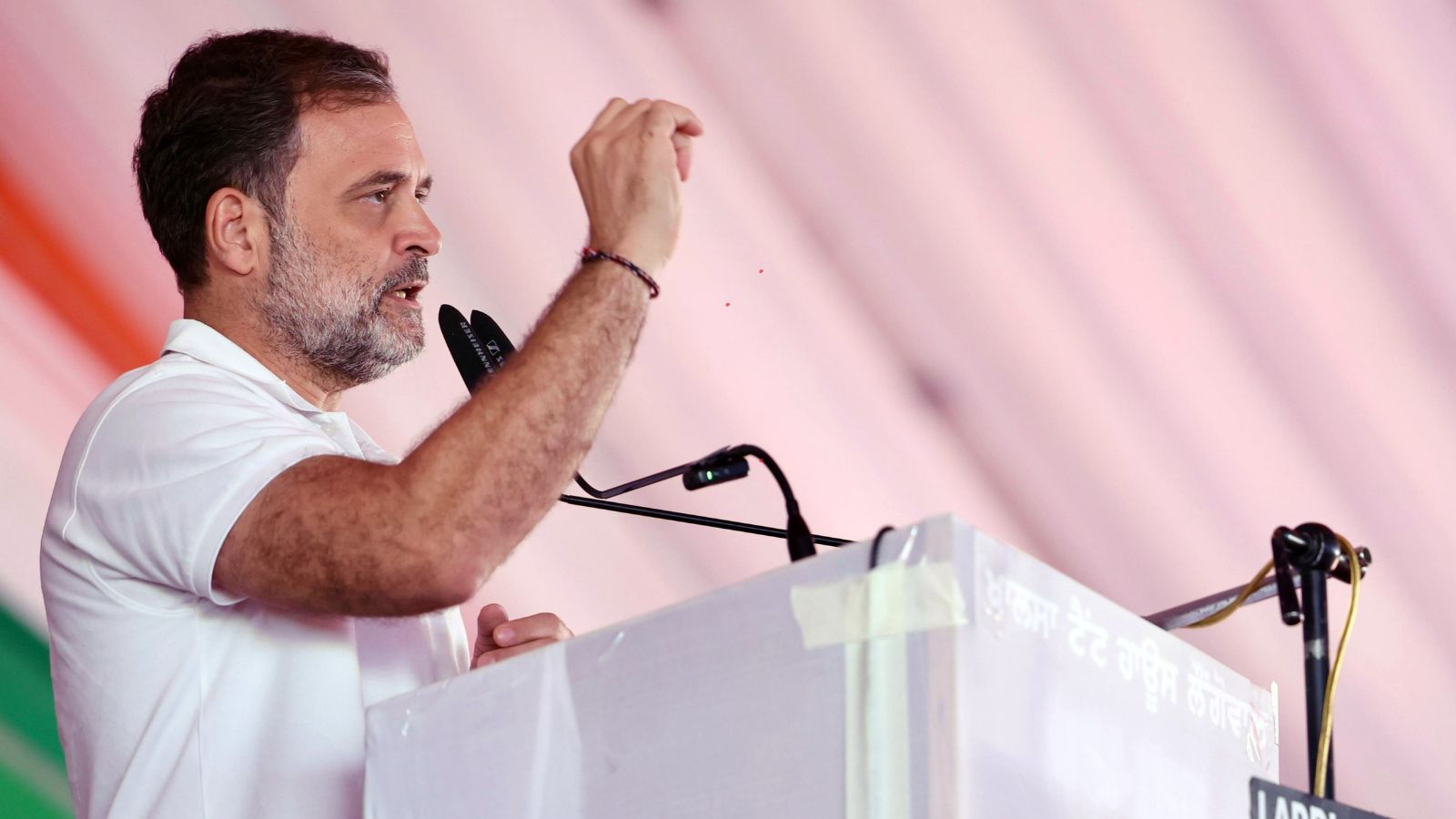
The Supreme Court will hear objections regarding Rahul Gandhi’s plea to get sworn answers from the Election Commission. A three-judge bench led by CJI Surya Kant adjourned the matter to December 9. Harish Salve, representing the ECI, said, "We have something to say about that. There is very serious prejudice."
A three-judge Supreme Court bench led by CJI Surya Kant adjourned to December 9 the hearing on the Opposition leaders' application seeking sworn answers from the Election Commission to 48 interrogatories on the SIR process.
With the Election Commission of India (ECI) raising objections to an application filed by Leader of Opposition Rahul Gandhi and others seeking answers to 48 interrogatories on the Special Intensive Revision (SIR) process, the Supreme Court Tuesday said it will hear the objections and the applicants before issuing any directions on the plea.
Interrogatories are written questions that a party in a lawsuit serves on the other party seeking sworn answers.
A three-judge bench presided over by Chief Justice of India Surya Kant adjourned the hearing on the application, which sought answers from Chief Election Commissioner (CEC) Gyanesh Kumar and Election Commissioners Sukhbir Singh Sandhu and Vivek Joshi and Director General (Information Technology) Seema Khanna, over the SIR, to December 9.
Sibal seeks notice on interrogatories; Salve flags 'serious prejudice'
Appearing for Rahul Gandhi, Senior Advocate Kapil Sibal apprised the bench that the application containing 48 interrogatories was filed on Monday because the ECI's counter affidavit in response to petitions challenging the SIR process merely relied on bare assertions without disclosing corresponding dates, file notings, records, or details of the decision-making process.
Urging the court to issue notice on the plea, Sibal contended that the response filed by the ECI, CEC, and ECs "far from disclosing... facts, rests upon bare assertion".
Objecting to the request, Senior Advocate Harish Salve, appearing for the ECI, told the court, "We have something to say about that. There is very serious prejudice." The bench stated that the ECI can raise its objections, and the court will examine the interrogatories issue before taking a call.
Questions on dissent notes
The application seeks the file number and decision date for each SIR order, how the decision was taken, and when each member gave approval, alongside an affidavit clarifying whether a First Appellate Authority's RTI order. stating that "the Commission has so far not taken any decision on initiating a Special Intensive Revision (SIR) across the country in 2025", was accurate when issued.
Following an investigation by The Indian Express on September 23 revealing that Sandhu and Joshi had objected on record 14 times in 10 months to steps taken under CEC Kumar, the plea asks for the number of occasions between February 19, 2025, and October 26, 2026, on which either commissioner recorded written objections, dissent, or reservations regarding SIR, ECINET, Form 6, or appeals, along with dates, file numbers, subject matter, and how those issues were subsequently resolved.
The ECI's counter affidavit stated that the three SIR orders dated June 24, 2025, October 27, 2025, and May 14, 2026, were unanimous, and noted that an unimplemented July 28, 2026, internal work-allocation order by an Additional Secretary-rank IAS officer prompted Sandhu and Joshi to write to the Cabinet Secretary on July 29 and issue a joint direction on July 30.
Referring to the counter affidavit, the plea seeks the officer's name, the authority and member approval behind the order, whether the CEC concurred in the July 30 direction, and what action was taken against the officer.
The plea also seeks the number of appeals filed before Appellate Tribunals in West Bengal by or in the name of the Commission or its officers against inclusion orders passed by judicial officers, and the period during which they were filed.
It requests the dates, file numbers, and any recorded member objections concerning decisions approving the design, architecture, and deployment of ECINET for preparing and revising electoral rolls, as well as details on when the Declaration was added to the online Form 6 page, which officer or division took the decision, and when the Commission approved it.