
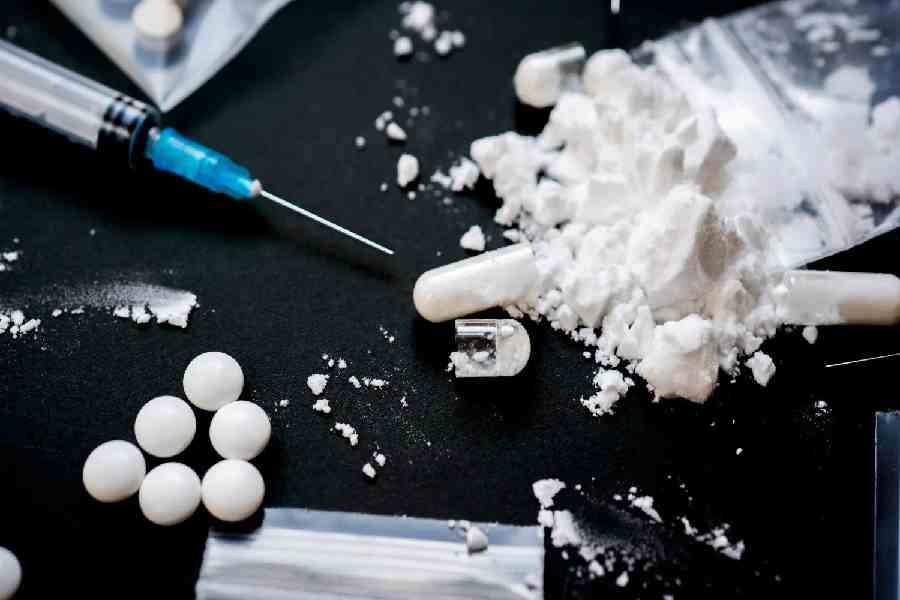
Bihar registered 1,905 drug cases between January and May 2026, already exceeding the 2022 total. Similar crises hit Punjab and Gujarat, where seizures rose sharply. Experts said, "Governments must strike at the root of trafficking." Despite many enforcement efforts, porous borders and a lack of treatment facilities remain major concerns.
Alarming reports have emerged on the proliferation of the trade in and the use of drugs in Bihar. The state registered 1,905 Narcotic Drugs and Psychotropic Substances (NDPS) cases in January-May 2026, exceeding 2022's total of 1,822 cases. Tablet seizures rose from 29,762 in 2022 to 9,29,137 in these five months, while those of injections increased from 3,677 to 3,83,066. Both prohibition and drug elimination seem to be failing in the state. Bihar's predicament has national parallels. Punjab's average annual heroin seizures have risen from 829 kilogrammes in 2018-21 to 1,390 kg in 2022-24. Ahead of the 2027 assembly elections, the Aam Aadmi Party faces scrutiny over its unfulfilled promise of eradicating Punjab's drug problem. The Bharatiya Janata Party has promised complete elimination of drugs from the state by 2029, yet in Gujarat, where it has been in power for over three decades, 508 NDPS cases were registered in 2022, up from 150 in 2018. Gujarat also reported narcotics seizures worth Rs 3.87 crore in Ahmedabad and Rs 13.29 crore in Surat during 2025. Bihar's documented Myanmar supply routes and the repeated interceptions of drugs from Gujarat's ports are suggestive of porous land and maritime border scrutiny. The seizures demonstrate successful enforcement operations, but what explains the lax border controls?
The flourishing drug trade extracts a huge cost. Economically, Punjab's 2015 opioid survey estimated annual expenditure of Rs 7,575 crore among dependent users, indicating substantial household spending before treatment costs and lost earnings. The National AIDS Control Organisation's 2021 survey also recorded HIV prevalence in 9.03% of injecting drug users. Governments must strike at the root of trafficking -- the economics and big fish that make it tick -- prosecute corrupt facilitators and strengthen border intelligence. Accessible treatment and psychiatric care -- India's health institutions are lacking in these -- are crucial too. A coordinated national response as well as transnational cooperation merit greater investment.