
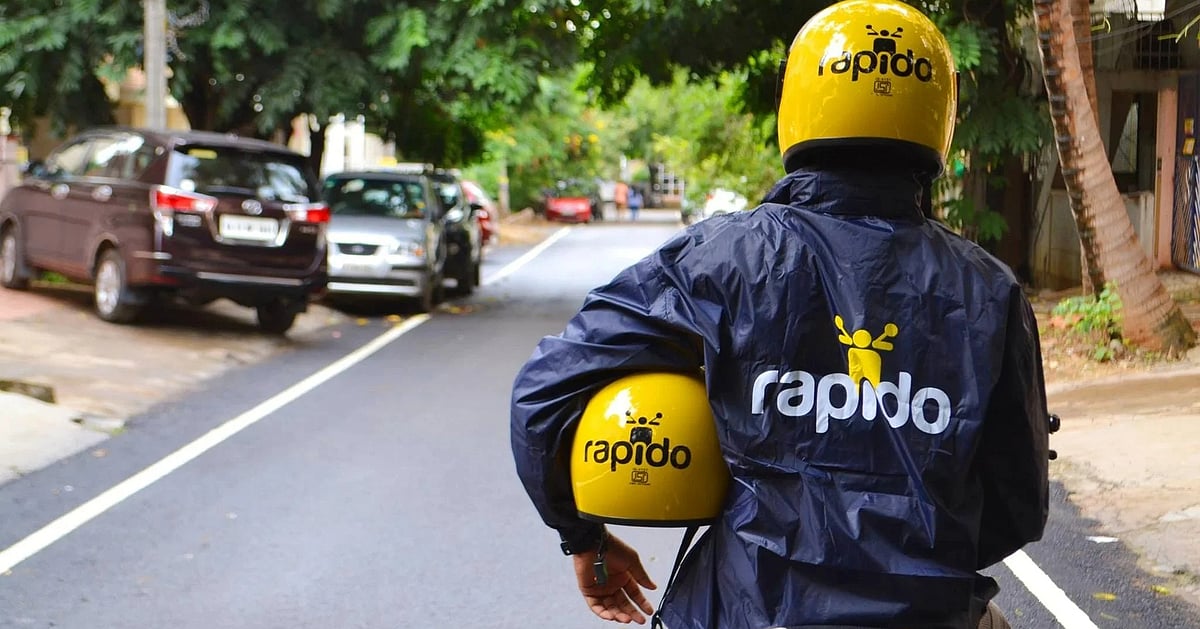
The Supreme Court upheld the Karnataka High Court order allowing bike taxis to operate. Drivers and platforms now urged the government to frame clear rules to stop harassment. "A structured framework will benefit drivers, platforms and commuters," said Adi Narayan. Formal recognition would help ensure safety and job security.
Bengaluru: With the Supreme Court upholding the Karnataka High Court's order allowing bike taxis to operate in the state, drivers, aggregator platforms and commuters have urged the government to expedite the framing of a clear regulatory framework to ensure the service can function without uncertainty and harassment.
While the verdict has brought relief to thousands of bike taxi drivers who have faced disruptions to their livelihoods, stakeholders say the absence of specific regulations continues to leave them vulnerable on city roads. Drivers allege they are frequently confronted by auto and cab drivers, who question their right to operate and threaten consequences for providing what is often labelled an "illegal" service.
"In the past four years, I've completed 25,000 rides. Dropped all passengers safely. But still, my job lacks credibility. Especially in the last few months, I've been confronted with rowdy auto and cab drivers who harass not just me, but also passengers. This deters passengers," said Nanjundan K, a 59-year-old bike taxi driver hoping government regulations will help curb the on-ground harassment.
Drivers said the uncertainty had also affected their ability to work consistently, with some reporting confrontations while picking up or dropping off passengers. They said formal recognition and a defined set of rules would help distinguish legitimate operators from those violating regulations.
"Now, that the legal position has been clarified, the next step should be for the government to put regulations in place. A structured framework will benefit drivers, platforms and commuters, while ensuring that passenger safety is not compromised. From our end, we'll do our best to push the government towards forming the new rules at the earliest," said Adi Narayan, president of the Bike Taxi Welfare Association of Karnataka.
"Currently, while the base fare across platforms is around Rs 25-35, the per km fare differs. While Rapido offers Rs 7/km, Uber and Ola offer around Rs 10-11/km. Plus, unlike autos, we don't get paid extra for night duty. All this needs to be taken into consideration while forming the bike taxi rules. Plus, there needs to be an emphasis on job security," he added.
"We encourage the Karnataka government to focus on four key aspects while framing the policy: uniform safety and insurance standards across operators; simple, transparent and time-bound digital processes for registration and licensing; integration of bike taxis with the wider public transport ecosystem to strengthen last-mile connectivity; and consultations with commuters, women riders, Captains and operators to ensure the framework addresses ground realities,” he said.