
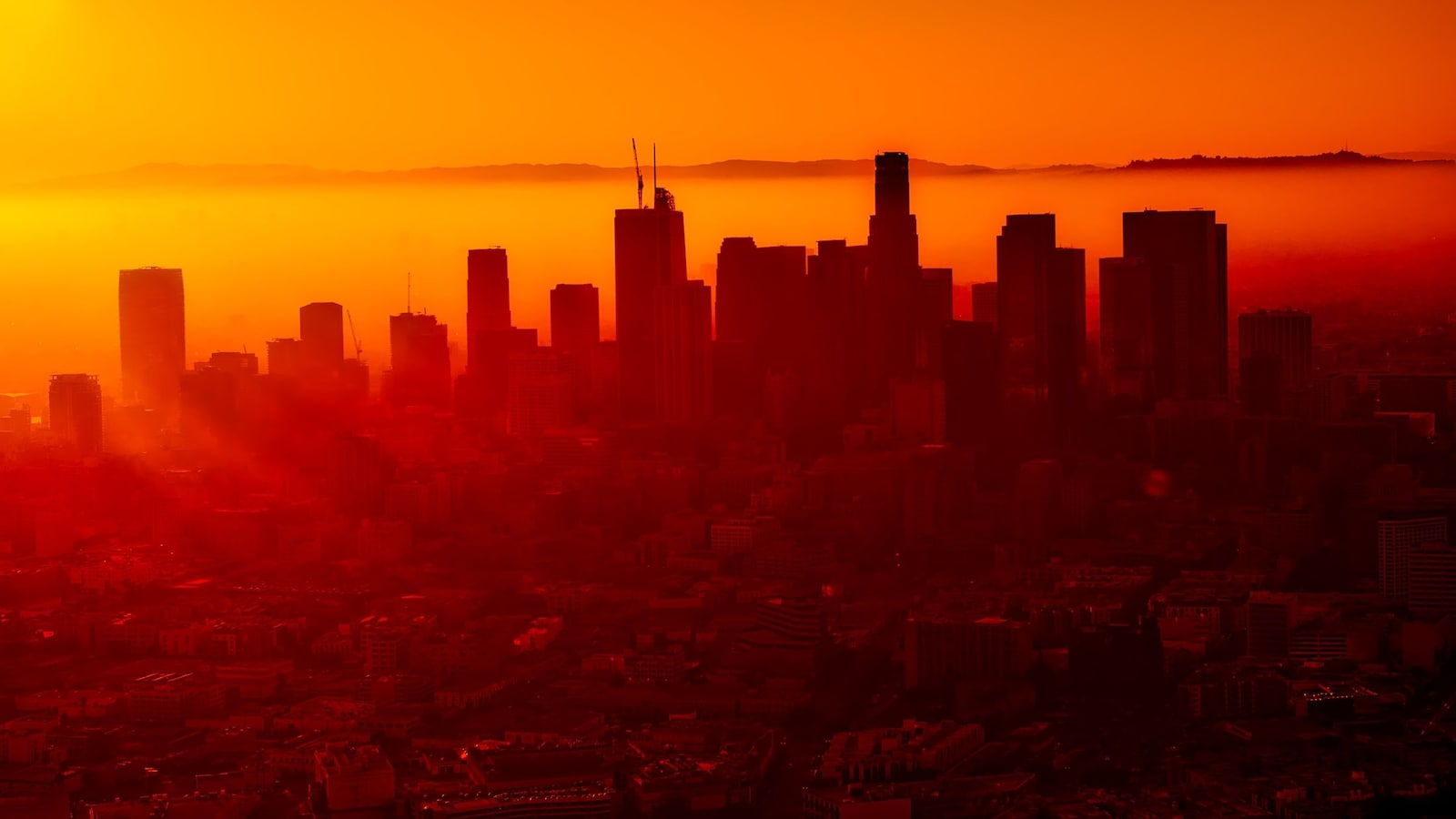
Large parts of northern India turned hotter and drier over the past 70 years, a new study showed on Friday. While the north got drier, peninsular India became wetter. Lead author Ananya Karmakar said, "the timing of sowing and harvesting there needs to be watched closely" due to these shifts.
The study found that much of peninsular India became wetter over the same period.
New Delhi:
Large parts of northern India have shifted towards a hotter and drier climate over the past 70 years, with the dry zone that once ended in western Uttar Pradesh now extending into the east of the state, according to a new study.
The study found that much of peninsular India became wetter over the same period.
The study, 'Identifying the climate zones shifts of Indian meteorological subdivisions: insights from historical records', was published in Mausam, a peer-reviewed journal of the India Meteorological Department (IMD), and made public on Friday.
For their analysis, the study's researchers examined IMD's data to redraw India's climate map for successive 30-year periods - the standard span over which climate is measured - from 1951-1980 to 1991-2020.
Their findings centre on four climate zones: hot semi-arid, hot with low rainfall; tropical savannah, warm year-round with a long dry season; tropical monsoon, the wettest, with heavy seasonal rain; and temperate, in India, hot summers and mild, dry winters. Note that climate zones are defined by temperature and rainfall.
The study revealed that in northwest India, the hot semi-arid zone grew from about a quarter of the region's area in 1951-1980 to a third in 1991-2020. Moreover, the temperate zone shrank from about a quarter to less than a fifth, meaning that an area equal to roughly 7 per cent of the region moved into the drier zone as temperatures rose and rainfall declined.
Peninsular India changed in the opposite direction. The hot semi-arid zone shrank from about 30 per cent of the region to 16 per cent, and most of that land moved into the tropical savannah zone, which now covers three-quarters of the peninsula.
Ananya Karmakar, scientist at IMD Pune and the study's lead author, said in a statement, "When we compared India's climate map decade by decade from 1951 to 2020, the clearest change was in the north, where the hot, dry zone has pushed east into Uttar Pradesh, and because this is one of the country's most important farming regions, the timing of sowing and harvesting there needs to be watched closely."
(Except for the headline, this story has not been edited by NDTV staff and is published from a syndicated feed.)
Got a follow‑up question on this article? Go on
How may i help you today
Show full article
Track Latest News Live on NDTV.com and get news updates from India and around the world