
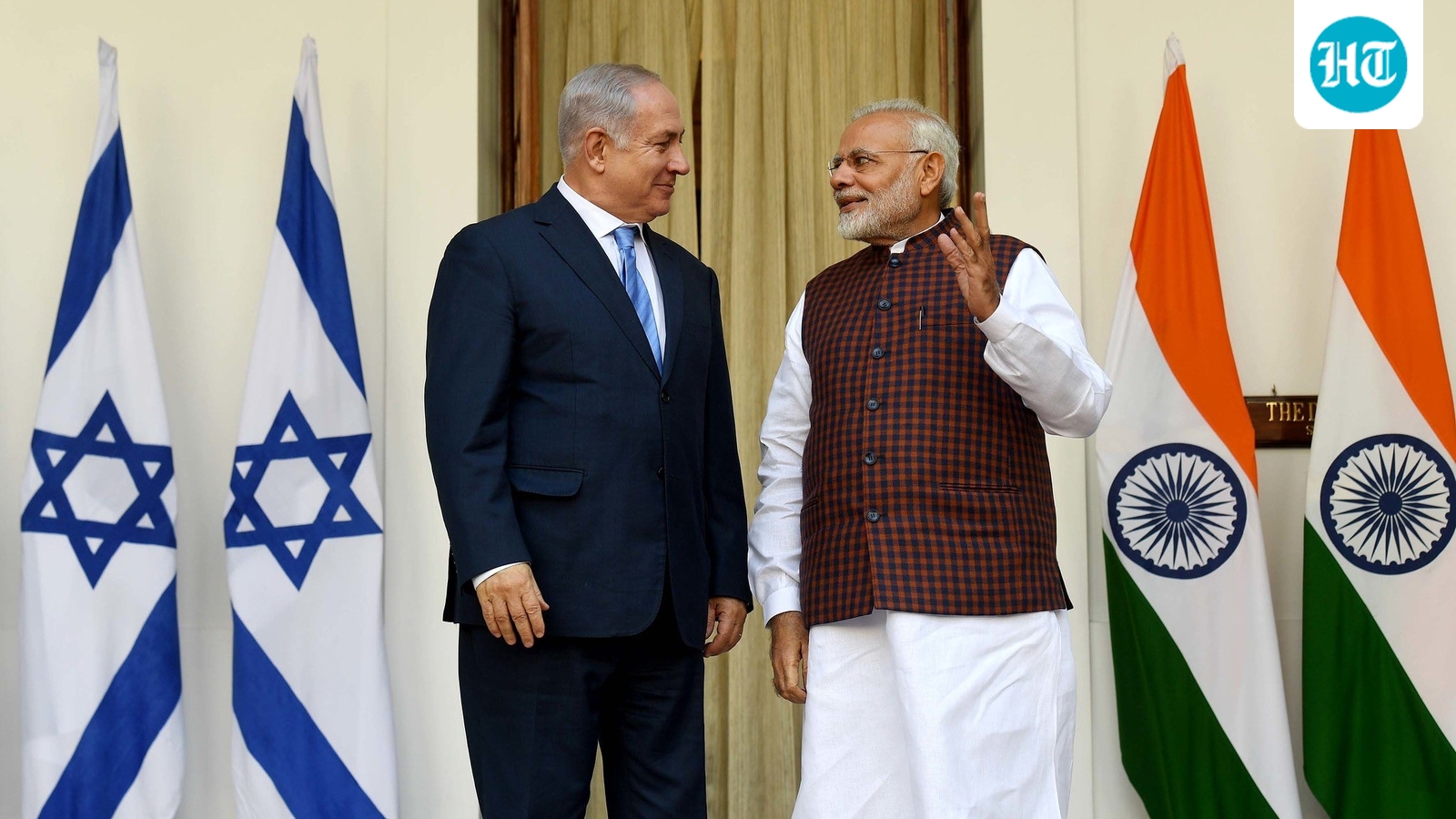
Israeli Prime Minister Benjamin Netanyahu warned that a future US president could be hostile to Israel. He said, "In two years, a President, man or woman, could come to power who is very hostile to Israel." He now wants to use close ties with India to build stronger global alliances.
Israeli prime minister Benjamin Netanyahu has warned that a future US president could adopt a hostile stance towards Israel, calling for stronger alliances with India and nations in Latin America as he seeks to bolster his country's strategic position ahead of the October 27 election.
While presenting his security doctrine, Netanyahu argued that Israel must use the remaining years of US President Donald Trump's tenure to strengthen its position in Washington while preparing for a possible shift in American policy.
"In two years, a President, man or woman, could come to power who is very hostile to Israel," Netanyahu said.
"How would you deal with that? How would you operate in relation to the United States? And beyond that, what solutions would be necessary?" he asked.
The Israeli prime minister said his government must work to consolidate ties with the US while diversifying its international partnerships to reduce its dependence on a single ally.
"First, we must do everything we can during these two years, and during the following two years, in the American arena, through good times and bad," he said.
"The second thing is to create other alliances. That is what I am working on now with many countries in our region and outside it. India is not a small country, and there are many others," Netanyahu added.
His remarks came hours before Trump publicly endorsed Netanyahu's re-election bid, offering the Israeli leader a boost just days before the country votes.
Netanyahu also pointed to political developments in Latin America, saying they could create opportunities for Israel to expand its international partnerships.
"There is a major shift in Latin America, and there could be an enormous change in Brazil in just a few days," he said, adding that Israel must "expand our pool of alliances and develop capabilities that make us valuable to everyone".
Netanyahu has repeatedly highlighted India's importance to Israel as his government seeks to counter international criticism over the country's military actions and strengthen its diplomatic standing.
In May this year, he described India as a "huge power" and said there was "absolutely crazy love for Israel" in the country, citing the relationship as an example of Israel's international partnerships.
The relationship between Netanyahu and prime minister Narendra Modi has been a prominent feature of the two countries' diplomatic engagement, with both leaders publicly emphasising their close ties.
Netanyahu's warning about a potentially hostile future US administration comes against the backdrop of his often-strained relations with Democratic presidents Barack Obama and Joe Biden.
According to reports, several experts in Israel believe that growing disillusionment with Netanyahu among Democrats in the US stems partly from decisions made by the Israeli prime minister over the years. Netanyahu, however, has frequently presented his willingness to challenge American presidents as evidence of his determination to protect Israel's national interests.
His close relationship with Trump has been a key element of his political pitch, particularly as Israel navigates its security challenges and international criticism.
Netanyahu's presentation drew sharp criticism from Gadi Eisenkot, his main challenger in the upcoming election and a former chief of staff of the Israel Defence Forces.
Eisenkot accused the prime minister of using the announcement as a political exercise rather than presenting a credible national security strategy.
"Nine days before the election and three years after the gravest failure and disaster in Israel's history, with every war front still open, Netanyahu decided to present his 'security doctrine' to the public," Eisenkot said.
He described the document as two pages of slogans that failed to address Israel's strategic challenges, arguing that it exposed what he called a strategic vacuum left by Netanyahu's government.
Eisenkot also accused the prime minister of attempting to influence voters through fear and divert attention from controversies surrounding his campaign.
"This is Netanyahu's method: manipulating perceptions, frightening people and trying to divert attention from the parade of lies and racism surrounding his campaign tonight," he said.