
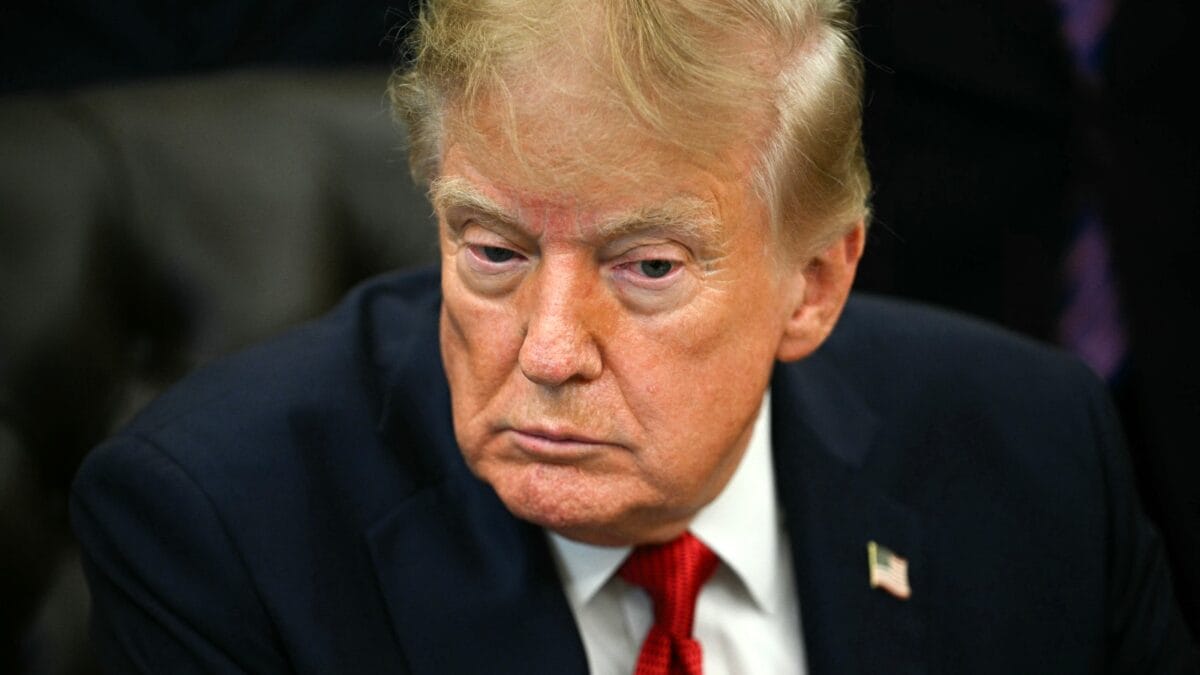
The US Supreme Court rejected President Donald Trump’s plea to set aside 20,000 California ballots on Monday, November 2. The court refused to intervene, allowing the state to count these votes. Trump said the move would protect electoral integrity, but California officials argued the federal list wrongly included many eligible citizens.
The decision, delivered on Monday, November 2, just a day before Election Day, allows California to proceed with counting the disputed ballots.
With the 2026 US midterm elections reaching their final stretch, President Donald Trump has suffered another significant legal setback after the US Supreme Court rejected his administration’s emergency plea to set aside around 20,000 ballots in California over allegations that the voters could be non-US citizens.
The decision, delivered on Monday, November 2, just a day before Election Day, allows California to proceed with counting the disputed ballots. It also raises larger questions about the limits of presidential power, the autonomy of states in conducting elections and the protection of voting rights in the world’s oldest modern democracy.
Catch Live updates on US midterm elections here
The Supreme Court refused to intervene without offering an explanation. No justice publicly dissented, and the court did not even seek a response from California officials before rejecting the administration’s request.
What Was Trump Asking The Supreme Court To Do?
The controversy began in October, when the US Justice Department identified more than 20,000 people on California’s voter registration lists whom federal authorities suspected of being non-US citizens.
Under American law, citizenship is a requirement for voting in federal elections. The administration argued that allowing potentially ineligible voters to cast ballots would undermine the integrity of the electoral process.
It subsequently demanded that California election officials separate mail-in ballots received from these individuals and refrain from counting them until their citizenship could be verified.
The Justice Department maintained that this was a precautionary measure rather than an attempt to prevent legitimate voters from exercising their rights. Its argument was that disputed ballots could be temporarily isolated while authorities established whether the individuals concerned were eligible to vote.
However, California officials refused to comply, questioning the accuracy of the federal government’s list and warning that thousands of eligible American citizens could be wrongly caught up in the exercise.
The federal government then approached the courts, seeking an emergency order compelling the state to segregate the ballots.
Why Did California Challenge The Move?
California argued that the federal government’s identification process was deeply flawed. Officials maintained that the list could include naturalised American citizens, people whose immigration records had not been updated and individuals incorrectly matched through government databases.
The administration’s own lawyer acknowledged the problem during court proceedings. When US District Court Judge Trina Thompson asked Justice Department attorney Kenneth Kao, “Would you agree there’s a high error rate?", he responded: “That’s a fair statement."
California also pointed out that the state had more than 23 million registered voters and that mail-in voting had been underway since early October. More than six million ballots had already been returned by the time the Supreme Court considered the dispute.
Officials argued that separating ballots at such a late stage would be logistically difficult, potentially disrupt the counting process and risk depriving eligible citizens of their constitutional right to vote.
There was also a larger legal question. Under the US Constitution’s Elections Clause, states and Congress have authority over the rules governing federal elections. While Congress can regulate certain aspects of the process, the President does not have unrestricted power to dictate how individual states administer elections.
What Did Lower Courts Say?
Before the matter reached the Supreme Court, the Trump administration suffered successive defeats in the lower courts. On October 28, US District Judge David O Carter rejected the Justice Department’s request for an emergency order directing California to segregate the disputed ballots.
His observations were particularly sharp. Carter wrote: “Never before in American history has the federal government, on the eve of an election, sought to coerce a state and local government to abandon their own Constitutional elections procedures and bend to the will of the Executive Branch."
He further warned that granting the administration’s request could create a dangerous precedent, allowing either political party to disrupt elections for its own advantage. “If the Executive can discount votes and threaten an ongoing election due to unproven allegations, then our democracy is in danger," Carter observed.
The administration subsequently approached the Ninth US Circuit Court of Appeals, which also refused to grant emergency relief. The majority said the government had not given the district court adequate opportunity to consider the matter.
The Justice Department then made its final appeal to the Supreme Court on November 2.
The top court’s rejection effectively ended the administration’s immediate effort to keep the 20,000 ballots out of the counting process.
What Trump Said
The Trump administration has consistently portrayed noncitizen voting as a serious threat to American electoral integrity. Trump has repeatedly claimed that potentially millions of noncitizens are voting illegally and influencing election outcomes, although independent studies and state-level audits have found such instances to be exceedingly rare.
In its October 15 lawsuit, the Justice Department maintained that “State-facilitated voter fraud is unacceptable in the United States of America." DHS Secretary Markwayne Mullin also argued that “even one noncitizen vote cancels out the ballot of an American citizen and undermines our elections."
California Governor Gavin Newsom welcomed the decision, posting on X: “The Court rejected Trump’s emergency request without even asking the other side to respond. Democracy won."
Attorney General Rob Bonta described it as the fourth judicial rejection of the administration’s efforts to interfere with California’s election procedures, saying the decision should end attempts to disrupt the state’s elections through emergency court orders.
The timing of the dispute makes the Supreme Court’s decision particularly consequential.
The November 3 midterm elections will determine control of both chambers of Congress – the House of Representatives and the Senate, for the remainder of Trump’s second presidential term.
California, a traditionally Democratic stronghold, holds 52 seats in the House, making it an important electoral battleground in the fight for congressional control.
With control of Congress at stake, the California ballot dispute has become much more than a question of 20,000 votes. It is another test of the constitutional boundaries between the White House, state governments and the judiciary, and of how much presidential power can extend into the running of American elections.