
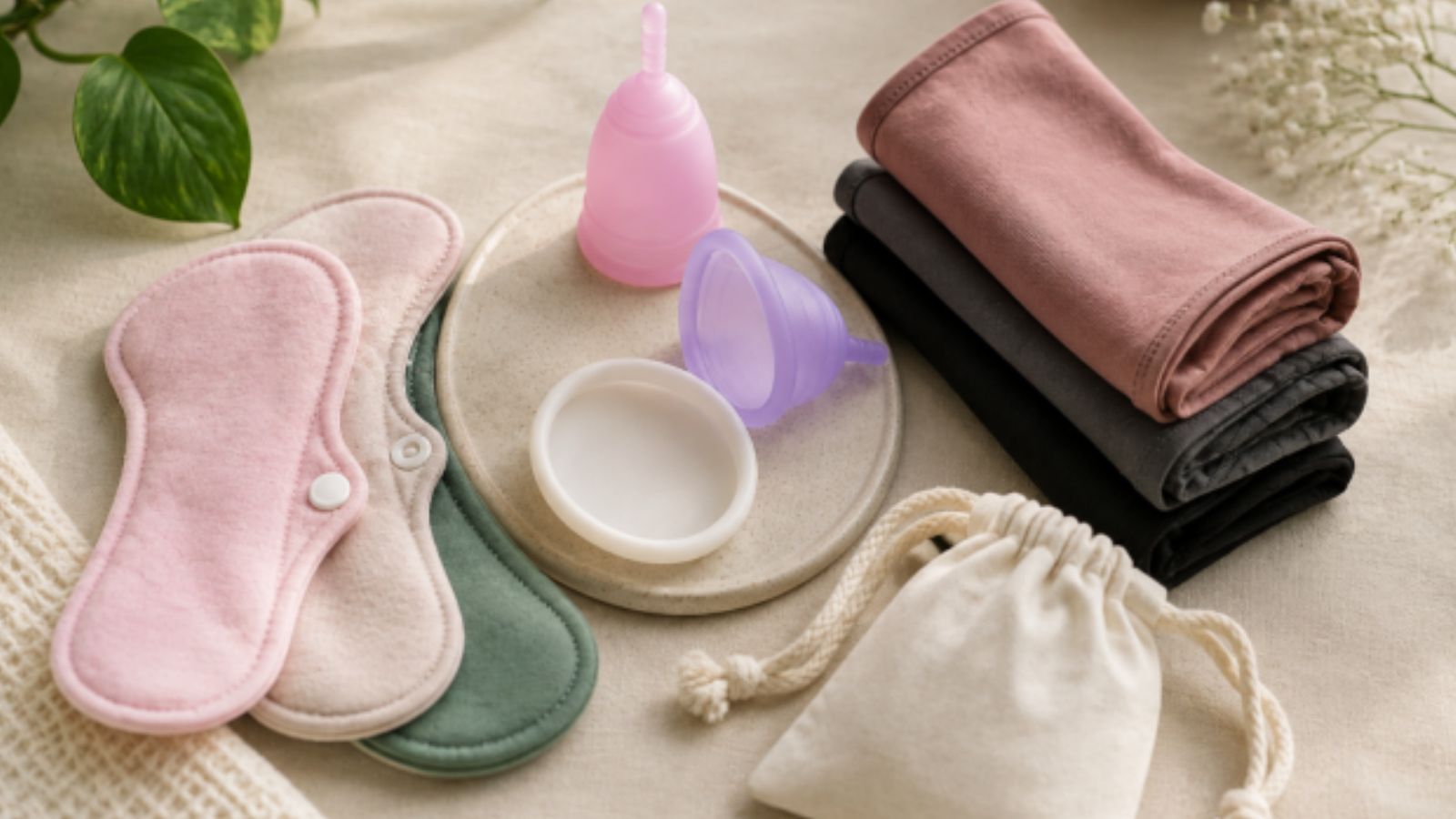
The National Family Health Survey-6 shows that 79.2% of young women aged 15-24 years now use hygienic menstrual protection. This figure rose from 77.6% in NFHS-5. Government efforts, including the Jan Aushadhi Suvidha pads, helped this growth. By January 2026, more than 100 crore Suvidha sanitary pads got sold across India.
Written by Pally Kundu/ Reena Singh
The National Family Health Survey-6 (NFHS-6) highlights an important but often underappreciated story of India's social development. While national attention has focused on improvements in maternal and child health, another indicator deserves equal recognition -- the increasing use of hygienic menstrual protection among young women aged 15-24 years.
Nationally, 79.2% of women aged 15-24 years now use hygienic methods of menstrual protection -- up from 77.6% in NFHS-5 (2019-21) and a dramatic leap from 57.6% recorded in NFHS-4 (2015-16). The World Health Organization and UNICEF's Joint Monitoring Programme (JMP) define effective menstrual hygiene management as the use of a clean material, one that can be changed in privacy as often as needed, washed and dried or safely disposed of, without embarrassment or restriction, for preventing infection and maintaining comfort (WHO & UNICEF, 2012). This definition has anchored menstrual health within the global Sustainable Development Goals on good health, gender equality and has progressively shaped how countries design and track their menstrual-hygiene interventions.
India was among the early adopters of this global framework. The trajectory captured in NFHS-6 -- from 57.6% in 2015-16 to 79.2% in 2023-24 -- reflects genuine movement, not merely a rise in product uptake. It is evidence that India's menstrual-hygiene policy architecture is converging with, and in several respects helping shape, the global benchmark for what safe and dignified menstrual protection should look like.
The national gains are not accidental. This progress is the outcome of a deliberate, multi-pronged, multi-sectoral strategy. The Scheme for Promotion of Menstrual Hygiene, implemented by the Ministry of Health and Family Welfare and supported through the National Health Mission, promotes increased awareness among adolescent girls on menstrual hygiene, increased access to sanitary napkins to adolescent girls by ASHA workers using the platforms of schools and community, and promotion of safe disposal of sanitary napkins in an environmentally friendly manner. States and Union Territories are supported in providing sanitary napkins to adolescent girls at subsidized rates through ASHAs, using school- and community-based platforms. Information, Education and Communication (IEC) materials form another important component of these efforts in promoting awareness. The government even launched the Jan Aushadhi Suvidha sanitary napkins under the Pradhan Mantri Bhartiya Janaushadhi Pariyojana (PMBJP), available at ₹1 per pad, to ensure affordable access to menstrual hygiene products. By January 2026, more than 100 crore Suvidha sanitary pads had been sold. Of these, over 22.50 crore pads were sold during FY 2025-26 alone. Currently, over 18,000 Jan Aushadhi Kendras nationwide distribute Suvidha napkins, thereby expanding access to safe and hygienic menstrual products.
Numbers that look incremental on paper often represent something far larger on the ground. The rise from 77.6% to 79.2% may read as a modest 1.6-percentage-point gain, but it means lakhs of additional young women moved from cloth or other unsafe materials to a hygienic method of menstrual protection in just a few years. Seen over a longer arc, the shift is more striking: hygienic protection among women aged 15-24 has climbed by nearly 22 percentage points since NFHS-4 (2015-16), when barely three in five young women had access to safe menstrual care.
Each of these is its own small triumph, and together they confirm that menstrual hygiene in India is no longer advancing in isolation -- it is moving in step with a broader, self-reinforcing shift in how young women learn, decide, and are heard.