
New norms change how often owners must renew Pollution Under Control certificates for BS-VI vehicles. Private cars under six years old now need renewal every three years. Owners of older vehicles face stricter timelines. Driving without a valid certificate attracts a fine of Rs 1,000 in most Indian states today.
What is PUCC?
A Pollution Under Control Certificate (PUCC) is a document issued to vehicles to certify that their emissions, including toxic gases such as carbon monoxide (CO), are within the permissible limits prescribed by the government.
For instance, in Delhi, four-wheelers are eligible for a PUC certificate only if their carbon monoxide emissions are within the prescribed limit of 3%. These emissions are tested at authorised emission-testing centres using gas analysers.
The rules stipulate that all vehicle owners, including two-wheelers, are required to carry a valid PUC certificate to ply on roads, especially in metropolitan cities such as Delhi, Mumbai, and Bengaluru.
Chart:
A pollution under control certificate in India typically costs between Rs 60 and Rs 100 (Plus GST 18%), depending on the vehicle type and fuel type. It may, however, vary from state to state and can go up to Rs 200 in certain states.
Under the Central Motor Vehicles Rules, driving without a valid PUC certificate attracts a hefty penalty. In most states, the fine for a first offence is Rs 1,000. In Delhi, motorists caught driving without a valid PUCC may face a fine of Rs 1,000 for the first offence, which can go up to Rs 10,000 for subsequent offences.
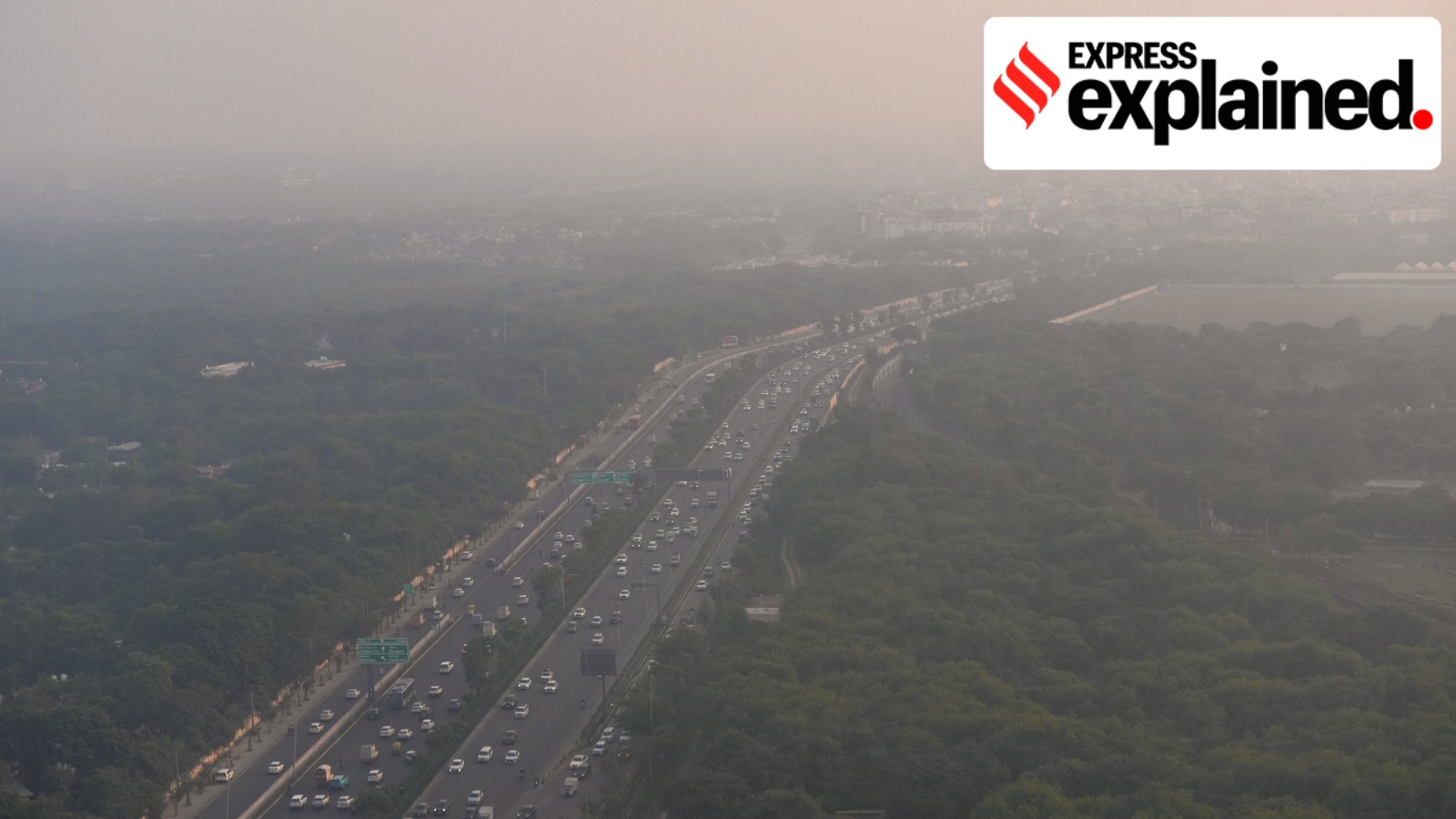
Emissions from the transport sector contribute significantly to pollution.
In Delhi-NCR alone, vehicular emission accounts for 14% of PM 2.5, 40% of Carbon Monoxide (CO), and 63% of Nitrogen Oxide (NOx) emissions. A BS-IV vehicle emits 2.7 times more than a BS-VI counterpart.
What are the changes?
According to the new norms, the owner of BS-VI private vehicles no more than six years old, will be required to renew PUC certificates only once every three years. Similarly, BS-VI vehicles aged 6-10 years will require renewals once in a year and private BS-VI vehicles aged more than 10 years shall require PUC certificate renewal once in every six months.
Earlier, all categories of BS-VI private vehicles were required to renew the PUC certificate once every year.
Similarly, the owner of a BS-VI commercial vehicle up to six years old will have to renew the pollution certificate once every two years. For commercial vehicles six to 10 years old, renewal shall be required once in a year.If the vehicle is more than 10 years old, the renewal must take place every six months
Earlier, all commercial BS-VI vehicles were required to renew their PUC once a year.
While the number of renewals is reduced for BS-VI vehicles, the revised renewal norms provide lower validity periods for older or BS-IV and below standard vehicles.
As per the existing validity norms, BS-IV vehicles were required to renew their pollution certificate once a year. Similarly all motor vehicles complying with BS-I, BS-II and BS-III emission norms are required to renew their PUC certificate in six months.
However, under the new norms, BS-IV vehicles will be required to double the renewal i.e. make the renewal once in every six months. For vehicles complying with BS-I, BS-II and BS-III emission norms, PUC certificates will be valid for three months.
How many vehicles will be impacted?
According to the MoRTH, a total of 48.24 PUC certificates have been issued across the states and union territories of the country.
This has resulted in a revenue of Rs. 288 crore to the government. A total of 11.81 crore certificates have been issued for BS-IV vehicles, 9.75 crore certificates for BS-VI vehicles, and 26.66 crore PUC certificates for other vehicles.
The data further shows that maximum PUC certificates (7.07 crore) have been issued in Maharashtra. This is followed by Kerala (6.15 crore), Uttar Pradesh (5.81 crore), Gujarat (4.72 crore) and Haryana (4.31 crore).
The data also shows that there are over 53,000 PUC centres across the country, with over 56,000 machines registered for granting PUC certificates.