
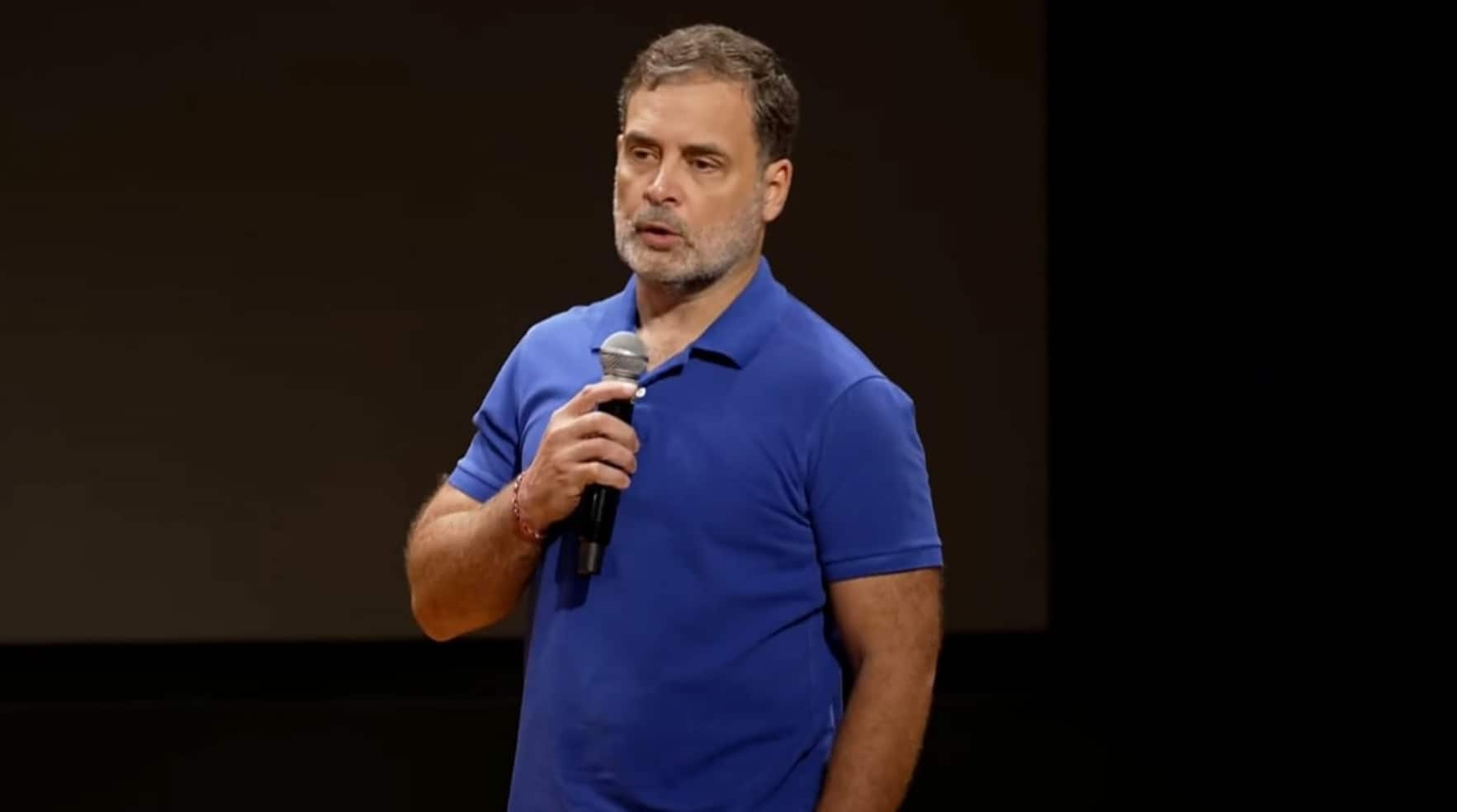
The Karnataka High Court quashed a case against G Nagesh over a Facebook post showing Rahul Gandhi with a Pakistani Army officer. Justice M Nagaprasanna said continuing the trial would be an abuse of law. The court noted, "permitting further trial would become an abuse of the process of law."
Market Mastery
Webinar by Vishal Malkan
Find the weak links
in your portfolio by Vishal Malkan
The Karnataka High Court has brought an end to criminal proceedings against a man accused of sharing a digitally altered image of Congress leader Rahul Gandhi alongside a Pakistani Army officer on Facebook, holding that continuing the prosecution would amount to an abuse of the legal process.
A single-judge Bench of Justice M Nagaprasanna quashed the case against G Nagesh, also known as Rajesha Hir imane, in an order dated November 4.
The petitioner had been charged under Section 353(2) of the Bharatiya Nyaya Sanhita (BNS), which deals with statements intended to promote enmity, hatred, or ill-will between different groups.
The controversy stemmed from a Facebook post allegedly shared by Nagesh on May 20, 2025. The image showed one half of Rahul Gandhi's face merged with the other half of a Pakistani Army officer's face. The officer's uniform carried a nameplate reading "Asim", while the accompanying tagline read "one agenda".
The Shivamogga Deputy Commissioner had lodged a complaint alleging that the post had the potential to provoke hostility between communities and regional groups.
Challenging the criminal proceedings, Nagesh maintained that he had neither created nor digitally altered the image and had only circulated an existing post. He also argued that the allegations, even if accepted at face value, did not establish the ingredients of an offence under Section 353(2) of the BNS.
The Karnataka government opposed the petition, arguing that the social media post prima facie promoted ill-will between different groups and that the accused should face trial.
However, the High Court found sufficient grounds to intervene, drawing on the Supreme Court's judgment in Imran Pratapgarhi v. State of Gujarat. The apex court had underscored the importance of protecting freedom of speech and expression under Article 19(1)(a) of the Constitution while examining criminal complaints arising from speech.
Applying those principles, Justice Nagaprasanna observed that allowing the prosecution to continue would serve no legitimate purpose.
"If the facts obtaining in the case at hand are considered on the bedrock of the principles laid down by the Apex Court, permitting further trial in the case at hand would become an abuse of the process of law and result in miscarriage of justice," the order stated.
The High Court accordingly quashed the criminal proceedings pending against the petitioner before the competent court in Hosanagara.
The ruling follows the Supreme Court's emphasis on safeguarding constitutionally protected speech against criminal prosecution without adequate legal grounds.
In Imran Pratapgarhi v. State of Gujarat, the Supreme Court examined the limits of criminal action over social media content and stressed that authorities must assess the actual words and context of a communication before invoking penal provisions.
Article 19(1)(a) guarantees freedom of speech and expression, although the right is subject to reasonable restrictions under Article 19(2), including in the interests of public order and other constitutionally specified grounds.