
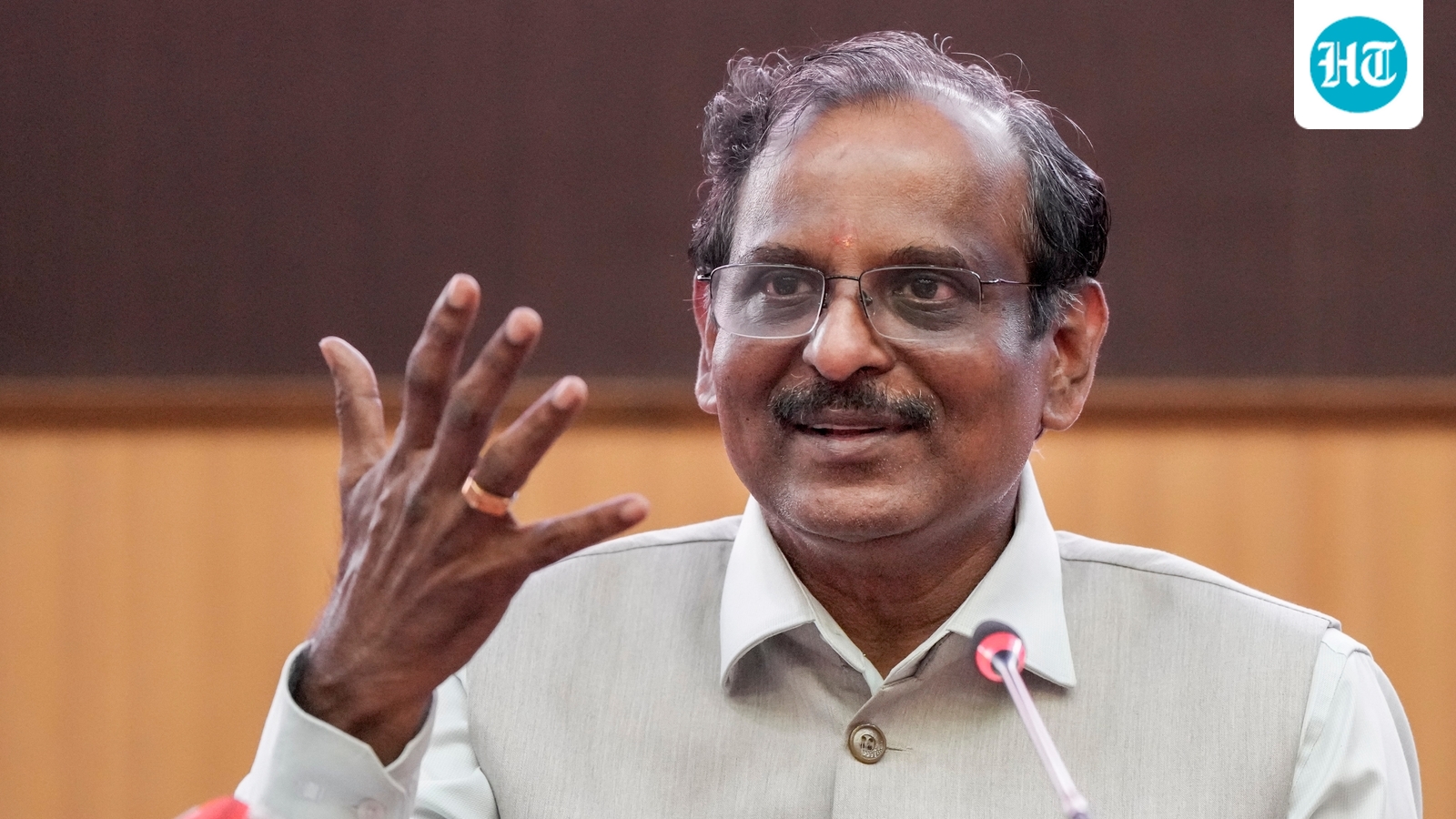
ISRO Chairman V Narayanan said India will have four functional launch pads by 2029. The agency plans a large satellite complex at Kulasekarapattinam to meet global demand. "To handle this expanding ecosystem, ISRO will handhold startups and private enterprises," he said. Meanwhile, the first uncrewed Gaganyaan test starts within two months.
ISRO Chairman V Narayanan has said that India will expand its space operations significantly with four functional launch pads by 2029.
He outlined the agency's roadmap, which includes a 2,000-acre dedicated Small Satellite Launch Vehicle (SSLV) complex at Kulasekarapattinam in Tuticorin district to meet the global demand for satellite deployment.
Clarifying that the national space agency will not be privatised, Narayanan emphasised that partnering with private firms was essential to meet surging global and domestic demands for thousands of satellites.
"To handle this expanding ecosystem, ISRO will handhold startups and private enterprises, transferring technological expertise to foster economic growth and generate thousands of high-tech jobs," he said while speaking at a graduation ceremony at a private university here on Saturday.
"India will expand its space operations significantly with four functional launch pads by 2029, supported by an increasing reliance on private industry partnerships to handle commercial operations," Narayanan said.
The ISRO chief said that the upcoming Kulasekarapattinam spaceport facility will feature crucial infrastructure such as integration buildings, launch pads, rail-track systems, telemetry, tracking, and command systems. However, he did not elaborate on the other three proposed launch pads.
Stating that ISRO plans to conduct the first uncrewed Gaganyaan test within the next two months, followed by two subsequent uncrewed tests before the crewed mission, he said, "These tests will evaluate environmental control, safety systems, crew escape mechanisms, and module interiors under varying pressure, temperature, and humidity conditions."
He said ISRO successfully conducted approximately 8,000 ground-based experiments for the mission, and four astronaut-designates are currently undergoing specialised training.