
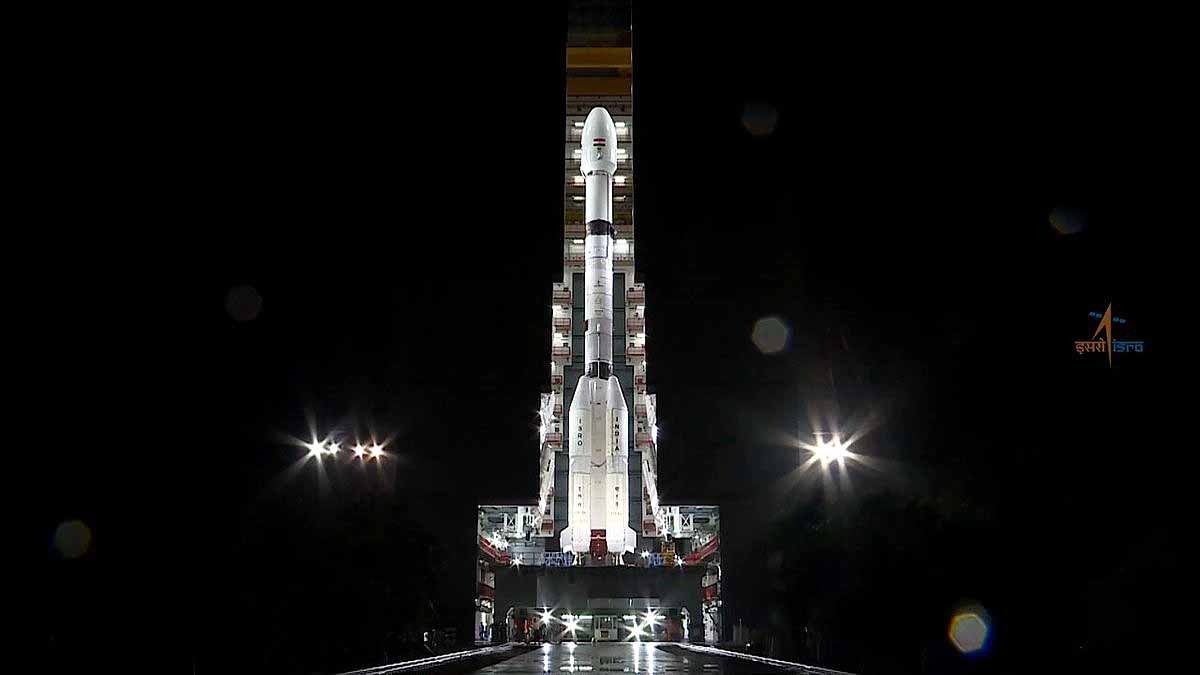
ISRO is preparing to launch the NVS-03 navigation satellite aboard a GSLV-F18 rocket on Friday, October 30, 2026, at 11:51 pm IST. This mission from Sriharikota aims to strengthen India’s NavIC system. The satellite will help restore independent positioning services after earlier technical problems affected the constellation’s ability to provide reliable data.
The Indian Space Research Organisation (ISRO) is preparing to launch its next-generation navigation satellite, NVS-03, aboard a Geosynchronous Satellite Launch Vehicle (GSLV) rocket on Friday, October 30, 2026, at 11:51 pm IST, in a mission aimed at strengthening India's indigenous satellite navigation system, NavIC.
The launch is scheduled from the Satish Dhawan Space Centre in Sriharikota, Andhra Pradesh.
The mission, designated GSLV-F18, will carry the third satellite in the second-generation Navigation with Indian Constellation (NavIC) series into space.
NavIC, India's regional alternative to the United States' Global Positioning System (GPS), provides positioning, navigation and timing services across India and approximately 1,500 km beyond its borders. These services support civilian applications as well as strategic operations, including navigation for the armed forces.
WHY IS THE NVS-03 MISSION IMPORTANT?
The launch comes as ISRO works to strengthen NavIC after setbacks involving earlier navigation satellites.
The NVS-02 satellite, launched in January 2025, reached geosynchronous transfer orbit but could not be manoeuvred into its intended orbit following a technical problem involving its propulsion system.
The resulting shortage of operational satellites has affected NavIC's ability to provide independent positioning services.
The government has previously stated that only three satellites were providing positioning, navigation and timing services through the system.
NVS-03 is expected to help restore NavIC's independent positioning capability once it reaches its intended orbit and becomes operational. However, the satellite's successful launch alone will not immediately guarantee the restoration of services; orbital deployment, testing and commissioning will also be required.
The mission is also significant for India's strategic autonomy in satellite navigation. NavIC provides a standard positioning service for civilian users and an encrypted restricted service for authorised users, including the military.
Its signals support applications ranging from transport and maritime navigation to defence operations.
NVS-03 is part of a planned series of five second-generation navigation satellites intended to augment the existing constellation. The next satellites in the series, NVS-04 and NVS-05, are expected to further strengthen the system.
The October 30 launch will be an important step in ISRO's effort to improve the reliability and continuity of India's homegrown navigation services.
However, the satellite will need to complete its orbital deployment and commissioning before it can begin providing operational navigation services.