
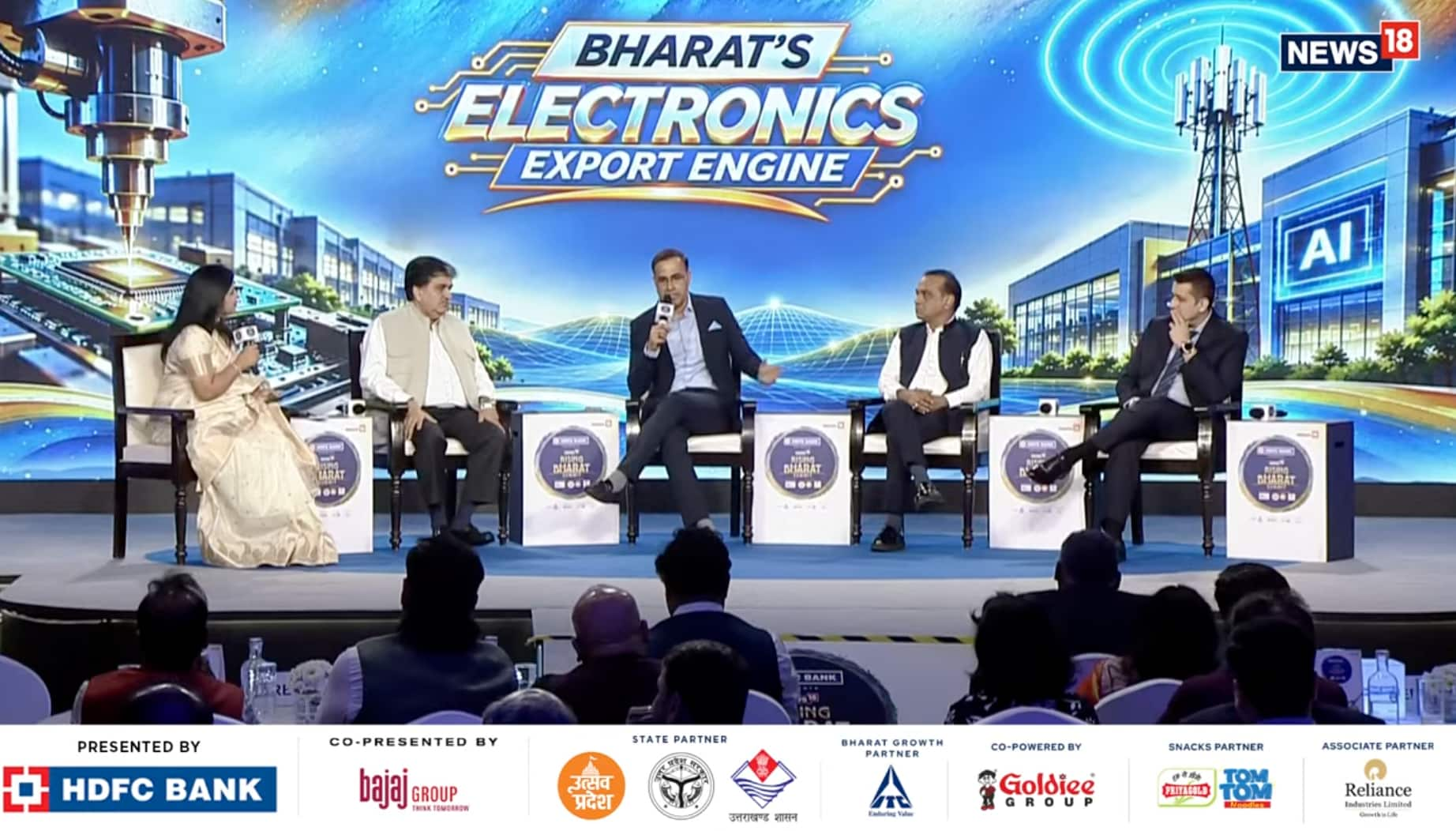
Industry leaders said India must move beyond assembly to build global smartphone brands. At the Network18 Rising Bharat Summit on November 17, experts noted that the country needs a stronger component ecosystem and more research. Tasleem Arif said, "The real strength is our talent pool," urging firms to prioritize innovation.
Market Mastery
Webinar by Vishal Malkan
Find the weak links
in your portfolio by Vishal Malkan
India's ambition to build globally competitive electronics brands will depend on its ability to move beyond assembly, develop indigenous design capabilities and invest in research and development (R&D), industry leaders have said.
OnePlus and OPPO India managing director of R&D Tasleem Ari and Ai+ Smartphone founder and CEO Madhav Sheth said India has the talent to build global brands but needed a stronger component ecosystem, greater ownership of intellectual property (IP) and technology-led innovation.
"We say that India's strength is the market, but the real strength is our talent pool," Arif said during a panel discussion at Network18 Rising Bharat Summit: North Edition in Lucknow on November 17.
He said companies focused on taking products to market quickly rather than investing in underlying technology.
The industry needed to pay greater attention to the software stack and technology that goes into developing hardware, where innovation and IP are created, he said. Sourcing components overseas and assembling devices locally may reduce costs but does little to create differentiated products or higher margins.
"These are the hygiene parts. This will help you reduce the device cost, but it will not give you the bandwidth where you can increase the device price," Arif said.
He called for a “cultural shift” towards R&D and innovation. The government's additional 3 percent incentive for R&D under the mobile phone manufacturing scheme could encourage companies to increase technology investments, though India still had a long way to go.
Sheth said homegrown companies had an opportunity to expand globally if they built the supply chain and design capabilities. He identified a weak sub-component ecosystem, limited indigenous design capabilities and scale as three gaps that needed to be bridged.
Despite India's electronics manufacturing services (EMS) capabilities, domestic value addition remains limited, Sheth said. He called on companies to develop their own designs instead of relying on overseas technology and paying royalties to foreign firms.
"Brand building is not tough. Building the supply chain is more important. Brand building can be 20 percent of the task. Eighty percent is to make sure that the supply chain is built behind it," he said.
Micromax co-founder Rajesh Agarwal said the absence of a component ecosystem and design capabilities was among the key reasons Indian smartphone brands lost ground to Chinese competitors.
Government initiatives and industry investments were creating another opportunity for domestic brands. Agarwal said Micromax was strengthening its design capabilities and said he wanted to relaunch the brand.
India Cellular and Electronics Association (ICEA) chairman Pankaj Mohindroo said India has established itself as a global smartphone manufacturing hub. Nearly 55 percent of smartphones consumed in the US are produced in India, he said.
The next phase must close gaps in R&D, design and brand creation, he said.