
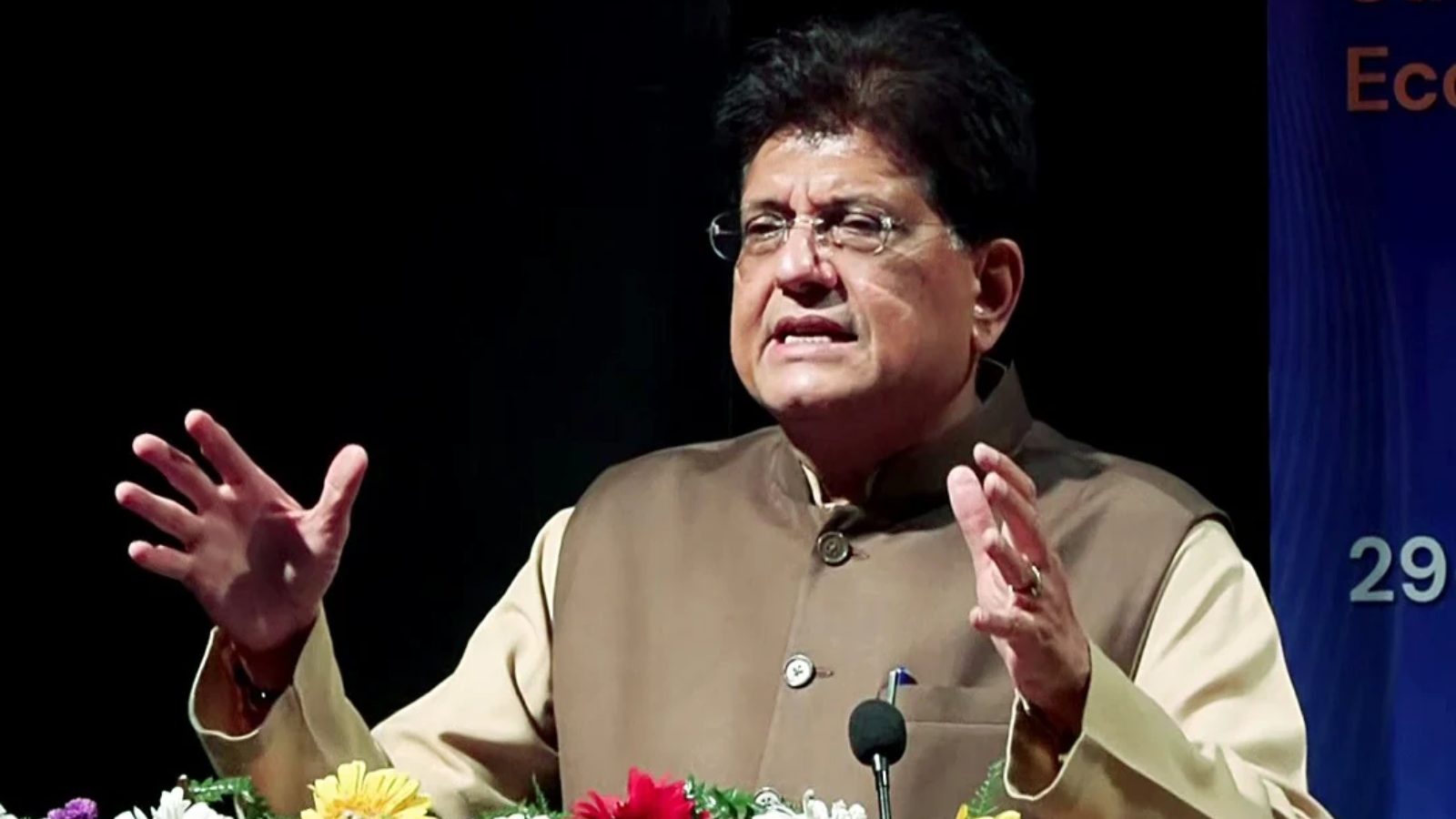
Commerce and Industry Minister Piyush Goyal said on Thursday that India will gain a strong comparative advantage after the US trade deal. He added, "the people of India will celebrate that not a single sensitive interest of our farmers has been compromised." Officials expect the final agreement very soon.
Goyal said India is trying to strike deals with countries with whom India has a complementary advantage.
Commerce and Industry Minister Piyush Goyal on Thursday said that India's sensitive sectors have been protected under the US trade deal and that India will have a strong comparative advantage after the pact.
This comes after US Secretary of State Marco Rubio last week said that India-US are weeks away from signing the deal and that 99% of the work is done.
"The US free trade deal is sometimes sought to be politicised by a few elements. I don't even know if they deserve any comment, because that's probably a lack of understanding or knowledge. The details are not yet fully out, so I don't know what they are criticising," Goyal said at an Institute for Studies in Industrial Development (ISID) conference.
"But I have the courage of conviction to announce boldly that the US trade deal, once details are out, the people of India will celebrate that not a single sensitive interest of our farmers has been compromised. On the contrary, India will stand at a very strong comparative advantage. And trade is about comparative advantage. Absolute numbers are not as important as your competitiveness to those you compete with," Goyal added.
The prospects of a trade deal have improved ever since the US earlier this month paused the Lindsey O. Graham Sanctioning Russia and Iran Act of 2026 amid high fuel prices. The law gave powers to US President Donald Trump to impose up to 100% tariffs on importers of Russian oil, such as India and China. Rubio had also said that the US had taken into account the trade deal with India while taking a decision to pause tariffs over the purchase of Russian oil.
Oil tariffs
The oil-related tariffs were the only sore point between India and the US, as both countries have found convergence on other tariffs. Both the Section 301 investigation on New Delhi and the trade deal have resulted in a convergence between the countries. India has already banned imports of goods using 'forced labour' following the first US Section 301 investigation.
On the Section 301 investigation on overcapacity, India, along with other G20 countries, released a joint statement committing to take action against structural overcapacity in certain geographies, particularly in sectors like automobiles, electric vehicles, batteries, chemicals, foundational semiconductors and solar panels.
Goyal said that India is trying to strike deals with countries with whom India has a complementary advantage. He said that India's trade agreements covered 38 developed and relatively prosperous countries, creating complementary trade opportunities for both sides, with India exporting products they needed and importing products required for its development.
"Imbalanced agreements cannot get you far. All the agreements before 2014 only covered $10 trillion, and countries were largely competing with India. You mentioned Regional Comprehensive Economic Partnership (RCEP); that would have been the death knell of manufacturing in India," Goyal said, adding that it would have been an FTA with China.
Goyal said that after he took office in 2019, he was shocked by the details of RCEP. "The one single act of [pulling out of RCEP negotiations] on November 4, 2019, in Bangkok, that we are discussing manufacturing and India's industry -- otherwise, we would have been a nation of salesmen and salesgirls marketing Chinese goods in India," the minister said.
In 2019, India had pulled out of RCEP on grounds that it "does not reflect its original intent" and the outcome was "neither fair nor balanced". The other 15 nations in the regional grouping -- 10 of ASEAN plus China, Japan, South Korea, Australia and New Zealand -- had decided to go ahead.