
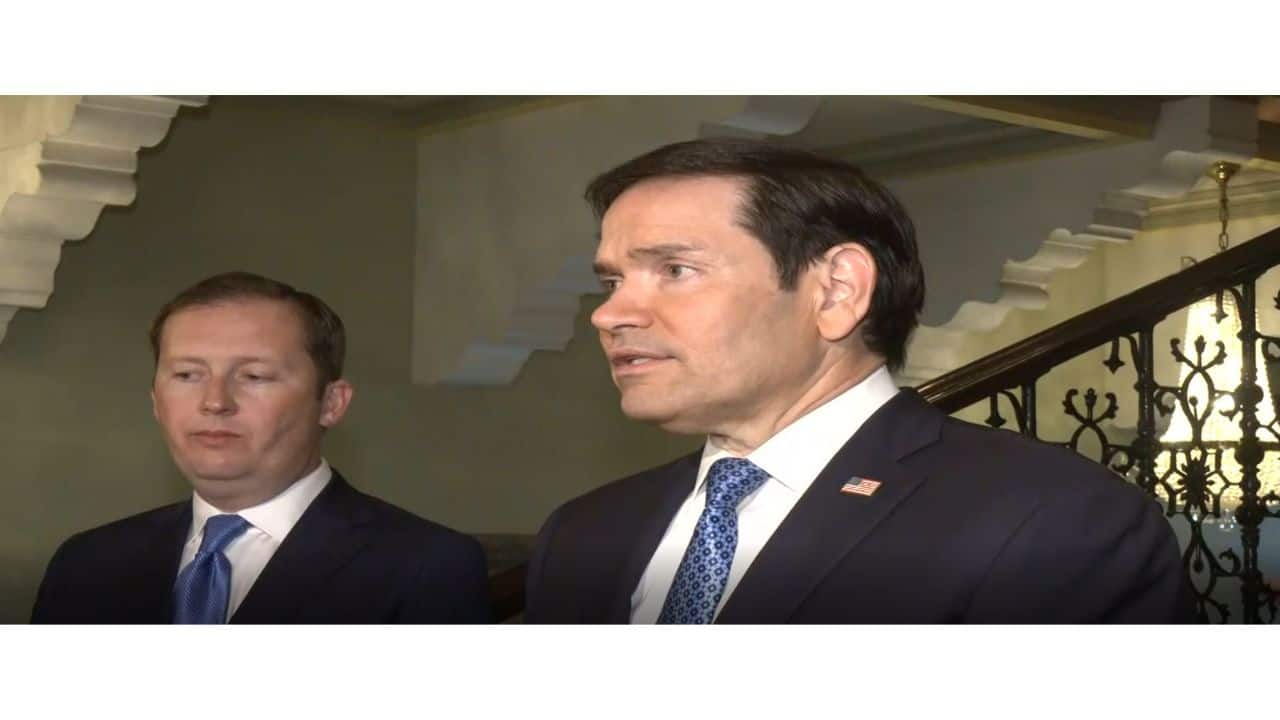
The India-US trade agreement is nearing its final stages, US Secretary of State Marco Rubio said on Tuesday (October 20). Rubio noted, "We are very, very close." The delegation also plans to discuss Venezuelan oil production with Reliance Industries during this visit to India to boost energy cooperation between nations.
Tiger Shroff attack: Was another celebrity the target before shooters turned to actor?
Mumbai: The India-US trade agreement may be down to its final unresolved issues, US Secretary of State Marco Rubio said on Tuesday (October 20), with only a few points left to settle before the deal can be signed. His visit to India has also brought energy cooperation into the talks. The US delegation is set to discuss Venezuelan oil production and refining with Reliance Industries.
Speaking to reporters in Mumbai, he said the negotiations were close to completion and expressed hope that the two sides would soon have an agreement ready for signing. He clarified that the US State Department does not lead trade negotiations, although he and other senior US officials are involved in the process.
"We are very, very close. I would say we are about as close as you can be without having executed the agreement," Rubio said.
He said only a small number of issues needed to be settled before the deal could move forward. He did not disclose the outstanding points or provide a date for the announcement, but said that Washington was optimistic about reaching an agreement shortly.
Rubio made the comments during his India visit, which includes a scheduled meeting with External Affairs Minister S Jaishankar. The two leaders will discuss trade, energy, investment, defence and critical technologies.
The proposed agreement is a major item on the bilateral agenda after a prolonged period of negotiations and trade friction. US President Donald Trump recently waived potential tariffs imposed over India's purchases of Russian crude oil, easing one obstacle as the two governments work towards a broader pact. The two sides have also been working through differences over tariff treatment and market access.
Trade, business and defence cooperation feature prominently on Rubio's agenda in India. He described India as an important US partner, citing its status as the world's most populous country and largest democracy, its role in bilateral commerce and its membership of the Quad.
He also referred to Jaishankar's repeated visits to the United States this year, saying Washington should engage more frequently with India. He described the two countries as strong strategic partners and said their cooperation justified more high-level exchanges.
Why Venezuelan oil is part of the talks
The US delegation plans to discuss Venezuela's oil sector with Reliance Industries, which operates the Jamnagar refining complex in Gujarat.
Rubio said that India had made progress in diversifying its sources of petroleum imports. He described the move as prudent and argued that Indian refiners were well equipped to process heavy crude, including oil from Venezuela.
"India is a refining superpower," he said, citing the country's experience in handling heavy crude. He added that Indian companies held oil concessions in Venezuela and could potentially increase production.
Rubio cautioned that only Venezuelan supplies would not be enough to replace all the oil that could become unavailable because of international disruptions. He said increased production could nevertheless provide additional supplies in the short term and make a greater contribution over time.
Sanctions could complicate the proposed cooperation. Rubio said the United States and India would need to work through possible restrictions before increasing their involvement in Venezuela's oil sector. The meeting with Reliance is expected to explore opportunities in oil production and refining.
India is negotiating oil imports to secure reliable supplies during a time of market uncertainty. Since Indian refineries can process various types of crude, the country has flexible choices. However, any deal for Venezuelan oil depends on prices and US sanctions.
Ukraine war and arms control
Rubio also addressed the war in Ukraine and reports that the Trump administration had delayed approval for the transfer of US-made Patriot interceptor missiles to Kyiv from allied countries. He rejected the suggestion that Washington was deliberately denying Ukraine assistance and said Trump was unhappy with claims that he was undermining the country.
The issue is about transferring US-made military equipment from other countries, which needs approval from the United States. Report of shipping delays is creating doubts about Ukraine's air-defense supply, even as Russian missiles and drones continue to strike the country.
Rubio said the United States, Russia and China might talk about controlling their nuclear and military weapons. He believes that reaching an agreement would make the world safer for everyone.
Stay informed on all the latest news, real-time breaking news updates, and follow all the important headlines in india news and world news on Zee News.