
India missed its 2025 target to eliminate tuberculosis, though TB deaths fell by 38% since 2015. The country got better at rapid testing, with 46% of cases diagnosed this way in 2025. The TB Mukt Bharat Abhiyan, which started in November 2024, screened 25 crore people to find new cases.
TB deaths have fallen by 38% since 2015 and rapid testing has expanded. But India's latest incidence estimates are still pending as new surveillance data is analysed.
While India has not achieved its target of eliminating tuberculosis (TB) by 2025, five years ahead of the global deadline, it has been making strides. The incidence and mortality due to the bacterial infection has been on the decline.
India has also seen an improvement in diagnosis -- with more people accessing rapid diagnostics and getting tested for resistance to a commonly used antimicrobial.
The country also saw a massive active case finding exercise over the last two years. Its incidence, however, remained uncalculated in this year's Global TB report released by the World Health Organization (WHO) in view of new district-level surveillance data becoming available.
First, what are the important findings from the WHO report?
Reduction in mortality: India reported a 38% reduction in its TB mortality as compared to 2015 -- breaching the 2020 End TB milestone of reducing it by 35%, albeit five years later. India's TB mortality reduced from 28 per lakh population in 2015 to 18 per lakh population in 2025, according to the Global TB report. The 2025 target of reducing mortality by 75% still remains distant.
This reduction came with WHO incorporating several different datasets to calculate the mortality. "Estimates of TB mortality in India for 2023-2025 were updated using recently released cause-of-death data from the sample registration system for the period 2022-2024, complemented by programmatic data for 2025," the report said.
Increase in diagnostics: India saw an increase in rapid diagnostic testing in 2025, with 46% of the cases being diagnosed using these. This is up from 38% the previous year. Quick diagnosis ensures timely treatment and prevents the further spread of the infection.
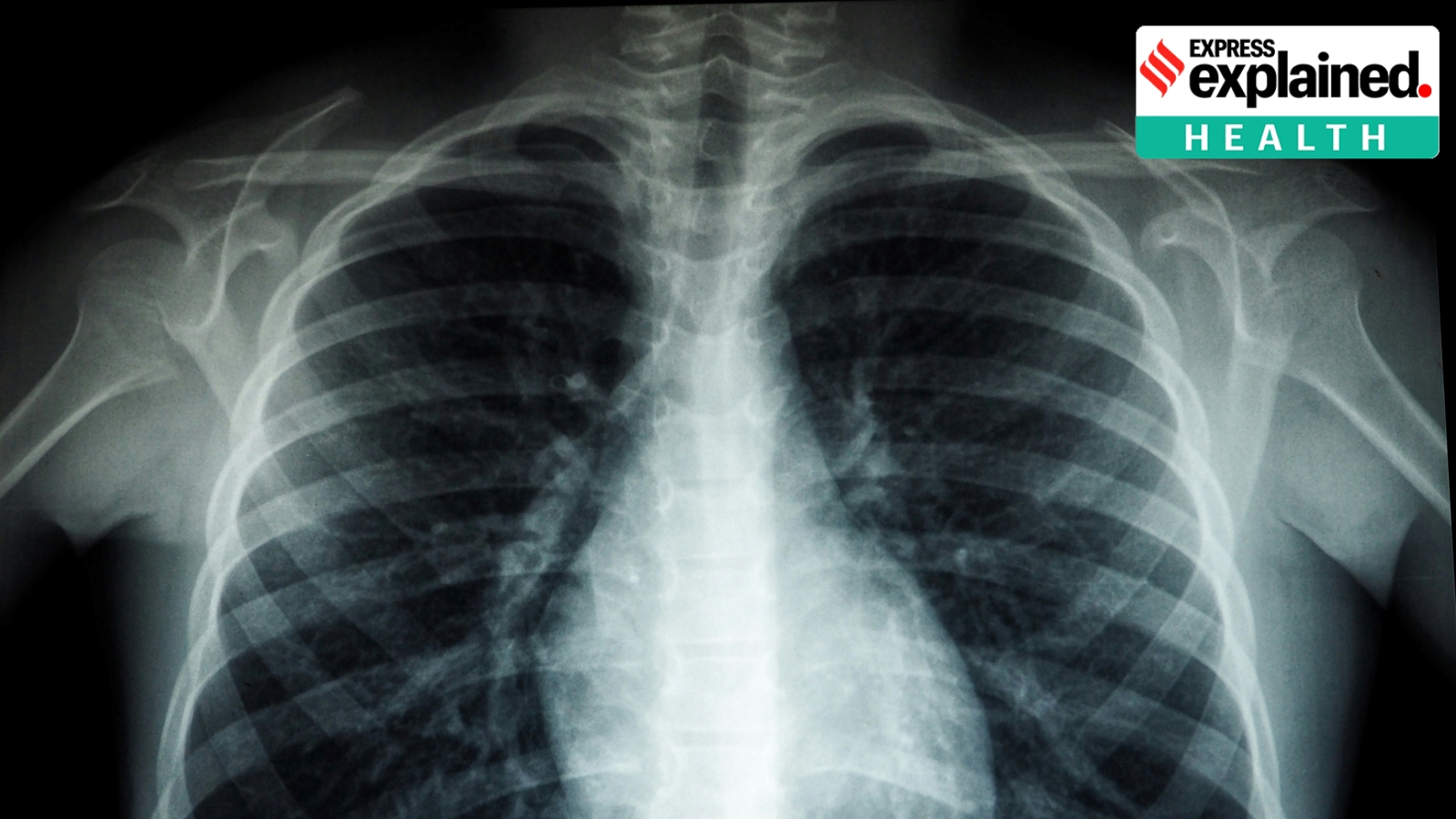
The national programme has inducted several new testing methodologies under its TB Mukt Bharat Abhiyan. The programme which was started in November 2024, has already screened 25 crore people -- 11 crore people being screened using chest X-ray that can diagnose asymptomatic cases. Another three crore were screened using the highly accurate molecular test. This exercise led to detecting nearly 49 lakh new cases, including almost 15 lakh asymptomatic cases that might not have otherwise been detected.
Increase in national funding: With a decline in global health funding, with TB funding reducing by 14% globally, India saw an increase in domestic funding. The increased domestic funding in India, along with Indonesia and Russian Federation, made up for most of the 9% rise in TB funding across low- and middle-income countries in 2025. India reported a low 0.79% share of global funding in its TB funding.
What are the TB targets and is it likely that we will reach it?
With TB continuing to be the biggest infectious killer in the world, the WHO set End TB targets to bring down the incidence, mortality, and catastrophic costs associated with it.
With 2015 as the base year, countries have been trying to meet targets of reducing TB deaths by 35% by 2020, 75% by 2025, 90% by 2030, and 95% by 2035. The target for TB incidence is reduction of 20% by 2020, 50% by 2025, 80% by 2030, and 90% by 2035. And, zero catastrophic costs across the years.
While catastrophic cost data is unavailable for India and the incidence for the year is yet to be calculated, the mortality figures saw a decline but not to the levels targeted for 2025.
"India, much like the rest of the world, is unlikely to meet the targets. But, this is not the time for complacency. There is a need for sustained efforts and proper funding to control the disease," said Braj R, health expert who works in the domain of TB.
Why is the India data missing?
The country's estimated incidence is missing from this year's Global TB report. This is significant considering India has not released its own TB report, which used to be released annually in March on the occasion of World TB Day. This report usually provides granular state-level data on various indicators.
"Estimates of TB incidence and associated indicators are under review, pending finalization and use of data from district-level sentinel surveillance. Estimates are expected to be updated in early 2027," the dataset says. This number is important considering that the gap between the estimated incidence and the actual number of cases reported by a country is considered to be number of undiagnosed and untreated cases who may continue to spread the infection.
New data available from a district TB surveillance conducted in 2025 is currently being analysed to come up with new country-level estimates.
The report explained: "India has established a system for district-level sentinel surveillance (DLSS) of population-level trends in the prevalence of TB disease and TB infection. The system is based on a cluster sampling design and includes 300 clusters in 50 districts, with an eligible population (based on age and residency) of about 150 000 people. The first round of data collection was completed in 2025, with future rounds planned every 2-3 years. In addition to robust monitoring of trends in the prevalence of TB disease and infection, findings will be used to improve estimates of trends in TB incidence."
Dr Katherine Floyd, Unit Head, Monitoring, evaluation and strategic information, Department for HIV, TB, Hepatitis and STIs at WHO, said: "A population-level TB disease prevalence was conducted in 2025. But there is a process to finalise the data. We need to look at the trends and see whether the data is comparable to the previous round of national TB prevalence survey in 2020-21... Once any required adjustments are made, the estimates will be released."
India has conducted two national TB surveillance surveys, one between 1955-58 and one between 2020-21, which have served as the basis for the estimated incidence for India.
"Instead of a national surveillance, the government conducted a district level surveillance last year, where the prevalence was recorded in 50 randomly selected, representative districts. This surveillance can be repeated from time to time to provide a basis for revised estimates," said an expert in the field on condition of anonymity.
"While national surveillance is a superior way to calculate the estimates, it cannot be repeated very often as it is very resource intensive. Even a country like China has done it only three times. A district level surveillance can be repeated more frequently," the source added.