
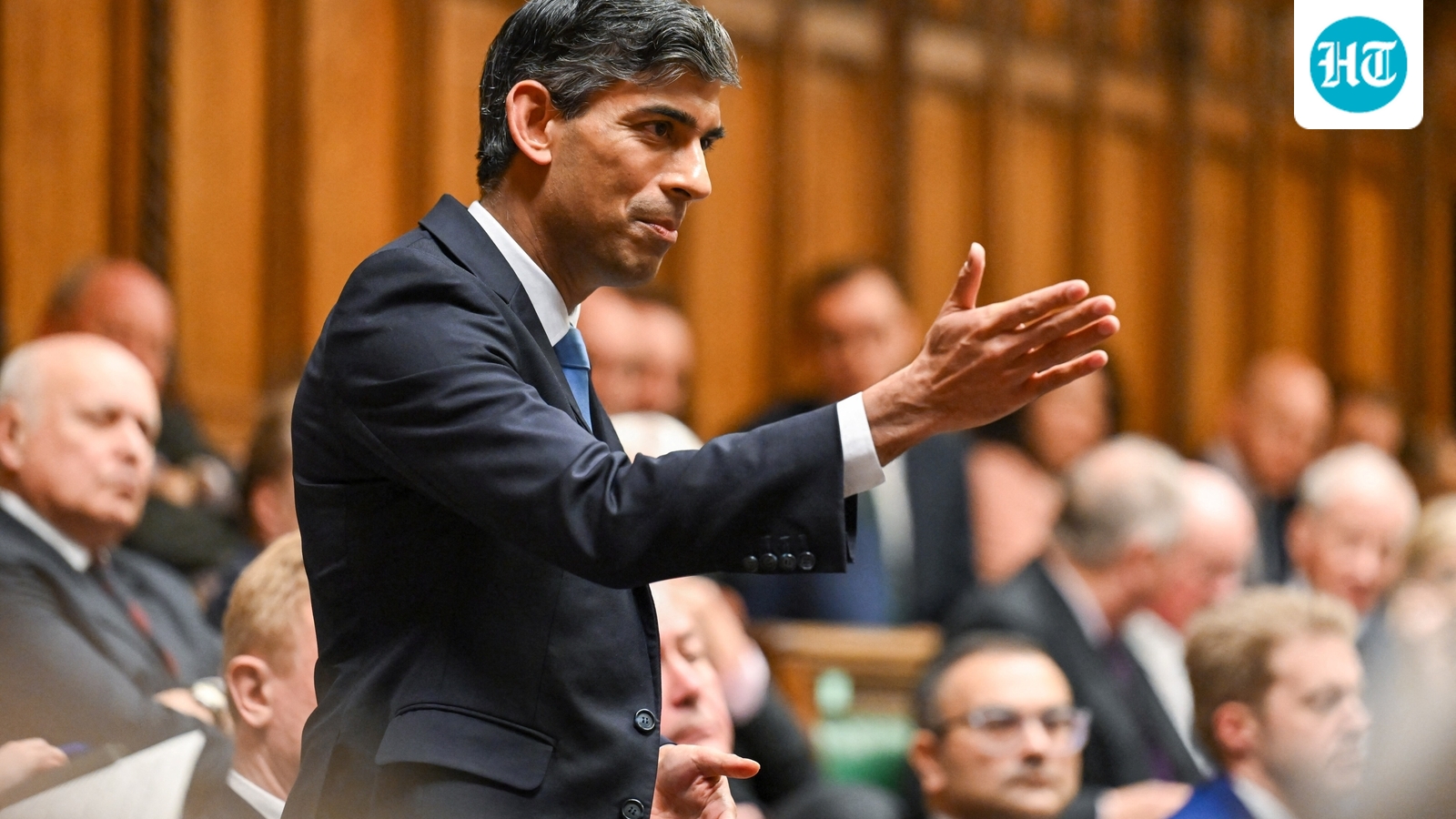
Former UK Prime Minister Rishi Sunak said on Tuesday that India and Gulf nations now chart their own course. Speaking at the Bloomberg New Economy Forum 2026, he noted these countries do not always agree with the US or China. He added, "They're going to do what they want."
Former UK Prime Minister Rishi Sunak on Tuesday pointed to the growing ability to pursue independent foreign policy choices by India's and countries in West Asia, saying they would not necessarily align with the United States or China as the global balance of power evolves.
Speaking at the Bloomberg New Economy Forum 2026 in New Delhi, during a panel discussion titled 'The End of Predictability', Sunak said the international economic order was undergoing a fundamental shift, with the decline of the multilateral, rules-based system creating greater geopolitical uncertainty and risks.
"We all grew up investing in, operating in a multilateral rules-based framework, largely enforced by US President Trump is not a cause for that; he's a symptom of that, and the world that we're in now is one where we don't quite know what we've settled down to, and that creates an enormous amount of geopolitical uncertainty and indeed danger," Sunak said, as quoted by news agency ANI.
He identified China's rise as a strategic rival to the US across economic, military and technological spheres as another major development reshaping the global landscape.
"So, China is a peer competitor for the US across economic, military, and technological domains. That is a new feature of the world economy," he said.
Against this backdrop, Sunak said countries such as India and those in West Asia were increasingly in a position to make decisions independently, guided by their own priorities rather than automatically siding with either of the world's two major powers.
"Countries like India, like the Gulf, now are able to chart their own course. They're not going to always agree with the US or China. They're going to do what they want, and that's a new feature," the former UK prime minister said.
Sunak also spoke about the growing instability in the global security landscape and pointed to the rising number of armed conflicts worldwide and the risks they pose to international peace.
"And I think it's no coincidence that right now there are more armed conflicts happening than at any point since World War II. 61 different state-based armed conflicts around the world. Now I look at that, and I'm worried," Sunak said.
He also took a jibe at US President Donald Trump's approach to international diplomacy, saying that the latter "looks at that and thinks 61 opportunities to win the Nobel Peace Prize".
"But his deputy chief of staff said something instructive about the environment, and he said we are living in a world that is governed by force, that is governed by strength, that is governed by power," he added.
While cautioning that this view is a bit extremist, the former British prime minister argued that military capabilities and strategic strength were becoming more consequential. He also highlighted the growing convergence of economic interests, national security and technological advancement, warning of a combination of risks confronting countries.
"Now I think that kind of Puseyian worldview is probably a little bit extreme. It's not that bad, but we are certainly living in an environment where hard power matters, and states have realised that their economic security is indivisible from their national security and technological strength, which is creating a world I think of as unreachability. What we are talking about is a cocktail of risks. To think of it in those terms, there," he noted.
The discussion, titled "The End of Predictability", focused on leadership in a global economy increasingly marked by uncertainty, fragmentation and disruption.
The panel also included Tata Sons Chairman Natarajan Chandrasekaran and Blackstone President and Chief Operating Officer Jonathan Gray.
The Bloomberg New Economy Forum 2026 is taking place in New Delhi from October 13 to 15, with "A World in Play: Defining the New Levers of Power" as its theme.