
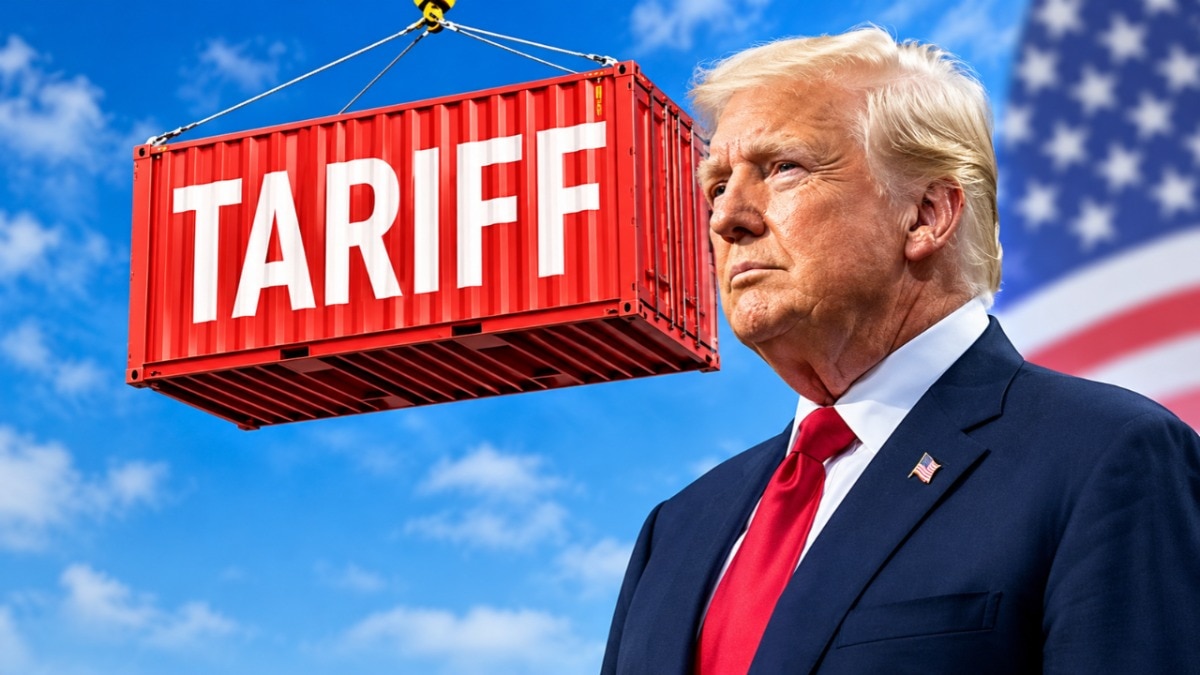
The Trump administration is preparing higher tariffs on India and 15 other major economies over industrial subsidies. This move follows a US investigation into foreign manufacturing support. Officials said the plan could affect many exported products. The timing remains delicate as New Delhi and Washington still negotiate a trade deal.
The Trump administration is preparing higher tariffs on India and 15 other major economies over industrial subsidies. The timing for this development is especially delicate in view of the fact that New Delhi and Washington are still trying to negotiate their bilateral trade deal.
India could face another round of tariff pressure from the US as President Donald Trump's administration prepares to impose higher tariffs on countries it accuses of supporting domestic industries through subsidies and other government assistance, according to a report by The Wall Street Journal.
The proposed tariff action is expected to cover China, India, Japan, South Korea, the European Union and several other major economies. It follows a months-long US investigation into industrial subsidies, which Washington argues give foreign manufacturers an unfair advantage over American companies by allowing them to produce goods cheaply and flood international markets.
US Trade Representative Jamieson Greer is expected to announce the findings of the investigation as early as this week, people familiar with the plans told The Journal. However, they cautioned that the timeline could change.
The timing for this development is especially delicate in view of the fact that New Delhi and Washington are still trying to negotiate their bilateral trade deal. The deal is being delayed by the alteration in US tariffs policy after a Supreme Court ruling.
WHY THE US IS TARGETING INDIA AND OTHER COUNTRIES
The crux of the proposed action regarding tariffs lies in the charge by Washington that some countries are manufacturing more industrial products than they need domestically, with government assistance ensuring lower prices for their businesses.
In simple terms, the US believes that subsidies, financial assistance and other policy support allow foreign manufacturers to produce goods at low costs. These companies can then sell their products at competitive prices in international markets, making it harder for American manufacturers to compete. The Trump administration claims that this creates an uneven playing field for US businesses and weakens domestic manufacturing.
The investigation covers China, the European Union and 14 other countries. The expected announcement could translate into higher import duties on products coming from these economies, potentially affecting a wide range of industries.
According to The Wall Street Journal, the proposed tariffs will cover most products exported by the targeted economies. However, some industrial goods, including steel, aluminium and automobiles, are likely to be excluded because they are already subject to separate tariffs imposed on national security grounds.
WHAT TARIFFS COULD INDIA FACE?
The final tariff rates have not yet been established. However, US officials have repeatedly indicated that the administration wants to impose duties comparable to those introduced by Trump in 2025, before the US Supreme Court struck down his earlier round of tariffs in February 2026.
The impact is unlikely to be uniform across all countries. Japan, the European Union and South Korea, which had negotiated trade arrangements with the Trump administration, are expected to face tariffs of 15 per cent or lower, according to people familiar with the plans.
The tariffs on India and Vietnam might be comparatively high due to the conditions of their separate agreements with the US government. However, the tariffs on China are expected to be especially high because the subsidies in China are numerous and highly disruptive, according to the representatives of the Trump administration.
The administration is also considering provisions that could allow Washington to raise duties further if a country's industrial overcapacity increases or if it fails to make policy changes during future negotiations.
WHY THE INDIA-US TRADE DEAL IS STILL ON HOLD
The proposed tariff action could further complicate India's efforts to conclude a trade agreement with the US. The two countries announced an interim trade framework on February 7, 2026. Under the arrangement, Washington had agreed to reduce its reciprocal tariff on Indian goods from 25 per cent to 18 per cent and withdraw another 25 per cent penalty tariff imposed over India's purchases of Russian oil.
However, the agreement ran into uncertainty later that month when the US Supreme Court struck down the reciprocal tariffs imposed under the International Emergency Economic Powers Act (IEEPA). That ruling forced Washington to reconsider its tariff arrangements and develop a new framework for duties on imports from different countries.
Commerce Secretary Rajesh Agrawal explained on November 18 that India and the US could not formally sign their proposed trade agreement until the new American tariff structure was established. Speaking at a Federation of Indian Chambers of Commerce and Industry (FICCI) event, Agrawal said the original trade framework had been negotiated against the backdrop of tariffs that were subsequently struck down by the US Supreme Court.
"The challenge that you need to appreciate is that the deal (framework for the first tranche of the bilateral trade agreement) was announced (in February) in the background of executive tariffs that were existing at that point of time. Those tariffs have been struck down by the Supreme Court there. Now a new tariff architecture is being created by the US," Agrawal said.
WHY SECTION 301 PROBE MATTERS FOR INDIA
There is another hurdle beyond the uncertainty surrounding the Supreme Court ruling.
The US is conducting investigations under Section 301 of the Trade Act of 1974, which allows Washington to examine trade practices it considers unfair and potentially impose additional duties in response. One of these investigations concerns industrial overcapacity and government subsidies. India is among the countries being examined, alongside several competing economies.
The findings could lead to fresh penalties on imports, making the outcome particularly important for countries negotiating trade agreements with Washington.
Agrawal said both sides wanted to conclude the negotiations quickly and that the legal agreement was in its final stages. However, he stressed that India needed clarity on the new US tariff structure and the outcome of the ongoing investigations before signing a deal.
"Until the tariff architecture comes back in place, signing of a deal, I think will take some time," he said.
"Every country will like to have a deal which gives them certainty around all the investigations that are going on. You cannot have a deal till there are uncertainties around multiple investigations that are going on," Agrawal said.
The proposed new duties could also be imposed alongside tariffs announced under a separate US action in July targeting economies that fail to block trade in goods produced using forced labour. That measure established additional tariffs ranging between 10 per cent and 12.5 per cent for a group of 60 economies. However, it is currently facing a legal challenge.