
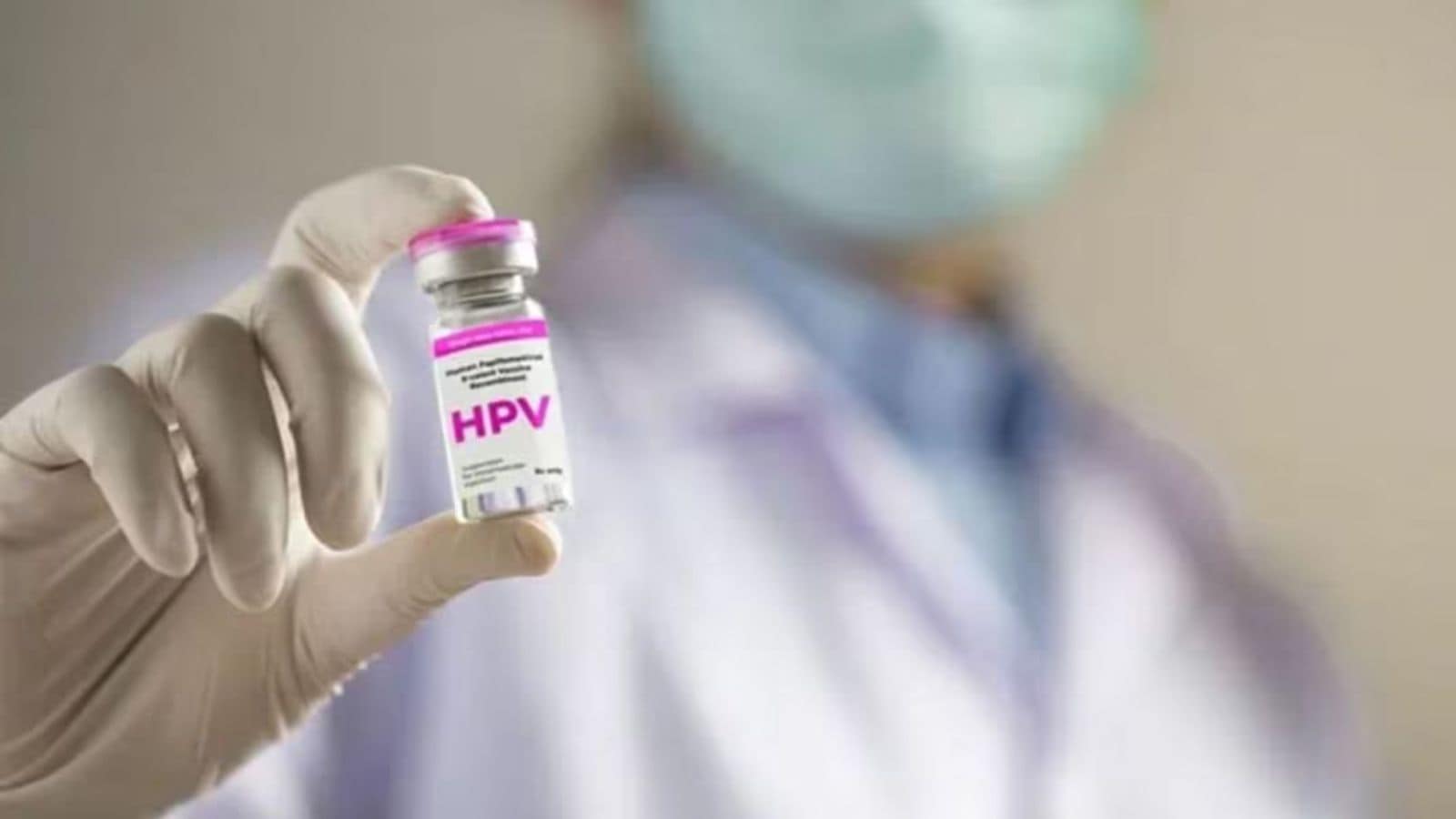
India administered over one crore HPV vaccine doses in nine months, reaching 87 per cent of eligible girls. The campaign, started by the Prime Minister on February 28, aims to prevent cervical cancer. Six states, including Gujarat and Uttar Pradesh, hit the 100 per cent mark in this nationwide immunisation drive.
India has administered more than one crore doses of the human papillomavirus (HPV) vaccine within nine months of launching its nationwide immunisation drive, reaching 87 per cent of all eligible girls, according to a government statement.
Rolled out by the Prime Minister on February 28, the campaign aims to immunise every 14-year-old girl in the country -- an estimated 1.2 crore beneficiaries each year -- to reduce the incidence of cervical cancer, which is primarily triggered by persistent HPV infection.
At least six states have achieved 100 per cent coverage -- Gujarat, Uttar Pradesh, Andhra Pradesh, Mizoram, Madhya Pradesh, and Bihar. Those with over 90% coverage include Telangana (95.28%), Karnataka (93.16%), and Uttarakhand (90.17%). States such as Chhattisgarh (86.21%) and Rajasthan (85.23%) have crossed the 80 per cent coverage mark, while Kerala (77.02%), Tamil Nadu (76.12%), Odisha (74.90%), and the Union Territory of Dadra and Nagar Haveli and Daman and Diu (72.99%) have achieved more than 70 per cent coverage.
In terms of absolute numbers, Uttar Pradesh leads the country with more than 29.33 lakh 14-year-old girls vaccinated, followed by Bihar with over 13.70 lakh and Gujarat with over 7.75 lakh girls vaccinated.
The campaign
The government launched the immunisation campaign with the well-established HPV vaccine Gardasil that protects against four of the most common strains of HPV -- HPV types 16, 18, 6 and 11. Importantly, the vaccine has been recommended as a single dose in women up to the age of 20 years by the World Health Organisation's (WHO) Strategic Advisory Group of Experts on Immunization in 2022. The advisory group found "strikingly high efficacy" with one dose among children between the ages of nine and 14.
The similar indigenously developed vaccine by the Serum Institute of India was not included in the campaign initially because it was yet to receive WHO pre-qualification and approval as a single-dose vaccine. The vaccine is likely to be included in the programme after two years, after the current stock has been used.
Persistent HPV infection is known to cause over 85 per cent of all cervical cancers. Cervical cancer is the second most common type of cancer among women, affecting over 79,000 people and killing 36,319, as per Globocan 2024 data.