
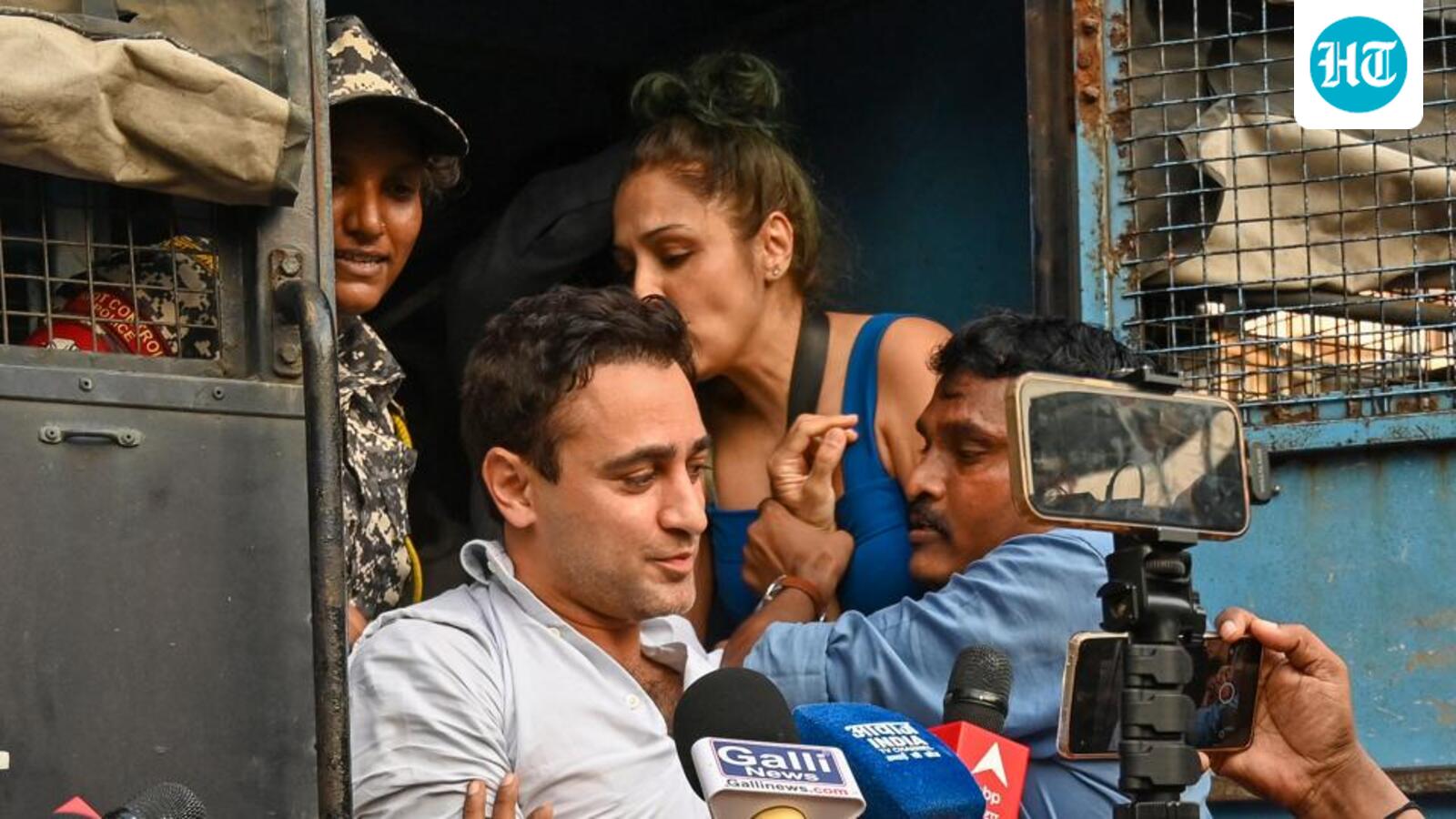
The Bombay High Court put the "Leave India Notice" issued to actor Imran Khan on hold until November 2. The FRRO assured the court that the US citizen will not be asked to exit India by October 28. "We are giving assurance as we are only seeking time," officials said.
Mumbai: The Bombay High Court on Tuesday placed the "Leave India Notice" issued to actor Imran Khan for allegedly participating in a political protest on hold until November 2, after the Foreigners Regional Registration Office (FRRO) sought more time and assured the court that the US citizen would not be asked to exit the country by the original October 28 deadline.
The FRRO requested an adjournment because solicitor general Tushar Mehta, who was supposed to argue the matter, was unavailable to appear in court on Tuesday.
A division bench of chief justice Mahesh Chandra Tripathi and justice Advait Sethna then posted the matter for hearing on November 2 after additional solicitor general Anil Singh assured the court that no coercive action would be taken against Khan for the time being. "We are giving assurance as we are only seeking time," he said.
The court was hearing a petition filed by Khan, an Overseas Citizen of India (OCI) cardholder, challenging the FRRO's Leave India Notice issued to him on October 15. The notice followed his detention by the police during a youth-led protest near August Kranti Maidan in Mumbai on October 10, demanding the resignation of chief election commissioner Gyanesh Kumar over alleged electoral roll irregularities. The notice invoked sections of the Immigration and Foreigners Act, which empower authorities to restrict the movement or presence of foreign nationals in India.
Khan has, however, denied violating the rules, saying no agitation was underway when he reached the spot and that he did not cross the police barricades to enter the protest site. He said he was apprehended after media personnel surrounded him while he was returning to his vehicle. He also contended that the notice did not specify the provision he had allegedly breached.
The actor has argued that OCI cardholders belong to a distinct statutory category and that the action against him was disproportionate, considering he has lived in India for more than four decades.