
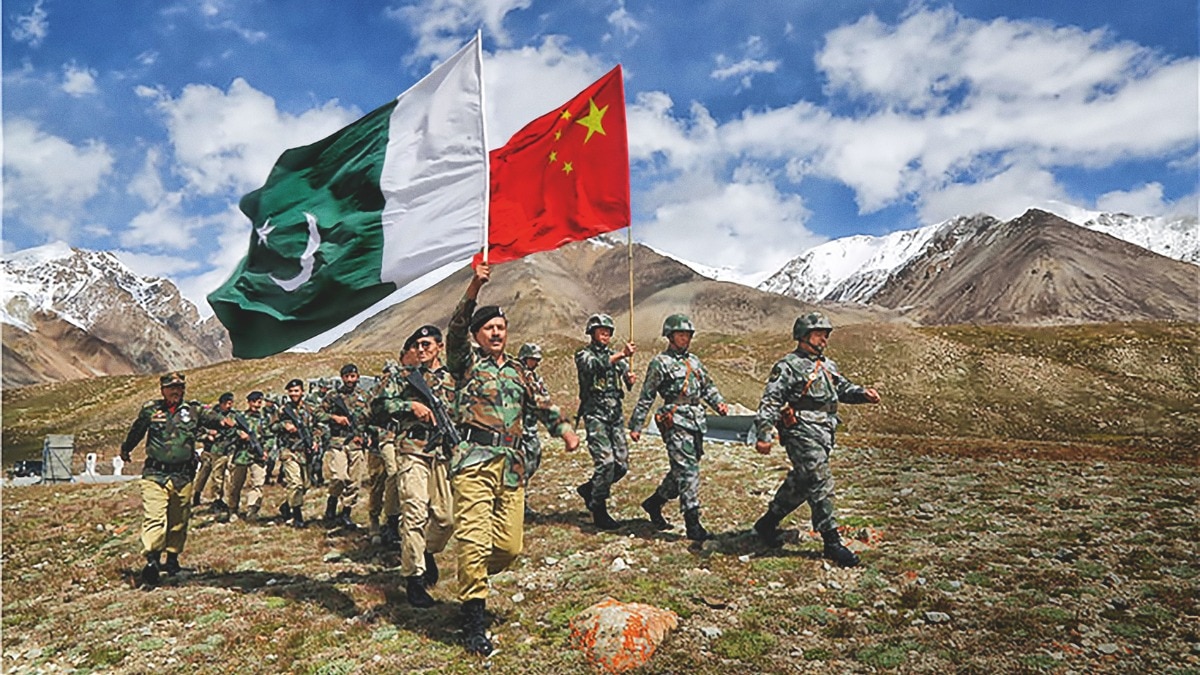
China and Pakistan will hold their first joint army exercise, Karakoram 2026, in Xinjiang during mid-to-late October. The drills focus on counter-terrorism in high-altitude terrain. A military analyst said, "Joint training in this environment allows the two forces to practise procedures, communications and coordination in terrain that shares some characteristics."
China and Pakistan are set to conduct their first joint regular army exercise, codenamed Karakoram 2026, in the Korla area of China's Xinjiang Uygur Autonomous Region in mid-to-late October. Announced by a Chinese Ministry of National Defence spokesperson on October 10, the drills will focus on joint counter-terrorism operations in high-altitude terrain, including training in unmanned aerial vehicle operations, on-the-move target search and firing, long-range sniping, joint command procedures and live-force exercises.
Chinese officials describe the activity as a means of deepening bilateral cooperation and strengthening interoperability against terrorist threats. For India, the exercise carries broader strategic weight. It expands an already extensive military partnership between two neighbours with whom New Delhi has unresolved territorial disputes, placing additional pressure on India's two-front security calculus along its western and northern borders.
China and Pakistan have long maintained close defence ties that go well beyond occasional exercises. The relationship encompasses the supply of fighter aircraft, missiles, air defence systems, armoured vehicles and naval platforms, as well as an established series of drills such as the Shaheen air exercises and the Sea Guardians naval exercises.
Military observers pointed out that Karakoram 2026 marks a further step by bringing regular army units into the pattern of joint training for the first time. The choice of location, too, is notable. Xinjiang borders Pakistan-administered territory in the northern reaches of the subcontinent and lies close to the China-Pakistan Economic Corridor, a flagship element of Beijing's Belt and Road Initiative.
"Joint training in this environment allows the two forces to practise procedures, communications and coordination in terrain that shares some characteristics with the high-altitude regions that form part of India's strategic periphery," says a key military analyst. New Delhi, therefore, must assess the development within the larger context of the unresolved China-India boundary dispute and Pakistan's postures along the Line of Control and the international border.
The timing of the exercise coincides with a fresh diplomatic exchange over Ladakh. On October 2, India's Ministry of Home Affairs, in consultation with the Union Territory administration and local stakeholders, formally identified and standardised the names of 28 places and geographical features in Ladakh on the official Survey of India map. The list includes several locations along the Line of Actual Control, among them Gogra and Hot Spring. On October 13, Chinese foreign ministry spokesperson Mao Ning rejected the move, stating that China has never recognised the "so-called Union Territory of Ladakh" that India unilaterally and illegally established, describing the naming exercise as illegal and invalid, and asserting that the relevant areas in the western sector of the China-India boundary have always belonged to China.
India responded the same day through Ministry of External Affairs spokesperson Randhir Jaiswal, who reiterated that the Union Territory of Ladakh was an integral and inalienable part of India, and that no amount of denial by the Chinese side could change this established fact. The naming, he added, was undertaken to facilitate accurate recognition of the locations and improve public awareness.
India's concern does not rest on the mere fact of another exercise. It rests on the cumulative effect of deepening military interoperability between China and Pakistan. Closer familiarity with each other's equipment, command systems and operational methods could, in a crisis, improve the speed and coherence of coordinated responses. Pakistan's armed forces already rely heavily on Chinese-origin platforms even as China's military modernisation continues at pace. "Regular army exercises add another layer of practical experience that could influence how the two militaries might operate if tensions rose simultaneously on India's western and northern fronts," another military analyst said.
At the same time, it is important to maintain a clear distinction between strategic vigilance and unsupported assumptions. There is no publicly available evidence that Karakoram 2026 is designed to test Chinese weapons systems on Pakistan's behalf or that Islamabad is financing experimental evaluation of Chinese equipment. Such claims require concrete substantiation rather than inference. The exercise is officially framed around counter-terrorism, and the activities listed by Chinese officials -- drone operations, mobile firing, long-range precision shooting and joint command -- align with that stated purpose. India can and should monitor the drills closely for indicators of improved coordination, new tactical approaches or logistical practices, but it should avoid treating the exercise itself as proof of imminent joint offensive planning against India.
The performance of Chinese defence equipment supplied to Pakistan remains a subject of legitimate analytical interest. China has become a major global arms exporter, and Pakistan is one of its most significant customers. Systems such as the PL-15E air-to-air missile and the HQ-9 air defence system have featured in public discussions following regional confrontations, while older Chinese-origin tanks and newer platforms such as the Type-15 light tank continue to attract scrutiny regarding their effectiveness in modern combat environments characterised by precision munitions, drones and electronic warfare.
Promotional claims and fragmentary reports of individual engagements, however, do not, by themselves, establish overall capability or failure. Actual battlefield performance depends on a complex mix of factors, including maintenance standards, operator training, sensor integration, ammunition quality, command networks and the specific conditions of any engagement. India's armed forces, therefore, need evidence-based assessments of these systems' real strengths and limitations, rather than either exaggerated threat narratives or dismissive underestimation.
Pakistan's growing dependence on Chinese military technology carries long-term implications. Access to advanced platforms has expanded Islamabad's options, but it also creates ongoing requirements for spare parts, technical support, upgrades, training and ammunition that reinforce reliance on the original supplier. Over time, such dependence can constrain a country's strategic flexibility, particularly if alternative sources of critical components or expertise are limited.
For China, the relationship offers a stable market for its defence industry and a deeper strategic foothold in South Asia. For India, the evolution of this supplier-recipient dynamic is relevant because it shapes the capabilities and sustainability of Pakistan's military modernisation and the degree of interoperability that joint exercises can realistically achieve.
The location of the exercise also draws attention to the wider context of Xinjiang. Beijing presents its security policies in the region as necessary measures against terrorism and separatism. However, the United Nations human rights office's 2022 assessment raised serious concerns about alleged arbitrary detention, restrictions on religious and cultural practices, and other violations affecting Uyghurs and other predominantly Muslim communities. Holding a joint counter-terrorism exercise in this environment inevitably invites questions about how security cooperation is defined and whether it risks conflating genuine terrorist threats with broader forms of dissent or cultural expression.
Counter-terrorism remains a legitimate shared interest for China and Pakistan, particularly given attacks that have targeted Chinese personnel and projects in Pakistan. Yet international security partnerships should be judged not only by their declared objectives but also by their practical effects and consistency with human rights obligations. The exercise itself neither validates nor resolves the outstanding concerns surrounding Xinjiang.
For India's defence planners, Karakoram 2026 is best treated as a development that warrants careful observation rather than as an immediate crisis. Useful indicators would include the degree of sophistication shown in joint command and control, the integration of drones and other emerging technologies, any visible improvements in logistical sustainment, and whether the drills are accompanied by new bilateral agreements on equipment, maintenance or training. These concrete observations will provide a firmer foundation for assessment than speculation about hidden intentions.
In parallel, India must continue to strengthen its own preparedness across multiple domains. Investment in indigenous defence production, multi-layered air defence, counter-drone systems, electronic warfare, intelligence and surveillance capabilities, and resilient logistics remains essential. Cooperation among public-sector research organisations, private industry and the armed forces will be critical to reducing external vulnerabilities and accelerating technological adaptation.
Diplomatic engagement and credible conventional deterrence should continue to operate as complementary instruments. India's response to the expanding China-Pakistan defence relationship will be most effective if it rests on sustained military modernisation, independent intelligence analysis and a realistic understanding of both the opportunities and the limits of that partnership. Karakoram 2026 signals a further institutionalisation of military cooperation between Beijing and Islamabad. The central question for New Delhi is not the official label of counter-terrorism attached to the exercise, but whether the cumulative growth of interoperability, shared experience and equipment commonality will eventually alter the operational calculus India must prepare for on its western and northern frontiers. Clear-eyed observation, evidence-based evaluation and steady investment in national capabilities offer the most reliable path forward.