
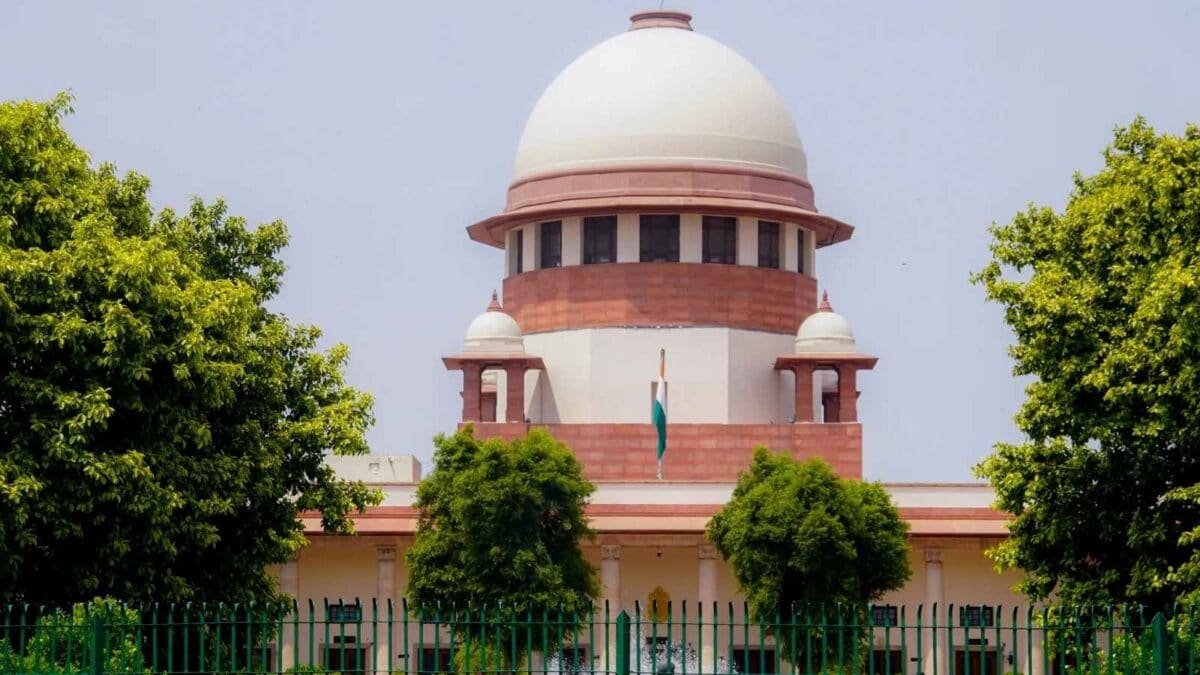
The Supreme Court on Tuesday slammed the Centre over high medicine prices and hospital costs. The bench said, “Hospitals can survive through other means, not through this dacoity.” Judges questioned why drug prices remain so high and asked the government to explain the wide gaps in current price control measures.
The apex court further questioned the government's mechanism for regulating drug prices and asked why medicines with substantial markups remain outside price-control measures.
The Supreme Court on Tuesday came down heavily on the Centre over exorbitant hospital charges and medicine pricing, questioning whether healthcare institutions could justify steep costs in the name of maintaining infrastructure and profitability.
Hearing a plea on high medical expenses, the apex court said, “Hospitals can survive through other means, not through this dacoity", while expressing concern over the financial burden on patients.
It also questioned the commercial approach to healthcare, asking, “Should we have such capitalistic thinking when it comes to patients and life?"
The bench scrutinised the Centre’s submission that medicine price controls are being regularly reviewed, stating, “Your calibration is too wayward". Referring to the price variation in a cancer injection, the court observed, “Rs 11,000 to Rs 1.30 lakh is no calibration", and sought an explanation for such wide disparities.
The court also highlighted the unequal relationship between hospitals and patients, noting that “Patients don’t have any bargaining power". The apex court further questioned the government’s mechanism for regulating drug prices and asked why medicines with substantial markups remain outside price-control measures.
Raising concerns over the pharmaceutical supply chain, the bench asked, “Why is a medicine with Rs 100 MRP sold to retailers for Rs 10 or Rs 20?" It also questioned the effectiveness of the 30% trade margin cap on cancer drugs, observing that the cap applies to the MRP rather than the price at which retailers procure the medicines.
During the hearing, the court also flagged around Rs 8,000 crore in pending recoveries from drug manufacturers linked to pricing differences.
The Centre argued that complete control of healthcare pricing may not be the solution. After hearing submissions from all sides, the Supreme Court reserved its order on the plea concerning hospital charges and medicine pricing.