
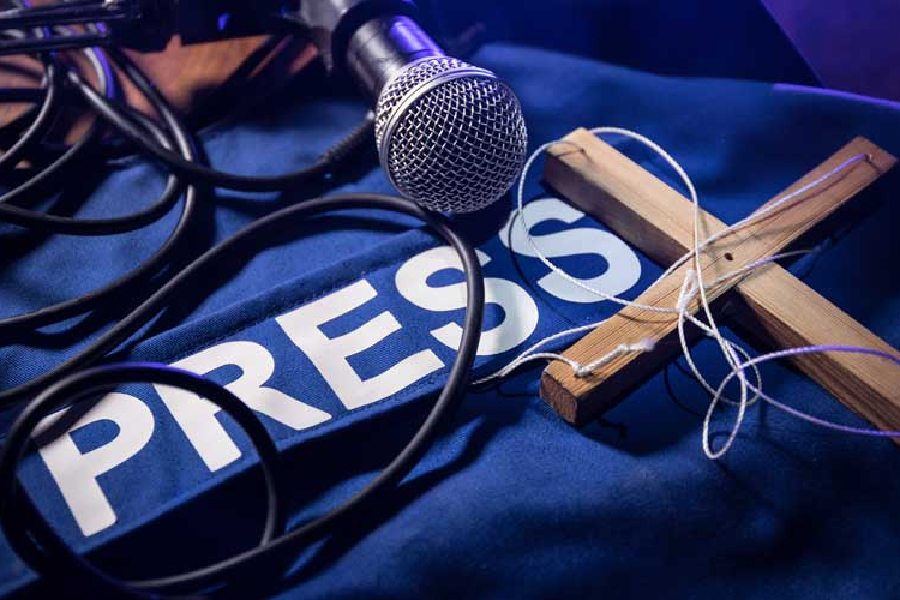
The Press Council of India issued new guidelines on Thursday to help journalists cover protests safely. The council said, "Do not participate in demonstrations, take sides, provoke confrontations, or interfere with protesters." Reporters should carry ID cards and maintain neutrality. Media houses must also coordinate with police to ensure safety.
The Press Council of India has issued detailed guidelines "to facilitate the orderly and effective coverage of protests and demonstrations" with emphasis on safety and professionalism in view of the prevailing scenario where the Opposition has indicated that protests will continue.
The guidelines that seek to "facilitate the effective discharge of journalistic duties while promoting the safety of media personnel, responsible reporting and better coordination among journalists, media organisations and law enforcement authorities" were adopted at a meeting of the council on Wednesday and issued on Thursday in view of the number of mediapersons detained during last weekend's protests in New Delhi.
Apart from advising mediapersons to carry their ID cards and display them at all times, the council urged journalists to maintain neutrality and professionalism. "Do not participate in demonstrations, take sides, provoke confrontations, or interfere with protesters, counter-protesters, or police. Remain respectful, follow police orders, avoid arguments during tense situations, and comply with lawful instructions, particularly those issued for immediate safety reasons, while calmly asserting your Press status when necessary."
Apart from detentions, the last few days have also seen some mediapersons -- particularly from the electronic media given their visibility -- get heckled while covering the protests. Advising mediapersons to maintain a safe distance from the protesters, the guidelines underscore the need to report events accurately, objectively and impartially. "Distinguish verified facts from allegations, opinions and unconfirmed claims. Follow the applicable Norms Journalistic Conduct on Accuracy and Fairness," the council said.
Newsrooms have been advised to designate a point of contact to monitor journalists' locations and respond to emergencies. "Freelancers should ensure that a trusted editor or contact knows their location, assignment plan and expected return time. Look out for fellow journalists, particularly when working alone, and communicate with colleagues whenever feasible. For planned demonstrations, media organisations should coordinate with designated police and public information officers or press liaisons to clarify communication protocols and identify any designated media staging areas," the council added.