
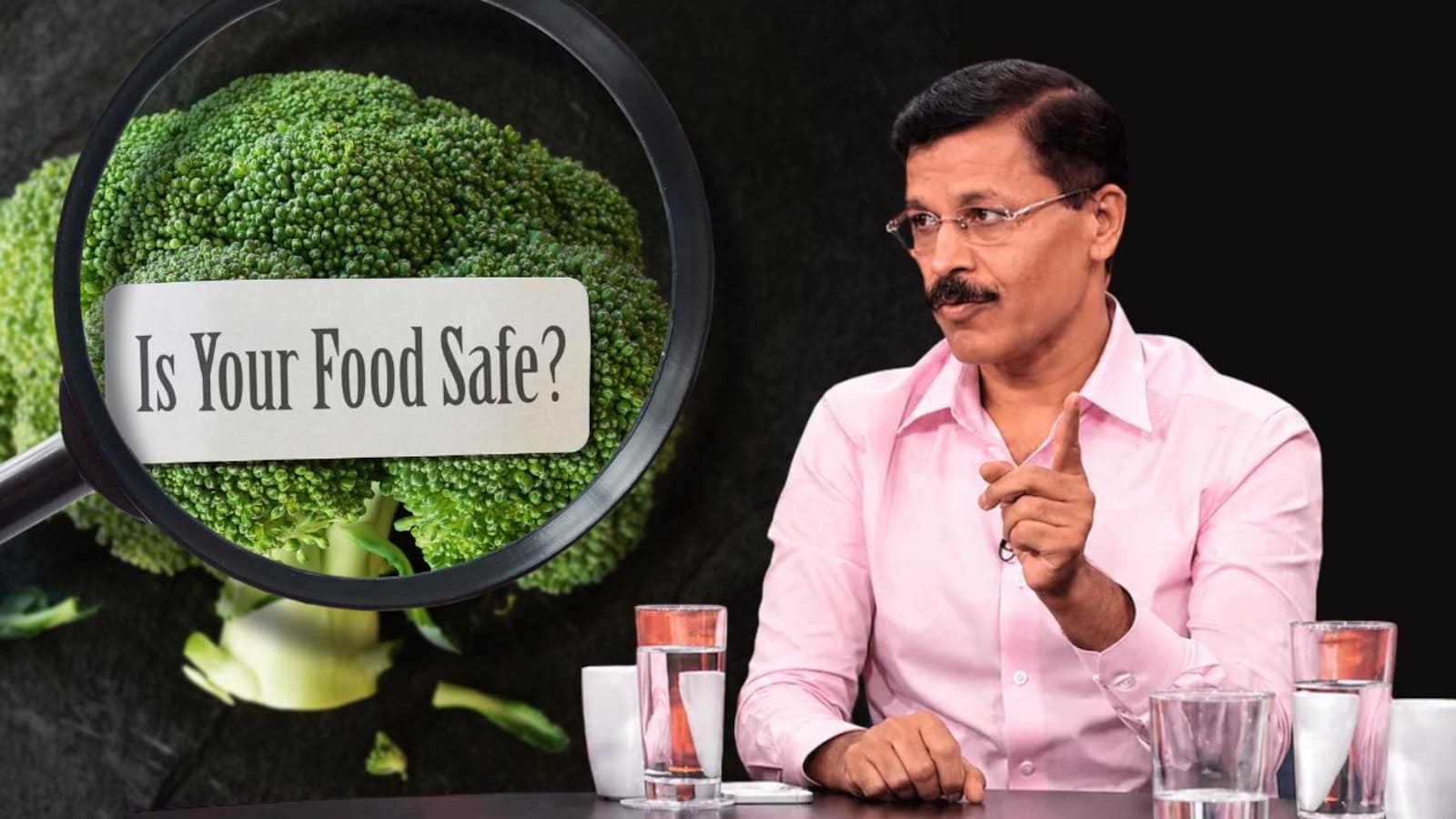
On World Food Day 2026, Tukaram Mundhe said India needs better food traceability to ensure safety. In 2024-25, over 34,000 food samples failed quality tests. Simple digital records for traders can help track batches quickly. This shift helps authorities isolate bad products and builds consumer trust in the food they buy.
The theme of World Food Day 2026, "Innovate Today. Nourish Tomorrow", invites us to think beyond new products and technologies towards the changes needed to make our food system safer, more reliable and more accountable. One of the most valuable innovations India can adopt is routine traceability, from farm to plate.
A large part of the food Indians consume moves through informal and semi-formal channels, including loose milk, spices, edible oil, fruits and vegetables, and sweets. When something goes wrong, identifying the source can take days or weeks of investigation. By then, the product may already have been consumed. Nationally, of more than 1.7 lakh food samples analysed in 2024-25, 34,388, or roughly one in five, did not conform to standards. Every such finding is only as useful as our ability to trace the affected batch.
The next step is to connect licences with invoices, batch numbers and dispatch records through simple digital systems. These must be practical for small traders. A mobile-based record of whom a trader bought from and to whom the product was sold can be enough to establish a traceable chain.
The benefits extend beyond enforcement. When a sample fails, authorities can isolate the affected batch within hours instead of seizing everything in sight. Honest businesses can demonstrate the quality of their supplies, making good practices a market advantage. Consumers, in turn, gain confidence from knowing that the food they buy has a verifiable history. Traceability is how we turn food safety from reactive policing into prevention.
Making Food Accessible Without Compromising Safety
Photo: Pexels
Access and safety are not competing goals. Unsafe food is not truly accessible food. When food is cheap but unsafe, the cost is merely deferred. It returns in the form of hospital expenses, lost workdays, compromised children's nutrition and diminished public trust.
The numbers are stark. The World Health Organization's 2026 estimates put the global burden of unsafe food at approximately 866 million illnesses and 1.5 million deaths every year. Children under five account for about 9% of the world's population but bear nearly one-third of foodborne illnesses.
In India, the Food Safety and Standards Authority of India (FSSAI) has estimated approximately 10 crore (100 million) cases of foodborne illness annually, at a cost of about US$15 billion, with cases projected to rise to 15 to 17.7 crore by 2030. The World Bank has estimated that unsafe food costs low- and middle-income countries approximately US$110 billion annually in lost productivity and medical expenses.
Food security and food safety must therefore be pursued together, with action across five key areas.
First, small food businesses must be strengthened. Most food in India is sold by small vendors, dhabas, sweet shops and dairies. Many fail to meet safety requirements not out of malice, but because they lack knowledge, clean water, cold storage or training. FSSAI's Food Safety Training and Certification (FoSTaC) programme, the Clean Street Food Hub and Eat Right India initiatives, along with the improvement notice mechanism under Section 32 of the Food Safety and Standards Act, give businesses a fair opportunity to correct deficiencies. Enforcement must be firm, but it must also be fair.
Second, public meal programmes must be held to the highest standards. Mid-Day Meal (PM POSHAN) kitchens, anganwadi take-home rations, tribal ashram schools and hostel canteens feed children and other vulnerable groups who have no choice about what they eat. Their kitchens, caterers and suppliers must be licensed, inspected and sampled with the same seriousness as any commercial unit. Initiatives such as Eat Right School and Eat Right Campus can help build a culture of food safety within these institutions.
Third, surplus food must be redistributed safely. According to the United Nations Environment Programme's Food Waste Index 2024, Indian households waste approximately 55 kg of food per person every year, amounting to nearly 7.8 crore tonnes nationally. Reducing this waste is a moral imperative, but redistributed food must also be safe. The Food Safety and Standards (Recovery and Distribution of Surplus Food) Regulations, 2019, establish how surplus food can be collected, stored and served by registered organisations. Goodwill must be matched by proper handling.
Fourth, food testing must be brought closer to people. Mobile food testing units such as Food Safety on Wheels, rapid test kits and stronger state laboratories can make quality checks more affordable and visible to vendors and consumers alike.
Finally, act decisively when food is unsafe. Guidance is the first tool, but food found to be unsafe must be removed from the market without delay. Lenient treatment of unsafe food is never a service to the poor.
Yet, the food safety risks that worry this author most are those consumers cannot see, smell or taste. News coverage naturally focuses on visible problems: a dirty kitchen, cockroaches or a viral video. These matter, but the risks that concern regulators most are often invisible.
The WHO's 2026 estimates found that chemical contaminants caused nearly three-quarters, or approximately 73%, of all deaths from unsafe food in 2021. Three categories of risk demand action.
The first is organised adulteration of everyday staples. Milk, paneer, khoya, ghee, edible oil and spices are consumed by households across the country. Organised networks that adulterate these products, sometimes producing synthetic milk from chemicals, can affect lakhs of people before anyone notices.
In 2025-26, of 39,351 milk and dairy samples tested across the country, 14,668, or 37.3%, were found to be non-conforming, according to provisional figures placed before Parliament.
Not all these samples were unsafe; many failed on quality parameters such as fat or solids-not-fat (SNF). But the scale of non-conformity underlines why dairy products require constant vigilance.
The second risk is the artificial ripening of fruit. The use of calcium carbide to ripen fruit is prohibited under the Food Safety and Standards (Prohibition and Restrictions on Sales) Regulations, 2011, yet it persists. Permitted ripening agents can also be misused. Fruit ripened this way can look perfectly normal on the shelf.
The third category comprises residues and contaminants. Pesticide residues on fruits and vegetables, antibiotic residues in milk and poultry, and naturally occurring toxins such as aflatoxins in poorly stored grains and nuts are governed by the Contaminants, Toxins and Residues Regulations, 2011. Exceeding the limit may not cause immediate illness. But their effects can be chronic and cumulative. Antibiotic residues contribute to antimicrobial resistance, which is one of the most serious public health threats of our time. A study published in The Lancet estimated that bacterial antimicrobial resistance was directly responsible for 12.7 lakh (1.27 million) deaths worldwide in 2019.
These hazards receive less attention for several reasons. For one, there is rarely an immediate, visible victim, making it difficult to link an illness years later to a particular food. Detection requires laboratory analysis rather than visual inspection. And the offenders are often well-organised, operating across districts and states.
In Maharashtra, for example, we are strengthening laboratory capacity, conducting intelligence-led and surveillance-based sampling, and running focused statewide drives on high-risk commodities, particularly during festivals. We coordinate with the police, other states and FSSAI to dismantle adulteration networks at their source. Invisible risks demand that regulators look further than consumers can.
Then Comes Eating Out
Photo: Pexels
Hygiene is only the visible tip of the iceberg. Food safety depends on the entire chain, from the purchase of ingredients to the plate. Our inspections have consistently pointed to risks that diners rarely consider.
For instance, untraceable raw materials can pose a serious problem. Ingredients are often purchased loose, without invoices, from unlicensed suppliers. If the paneer, khoya or oil is adulterated, even the best kitchen cannot make it safe.
Improper storage of dairy products, meat and seafood is another concern. These foods require cold-chain conditions that are often missing during transport and storage. Water used for cooking and drinking, as well as ice used in beverages, is also frequently untested.
Inside the kitchen, the repeated reuse of frying oil is a significant risk. Repeated heating degrades oil and produces harmful compounds. FSSAI has prescribed a limit of 25% Total Polar Compounds, beyond which the oil must be discarded. Under the Repurpose Used Cooking Oil (RUCO) initiative, used oil can be diverted for biodiesel production instead of returning to the food chain. FSSAI has estimated that approximately 220 crore litres of used cooking oil could be recovered for this purpose.
Temperature abuse is another common concern. Cooked food left at room temperature for hours, along with overloaded or malfunctioning refrigerators, creates conditions in which bacteria can multiply. Cross-contamination between raw and cooked food can occur through shared chopping boards, knives or storage areas. Non-permitted synthetic colours may also be used in gravies, sweets, snacks and beverages.
Food handlers who have not received proper training or obtained medical fitness certificates present an additional risk. Schedule 4 of the licensing regulations makes both requirements part of food safety compliance.
Risks do not end when food leaves the kitchen. Online delivery and cloud kitchens introduce additional handling and transport stages that consumers cannot see. Platforms must ensure that only licensed businesses are listed. Unsuitable packaging is another concern: hot food packed in non-food-grade plastic or wrapped in newspaper can be exposed to contaminants, as printing ink may transfer into food. Undeclared allergens are also a serious problem, as diners are rarely told everything a dish contains.
Initiatives such as Hygiene Rating and Eat Right Station encourage eating places to display their standards openly. A clean dining area is reassuring, but genuine safety is built behind the counter and throughout the supply chain.
How Maharashtra FDA Traces Adulterated Food
In Maharashtra, the Food and Drug Administration (FDA) follows a structured, evidence-led process to trace adulterated products from the shop shelf back to their source.
The process begins with the product itself. Its label carries the manufacturer's name, batch or lot number, date of manufacture and FSSAI licence number. A check on the Food Safety Compliance System (FoSCoS) helps establish who holds the licence, where the unit is located and which authority issued the licence.
The next step is to follow the records. Every licensed food business must maintain purchase and sale records. Food Safety Officers examine the retailer's purchase invoice to identify the distributor or wholesaler, then examine the distributor's records to identify the manufacturer or packer. The manufacturer's raw-material, production and dispatch records reveal where the inputs originated and where else the same batch was sent.
Samples are then drawn according to the statutory procedure and sent to accredited laboratories for analysis. The results establish whether the food is unsafe, substandard or misbranded, determining the action required. Nationally, 31,407 legal cases were launched in 2024-25 on the basis of non-conforming samples.
Once a risk is identified, suspect stock can be seized under Section 38 of the Food Safety and Standards Act. Under Section 28 of the Act and the Food Safety and Standards (Food Recall Procedure) Regulations, 2017, the food business operator is responsible for recalling unsafe food from the market. Licences can also be suspended where the risk demands it.
Fixing liability requires examining every link in the supply chain. Section 27 of the Act sets out the responsibilities of manufacturers, distributors and retailers. A retailer who can produce a valid warranty from the supplier can pass responsibility up the chain. This is why maintaining proper records matters so much for honest traders.
Where the supply chain crosses district or state boundaries, the matter is referred to the Designated Officer or Food Safety Commissioner concerned and to FSSAI in the case of centrally licensed units and imported food.
Where there is evidence of deliberate, organised adulteration, we work with the police. Criminal provisions of the Bharatiya Nyaya Sanhita relating to adulteration of food and the sale of noxious food apply alongside the Food Safety and Standards Act. This enables investigations into the entire network, including financiers, chemical suppliers and transporters.
The objective is not merely to remove the stock found at one shop. It is to reach the source, prevent further exposure and ensure that those responsible face the full consequences of the law.
What Consumers Underestimate
The biggest risk is the belief that if food looks good and does not cause immediate illness, it must be safe.
Consumers often judge food by its appearance, smell or price. Bright colours, glossy fruit and a pleasant aroma prove nothing; adulterants and chemical ripening are designed to make products look attractive. Nationally, approximately one in five food samples analysed in 2024-25 did not meet standards, and many would have looked perfectly normal.
Prices that seem too good to be true should also raise questions. Milk, paneer, ghee, khoya or edible oil sold far below the market rate warrants caution because genuine ingredients have a real cost.
Labels are another source of misplaced confidence. Words such as "fresh", "desi", "natural" and "pure" are not guarantees of safety. Such claims are regulated under the Food Safety and Standards (Advertising and Claims) Regulations, 2018, while loose, unlabelled products carry little accountability.
Consumers should read labels carefully, checking the FSSAI licence number, manufacturing and expiry dates, and storage instructions. They should also understand the difference between "use by", which concerns safety, and "best before", which concerns quality. Allergen information is mandatory on labels and must be taken seriously.
Food handling at home can also turn safe food into unsafe food. Poor refrigeration, repeated reheating, keeping leftovers for too long and reusing frying oil in the household kitchen can all create risks. Street beverages, juices and golas made with untested water and ice are frequent causes of illness, particularly during summer and the monsoon.
Finally, consumers must recognise long-term risks. Residues, contaminants and adulterants rarely cause immediate illness, which is why people often dismiss them. Their effects can accumulate silently over years.
There are practical steps consumers can take. Buy from licensed or registered sellers and ask for a bill. If something seems wrong, retain the packaging and bill, and note the batch details. Complaints can be reported through FSSAI's Food Safety Connect app or to the FDA. A specific complaint helps officers trace a product to its source.
An informed and alert consumer is the regulator's strongest partner. Food safety is a shared responsibility of government, industry and every citizen.