
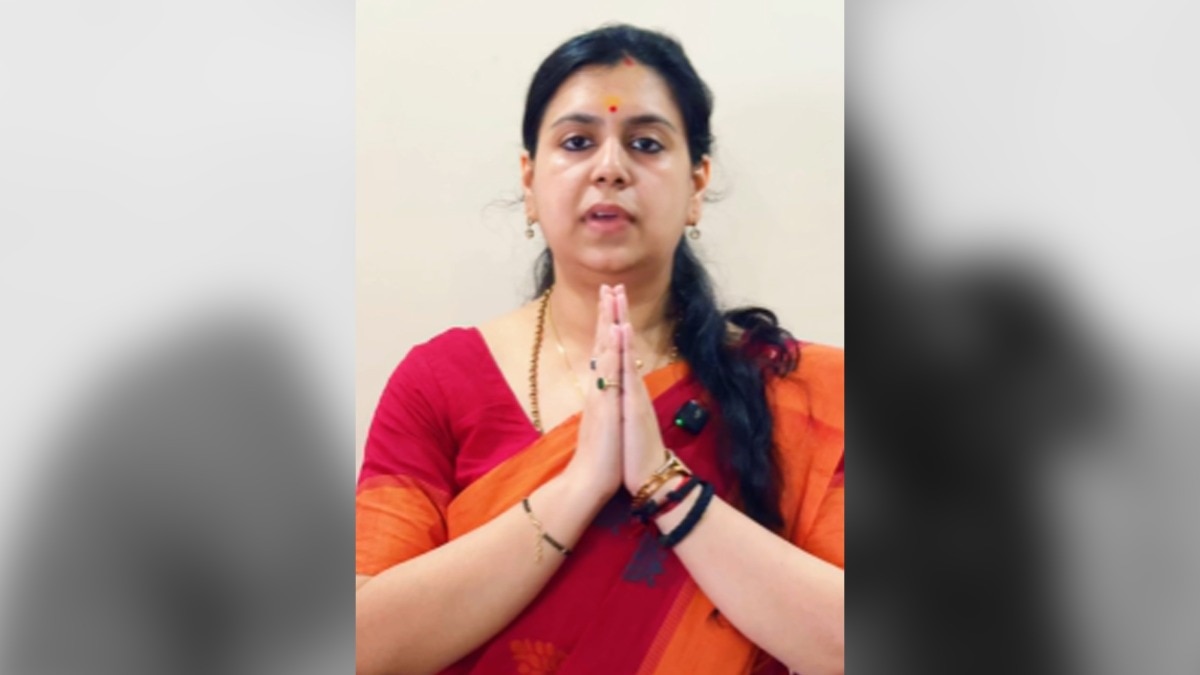
Former IAS officer Divya Mittal launched the Janniti Bharat Party on Thursday to contest the 2027 Uttar Pradesh Assembly elections. She resigned after a 13-year career to start this new political journey. Mittal said, “The shortage is not of parties, but of listening.” She wants people to shape government policies.
Former IAS officer Divya Mittal on Thursday launched her own political outfit, the Janniti Bharat Party, and announced that she would contest the 2027 Uttar Pradesh Assembly elections, promising a model of governance in which people would have a greater say in policymaking and hold the government accountable for its work.
In an eight-minute video message shared on X, Mittal, who resigned from the civil services and announced her entry into politics in September, said she decided to form a new party because the problem was not a lack of political outfits but a lack of willingness to listen to people.
“You will ask, is there a shortage of parties? The shortage is not of parties, but of listening,” she said, announcing the name of her outfit as Janniti Bharat.
“Politics rules you. In politics, you will rule,” she said, adding that the party would contest the 2027 Uttar Pradesh Assembly elections to ensure that the government functions according to people's wishes.
“It will fight so that the government can run according to you. Not just one day in five years, but at every step,” Mittal said.
The former Mirzapur district magistrate, who resigned from the civil services after a 13-year career, announced her entry into politics on September 29. She had earlier ruled out joining an existing political party and said she would publicly announce every step of her political journey.
MITTAL LISTS JANNITI BHARAT’S THREE PROMISES
In the video message, Mittal outlined her party’s three promises and said its first priority would be to put people at the centre of policymaking, with citizens determining their needs and experts helping find solutions.
“The public knows how the policies are made. They get to see it every day in their homes,” she said, citing the sacrifices parents make to secure their children's future.
“A mother eats less than her child, but fills her child's stomach. This is worry. A father cuts one hand in his field, but sends his child to school. This is thinking,” she said.
Mittal argued that such everyday experiences should inform government policies, including those concerning agriculture and small businesses.
Farmers, she said, understand the problems they face between harvesting their crops and taking them to the market, while small traders are best placed to explain the challenges they encounter.
Her second promise, Mittal said, was to ensure that decisions were made according to people's needs rather than their identities.
“Neither caste, nor religion, nor status. Everyone will decide together,” she said.
Citing an instance in which a road's alignment was allegedly changed following an intervention, she said the decision benefited a smaller group while affecting hundreds of households.
“In Janneeti, everyone's fingers will be on that map,” she said, explaining that citizens would be able to participate in decisions about infrastructure and public services.
Mittal also proposed using a mobile application to identify locations where women feel unsafe. Women could mark such places on the app, and locations receiving a high number of reports could be prioritised for lighting and cameras.
“The safety of our daughters will not be discussed after the news is made. There will already be strong arrangements for it,” she said.
The third promise of Janniti Bharat, Mittal said, would be to make government work transparent and ensure that public feedback determines whether services are functioning properly.
“Whatever work is to be done in that village, from any perspective, should be visible on the map on a phone. Every drain, every road, every hand pump,” she said.
She proposed that citizens should be able to access information about ongoing projects, including what work was being carried out, how much had been completed, how long it would take and who was responsible.
The same system, she said, could be used to assess schools and hospitals, allowing people to report whether they received medicines, accessed doctors or got the books they needed in school.
“It will be visible to the people, to the authorities, and to the minister. Now you will know where the shortcomings are and what they are,” she said.
Before Mittal announced the launch of her party, several political outfits, including the Samajwadi Party and the Congress, had expressed openness to her joining their ranks.
Samajwadi Party chief Akhilesh Yadav had hinted at a possible alignment when asked about her political plans. Referring to the party's signature green and red colours, he said Mittal would have to decide whether to wear a “green and red scarf” or something else.
The remark was interpreted in political circles as a possible indication of the SP's interest, though no formal offer of a ticket or constituency was announced.
Uttar Pradesh Congress chief Ajay Rai had also said the party would consider Mittal if she wished to contest an election and work for society. The Jansatta Dal (Loktantrik) was among the other outfits that welcomed her entry into politics.
A 2013-batch IAS officer, Mittal resigned from the civil services on August 30 after a 13-year career. She confirmed her decision to enter politics on September 29, saying she would begin her political journey in Uttar Pradesh, which she described as her karmabhoomi.
An alumna of IIT Delhi and IIM Bangalore, Mittal worked in London before joining the civil services. She had earlier been selected for the Indian Police Service before joining the IAS in 2013.
During her administrative career, she served as district magistrate of Mirzapur, Deoria and Sant Kabir Nagar, besides holding other positions in the Uttar Pradesh administration.