
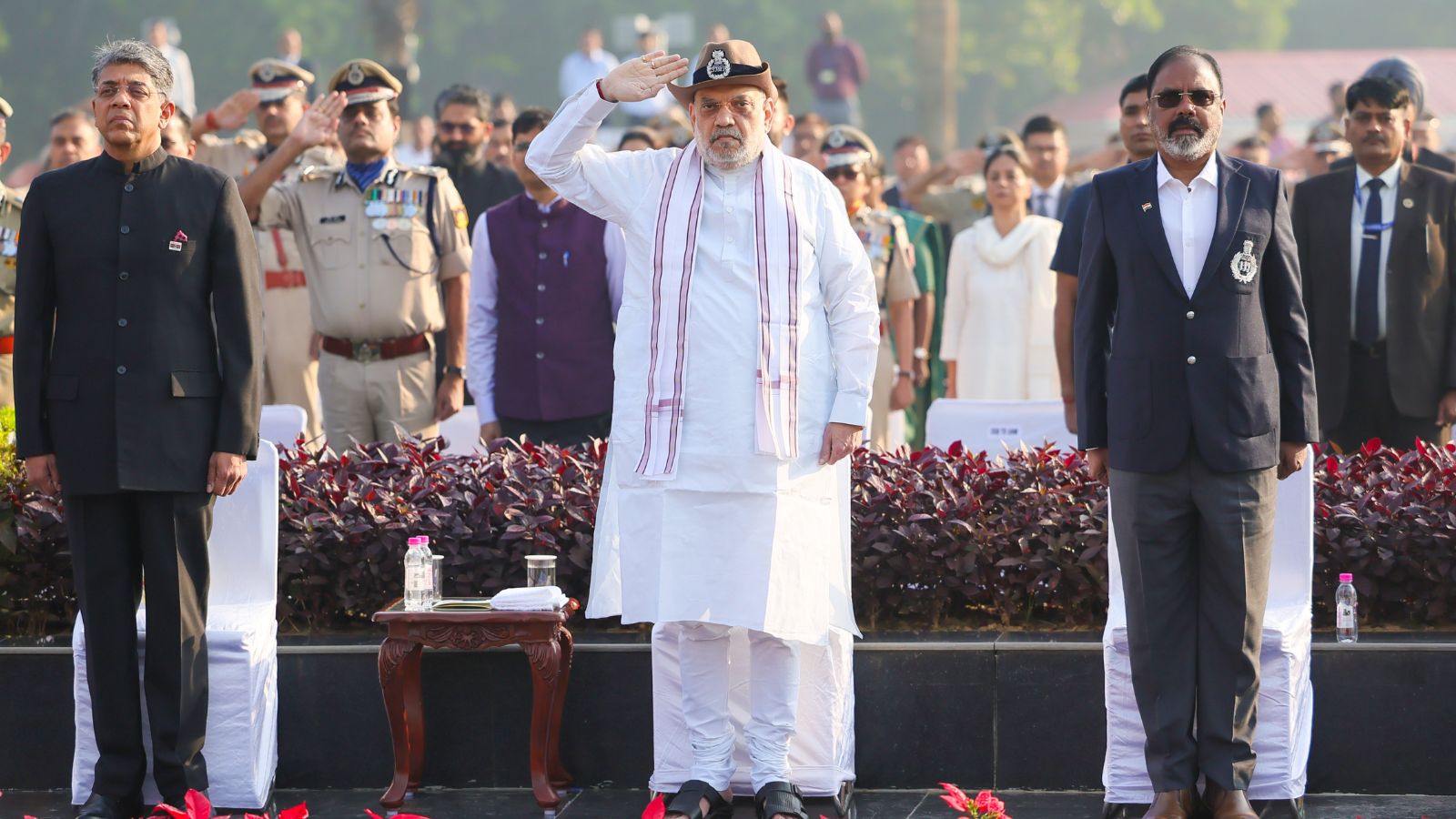
Union Home Minister Amit Shah asked police forces to make India drug-free by December 31, 2029. Speaking on October 21, he said, "Drug abuse and trafficking undermine the future of coming generations." He also noted that the country successfully ended decades of naxalism by March 31, 2026, through dedicated police efforts.
Paying homage to police martyrs on Police Commemoration Day (October 21), Union Home Minister described the target as a major national priority.
Reiterating that narcotics threaten future generations and provide financial support to organisations with anti-national intentions, Union Home Minister Amit Shah on Wednesday called on police forces across the country to ensure the drug menace is eliminated by the end of 2029.
Prime Minister Narendra Modi has set a deadline of December 31, 2029, to make India drugs-free. Shah described the target as a major national priority.
"Drug abuse and trafficking undermine the future of coming generations, place an unnecessary burden on the economy and often provide financial support to organisations with anti-national intentions," he said while paying homage to police martyrs at the National Police Memorial in Delhi on Police Commemoration Day (October 21).
The minister also flagged off a motorcycle rally themed 'Fight Against Drugs' involving about 90 police riders from several states and union territories, Central Armed Police Forces and other central police organisations.
2026 is an extremely significant year for the Indian police, Shah pointed out, adding that the country has eliminated decades of naxalism by March 31, 2026. He credited Chhattisgarh Police, the Central Armed Police Forces (CAPF), the Central Reserve Police Force (CRPF) and CoBRA for their role in combating insurgency.
More than 3,600 security personnel and approximately 13,700 civilians had been killed in violence associated with Naxalism between 1981 and March 2026, the minister said.
"There are numerous examples across the country of police personnel demonstrating extraordinary patience, restraint, discipline, courage and dedication, thereby strengthening the nation's internal security," Shah said.
Police personnel constitute both the first and the last line of defence for internal security, Shah asserted, expressing special gratitude to all personnel of the Central Armed Police Forces deployed along the borders and entrusted with security responsibilities within the country.
Shah said staying away from their families, these personnel remain vigilant and strengthen internal security on every occasion - whether during elections, festivals, protests or border security duties - and remain constantly on duty to ensure the smooth functioning of the country.
"Whether it is safeguarding democracy or ensuring the smooth conduct of democratic processes, it is impossible to imagine these tasks being accomplished without the CAPFs," he added.
Shah also said India had succeeded in eliminating electoral violence in Uttar Pradesh and Bihar, but that it had continued in West Bengal for a long time.
During the recently concluded West Bengal Assembly elections, he said, security personnel achieved a significant success by ensuring that the elections were completed without a single fatality, with the CAPFs establishing a new benchmark.
"The entire country now recognises that electoral violence has been brought to an end in the nation," he added.
Police Commemoration Day is observed annually on October 21 to honour the 10 CRPF personnel killed in a 1959 ambush by heavily armed Chinese troops at Hot Springs, Ladakh, as well as all police personnel who sacrificed their lives in the line of duty across India. The National Police Memorial was inaugurated by Prime Minister Narendra Modi in 2018.