
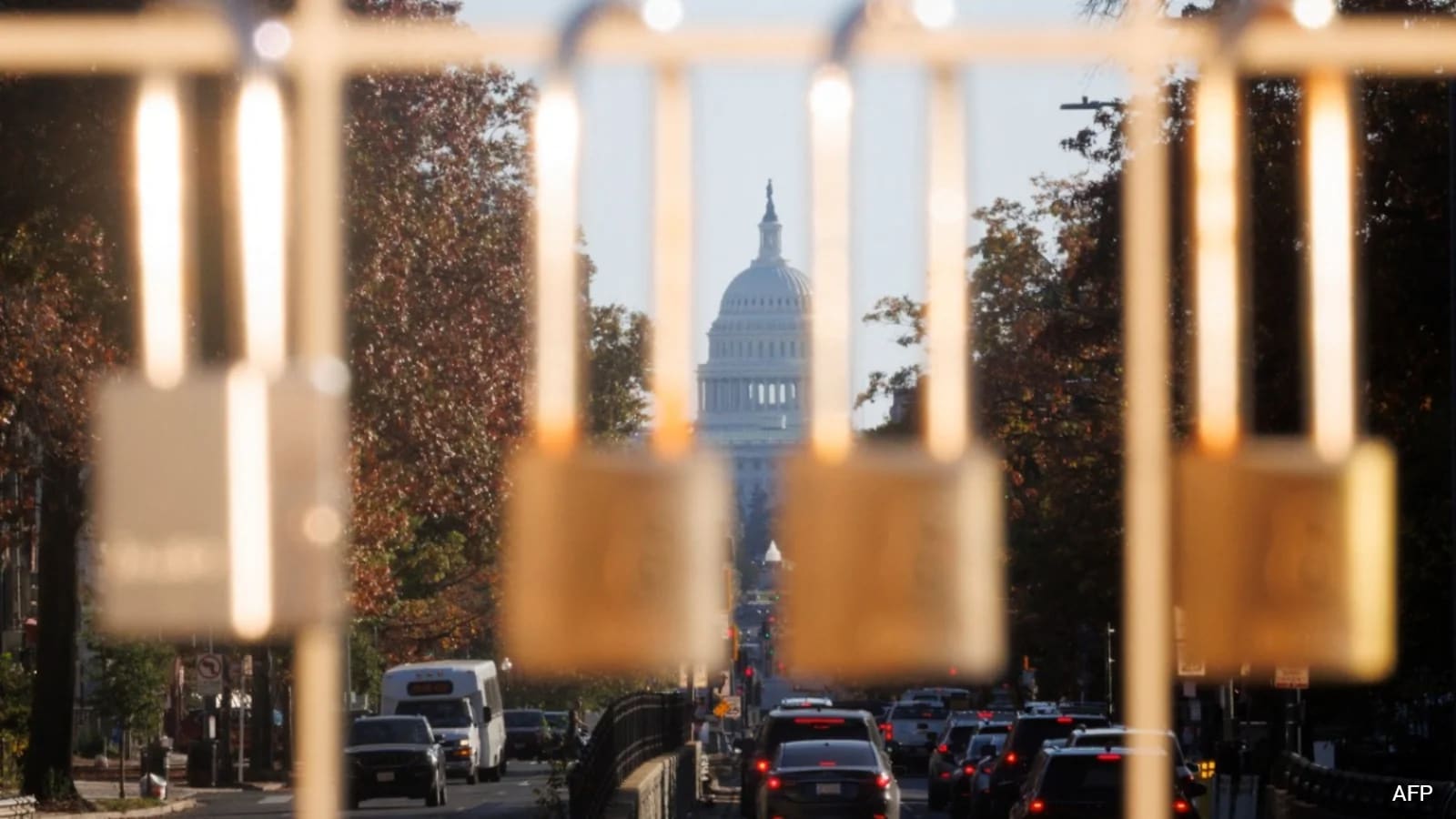
Democrats took control of the US Congress after winning five Senate seats and many House districts in the 2026 midterm elections. This shift impacts India, as new legislative power could change tariff policies and H-1B visa rules. Indian exporters now watch closely as trade deals and immigration laws face debate.
US is a major market for Indian goods, so any shift in tariff policy hits exporters directly.
Washington:
Democrats have taken control of the US Congress after picking up five Senate seats in the 2026 midterm elections, as well as more than a half-dozen House districts. The outcome is seen as a direct repudiation of US President Donald Trump, who urged voters to pretend he was on the ballot.
The elections were a nationwide verdict on Trump's turbulent second term, with discontent over living costs, tariffs and the US war against Iran, which has driven fuel prices sharply higher, weighing on Republicans as the president's approval ratings languish near record lows. Most voters appear to blame Trump's administration for high costs and want Congress to impose more checks on him, according to The AP Voter Poll.
What Democratic Congress Means for India
With Democrats controlling both chambers in the midterms, they gain stronger leverage over legislation, investigations and funding. Congress, however, would not automatically take charge of US foreign policy, as President Trump would retain broad executive powers, including the veto.
For India, the stakes are real. Decisions made by Congress and the US government can shape Indian exports, the fortunes of Indian professionals working in America, and bilateral defence cooperation.
A Democratic majority could trigger more debate and legislative activity on tariffs, healthcare, the cost of living and curbs on presidential war powers. Whether any of it becomes law would hinge on the final size of the margins, Senate procedure and how Trump responds.
Trade And Tariffs
The US is a major market for Indian goods, so any shift in American tariff policy hits exporters directly. In February, the two countries unveiled a framework for an interim trade agreement, under which the US said it would levy an 18 per cent reciprocal tariff on Indian-origin goods. Since then, the US Supreme Court has struck down Trump's use of emergency powers to impose tariffs on trading partners worldwide, pulling tariffs down to a baseline of 10 per cent.
However, a full India-US deal still looks distant. Secretary of State Marco Rubio earlier this month told the media that the India-US trade deal is close to finalisation. FOLLOW LIVE UPDATES
H-1B Visas and Immigration
The election results could also have an impact on Indian professionals in the US, especially H-1B holders. A shift in control of Congress could influence future immigration legislation and oversight, though it would not necessarily bring immediate changes to visa rules.
Democratic victory could increase congressional scrutiny of immigration rules and put some Republican-backed proposals on hold, even though the outcome would not automatically overturn Trump's presidential proclamations, including the inclusion of a $100,000 fee for new H-1B visa applications, announced last September.
Support for India in Congress
If Democrats take both chambers, their leverage would grow, but policy, particularly on foreign relations, would still be limited by Trump's veto, the Senate filibuster and shared political responsibility for the economy. US Treasury Secretary Scott Bessent said last week that even with a Democratic House, there would be "very little" they could do to block Trump's agenda.
Got a follow‑up question on this article? Go on
How may i help you today
Show full article
Track Latest News Live on NDTV.com and get news updates from India and around the world