
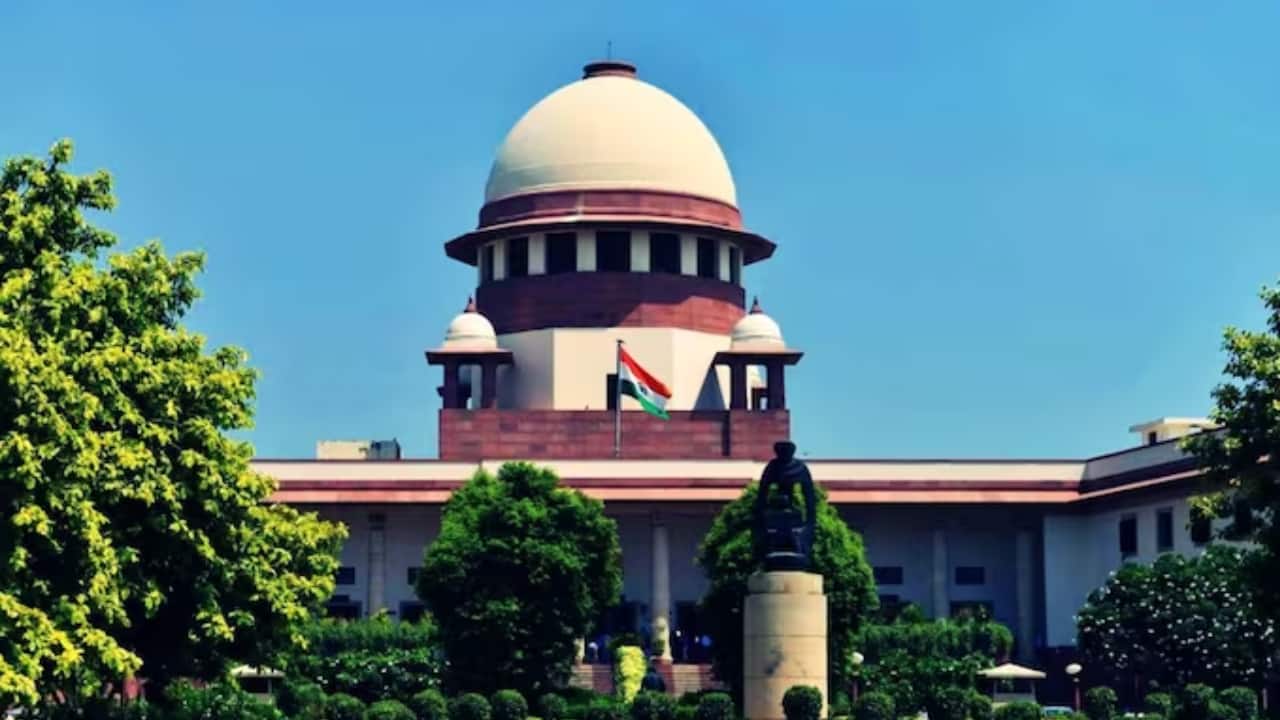
The Supreme Court on October 14 advanced the Delhi electoral roll hearing to October 28. The court acted after advocate Prashant Bhushan said voters deleted during the revision were forced to use Form 6. CJI Surya Kant said, "The court was considering an order to address the issue" for these voters.
Market Mastery
Webinar by Vishal Malkan
Find the weak links
in your portfolio by Vishal Malkan
The Supreme Court on Wednesday (October 14) advanced the hearing in the Delhi Special Intensive Revision (SIR) of electoral rolls to October 28 after being informed that voters whose names were deleted during the exercise were being asked to fill Form 6, which requires applicants to declare that they have never previously been enrolled as voters.
A bench comprising Chief Justice of India (CJI) Surya Kant and Justice Joymalya Bagchi took up the issue after advocate Prashant Bhushan mentioned an application filed by transparency activists Anjali Bhardwaj and Amrita Johri in the pending Delhi SIR matter. The hearing was originally scheduled for October 30.
Bhushan argued that asking previously registered voters to submit Form 6 could force them to make a declaration that was factually incorrect, exposing them to potential legal consequences. He urged the court to direct the Election Commission of India (ECI) to allow such voters to use Form 8, meant for certain corrections and changes, or introduce a separate mechanism to restore their names.
The application seeks directions to the ECI to establish a procedure through which electors removed during the SIR can be re-included in the electoral roll without being treated as first-time applicants.
When Bhushan sought an earlier hearing, pointing out that October 30 was also the deadline for filing claims and objections in the ongoing revision exercise, the bench listed the matter for October 28. Responding to Bhushan's concern that advancing the hearing by only two days might not provide meaningful relief, CJI Surya Kant indicated that the court was considering an order to address the issue.
The application states that 47,56,722 electors, representing 32.78% of Delhi's pre-revision electorate, were excluded from the draft electoral roll during the enumeration phase under the ASDD category, which covers Absent, Shifted, Dead or Duplicate voters.
According to the applicants, Form 6 is the only available mechanism for electors placed on the ASDD list to seek restoration of their names. They contend that the requirement is contradictory because these individuals had already been registered as voters but would now have to declare that they had never voted before.
The applicants have also invoked Section 31 of the Representation of the People Act, 1950, which prescribes imprisonment of up to one year, a fine, or both for making a false declaration in connection with electoral rolls.
In addition, the application challenges the supplementary declaration required alongside Form 6, arguing that it lacks legal backing and should be struck down. It refers to changes in the SIR guidelines issued in June 2026, October 2025 and May 2026 for Delhi, and questions the ECI's clarification that the additional declaration would not be required outside the SIR period. The applicants argue that this creates different procedures for achieving the same objective.
The broader petition also raises concerns over the alleged failure of the ECI and the Delhi Chief Electoral Officer to adequately disclose the names of voters served notices and the specific grounds for issuing them. The petitioners have sought disclosure of the criteria, definitions, algorithmic parameters and operational guidelines used to classify electors under the category of “logical discrepancies”.
The Supreme Court had earlier observed that notices issued during the Delhi SIR appeared to have been generated almost mechanically and sought clarification on the basis for identifying such discrepancies.
The next hearing on October 28 is scheduled two days before the deadline for filing claims and objections in the ongoing revision exercise.