
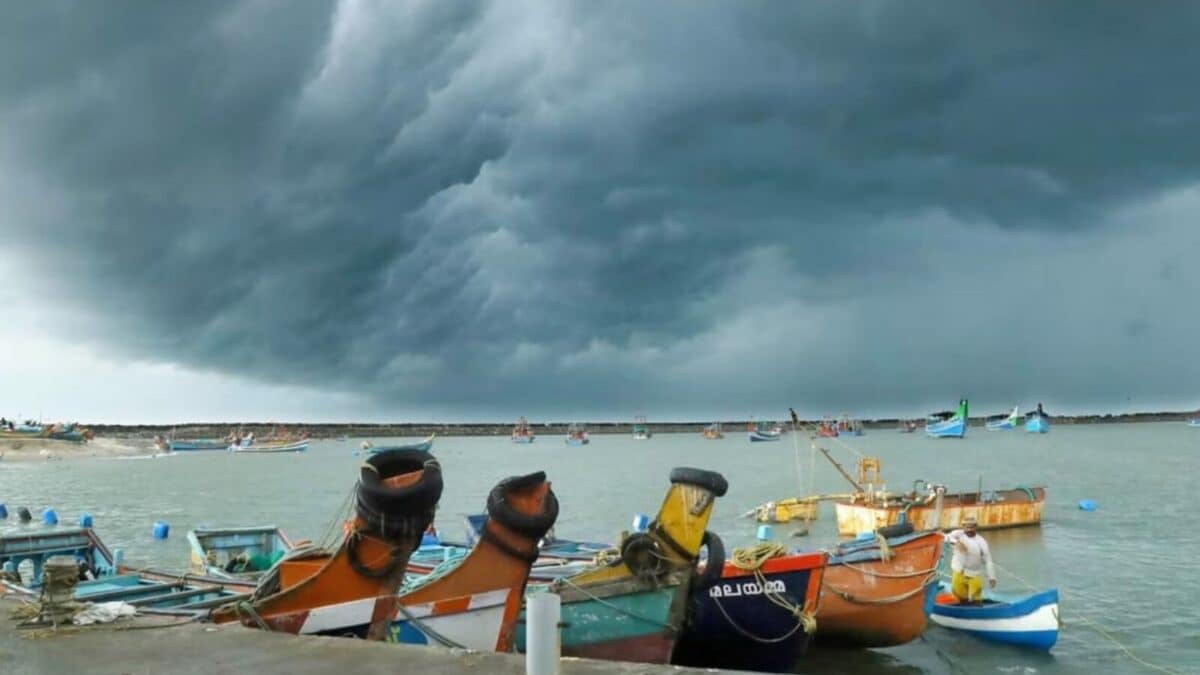
The India Meteorological Department said a deep depression intensified into Cyclone Arnab on October 26. Bangladesh proposed the name, which means ocean. The storm is forecast to move towards the Andhra Pradesh coast. The IMD uses a shared list of 169 names from 13 countries to identify tropical cyclones.
Cyclone Arnab: How are cyclones named, what does Arnab mean and who decides which name a storm gets?
The India Meteorological Department (IMD) said a deep depression over the east-central and adjoining southeast Bay of Bengal intensified into Cyclone Arnab on October 26. The storm is forecast to move towards the Andhra Pradesh coast and could make landfall as a very severe cyclonic storm. So, how are cyclones named, what does Arnab mean and who decides which name a storm gets?
Who Proposed The Name Arnab?
Bangladesh proposed the name Arnab, which features on the official list of names used for tropical cyclones over the North Indian Ocean, covering the Bay of Bengal and the Arabian Sea. The list was adopted in April 2020 and contains 169 names contributed by 13 countries. Each country submitted 13 names. The participating countries are Bangladesh, India, Iran, the Maldives, Myanmar, Oman, Pakistan, Qatar, Saudi Arabia, Sri Lanka, Thailand, the United Arab Emirates and Yemen.
The names are used in an agreed sequence as qualifying cyclones develop. A country’s contribution to the list does not mean that a storm will affect that country, nor does it determine where the cyclone will make landfall.
What Does The Name Arnab Mean?
Arnab is commonly associated with the Bengali word for the ocean or sea. However, the official IMD list confirms the name and gives its pronunciation as “Ornab", but does not provide a formal definition. The name is part of a shared regional system, under which participating countries contribute names in advance rather than naming storms individually as they form.
Who Names Cyclones In India?
The IMD’s Regional Specialised Meteorological Centre (RSMC) in New Delhi is responsible for naming tropical cyclones that develop over the North Indian Ocean, including the Bay of Bengal and the Arabian Sea, once they meet the required intensity criteria.
The centre uses names from the list agreed upon by the participating countries. The name is selected according to the established sequence, not according to the country expected to be affected by the storm. This is why a cyclone carrying a name proposed by Bangladesh can still be forecast to approach the Indian coast. The name identifies the storm; its track and likely landfall are assessed separately by meteorologists.
Why Are Cyclones Given Names?
Names make it easier for meteorological agencies, emergency services, the media and the public to identify and discuss individual storms. A distinct name helps reduce confusion, particularly when more than one weather system is active. It also makes warnings, forecasts and evacuation advisories easier to communicate and follow.
When Did Cyclone Naming Begin In The North Indian Ocean?
The naming system for tropical cyclones in the North Indian Ocean began in September 2004, initially with names contributed by eight countries. The system was later expanded. A revised list was adopted in April 2020, bringing five additional countries into the panel and taking the total to 13. Each country contributed 13 names, creating the current list of 169 names. The names are used sequentially, rather than being chosen afresh for every storm. As each eligible cyclone forms, it is assigned the next name in the agreed list.
Does A Cyclone’s Name Reveal Where It Will Make Landfall?
No. A cyclone’s name does not indicate its likely path, intensity or landfall location. It is simply an identifier assigned under the regional naming system. Although Bangladesh proposed the name Arnab, the current storm is forecast to move towards the Andhra Pradesh coast. Its eventual track, strength and landfall will depend on atmospheric and oceanic conditions, not on the country that submitted the name.