
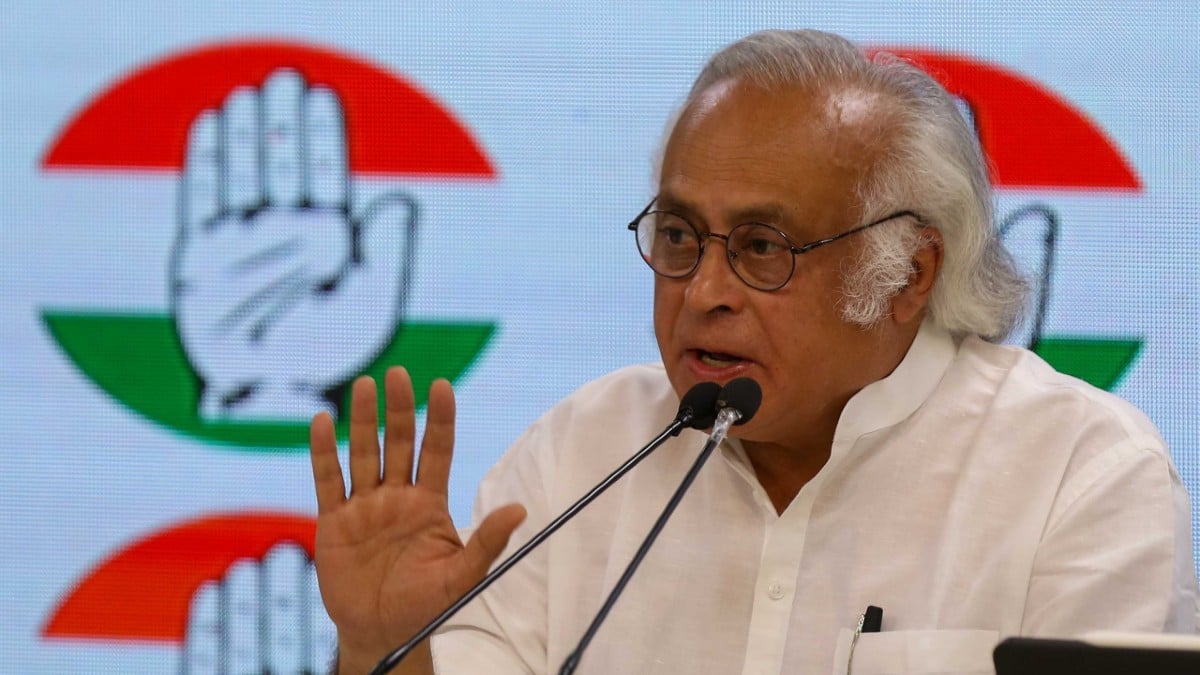
Congress leader Jairam Ramesh issued a six-point rebuttal to the Election Commission’s affidavit in the Supreme Court. He accused the poll body of deception regarding Form 6 and unilateral decision-making. Ramesh said, “The ECI cannot cover up its blatant violation of the Registration of Electors Rules, 1960,” while questioning ECINET.
The six points raised by Ramesh concerned the declaration attached to Form 6, approval of SIR orders, alleged centralisation of electoral-roll management through ECINET, functioning of EC’s IT division, alleged misuse of Form 7, and what the Congress described as the affidavit’s failure to deny media revelations about alleged irregularities.
On Form 6, the Congress accused the ECI of changing its position on the additional declaration introduced during the first phase of SIR.
“First, it claimed that the new declaration attached to Form 6 was upheld by the Supreme Court, which the Court subsequently contradicted. Second, it now claims that the new declaration form is separate, and Form 6 was not amended,” Ramesh wrote on X
“But this is a deception—Form 6 could not be submitted online without filling this mandatory declaration,” he added.
Ramesh also said the ECI had stated on 26 September that the declaration was attached to Form 6, but was now claiming that it was separate. “The ECI cannot cover up its blatant violation of the Registration of Electors Rules, 1960,” he said.
He also disputed the ECI’s claim that the three Election Commissioners had unanimously approved relevant orders relating to the SIR. “The two ECs objected on record to grave violations and illegal actions taking place on the orders of the CEC—their objections were disregarded,” Ramesh wrote.
“The ECs were not even informed and learnt of these decisions from the news. This is not unanimity but unilateral decision-making,” he added.
Ramesh further said that the ECINET was used to centralise control over electoral rolls and override Electoral Registration Officers (EROs).
“The use of ECINET to centralise control over electoral rolls and override the Electoral Registration Officers (EROs), who are the statutory authority, was put on file by the 2 ECs—instances from Goa, West Bengal, Uttar Pradesh and Uttarakhand present,” he wrote on X.
Ramesh also said the two Election Commissioners had written to the Cabinet Secretary over concerns about ECINET and the division’s functioning. “The ECs repeatedly expressed concern that the IT division operates opaquely, oversteps its mandate and takes unauthorised actions,” he said.
“There has been no change in its operation, nor any action on these issues,” he added.
On the SIR exercise, Ramesh said that “numerous illegalities and violations” had emerged across states.
“The affidavit does not deny the veracity of the ongoing revelations in large sections of the media,” Ramesh said, calling this “another confirmation of the gross malpractice and legal violations by the CEC”.
In its affidavit before the Supreme Court, the ECI maintained that the three major SIR orders were approved unanimously by all three Election Commissioners. It denied amending Form 6, arguing that the additional declaration was a separate document.
The poll panel also said that notes, queries and suggestions recorded by individual commissioners during the processing of files did not, by themselves, constitute decisions of the Commission. It maintained that no name could be added to, deleted from or modified in electoral rolls without an order from the concerned ERO.
The ECI also rejected the allegations against its decision-making process, and defended the legality of the SIR orders.