
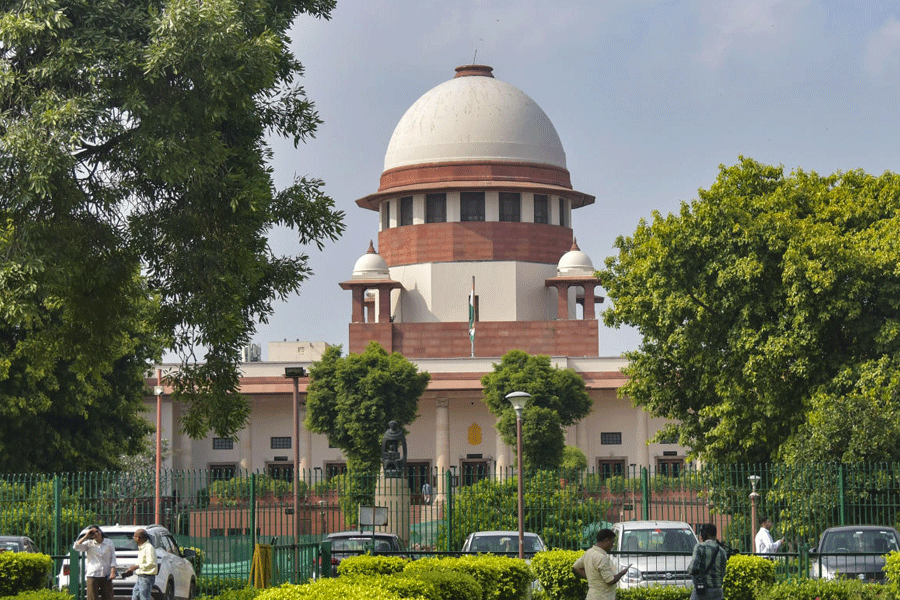
The Centre told the Supreme Court on Monday that its role in bringing back an Indian-origin man from the Russian Army is limited. Officials said he renounced his Indian citizenship and acquired Russian nationality. The government now plans to explore humanitarian intervention to help the man return to his family.
Government explores humanitarian intervention after Moscow informs Indian officials that the man has renounced his Indian citizenship and acquired Russian nationality
The Centre has told the Supreme Court that its ability to secure the return of an Indian-origin man serving in the Russian Army is limited because he has reportedly renounced his Indian citizenship and acquired Russian nationality.
A bench comprising Chief Justice of India Surya Kant and Justices Joymalya Bagchi and V Mohana was hearing a petition on Monday filed by the man's father, who sought directions to the Centre to bring his son back to India from the Russia-Ukraine conflict.
Solicitor General Tushar Mehta, appearing for the Centre, told the court that the man had reportedly renounced his Indian citizenship and acquired Russian nationality before joining the Russian armed forces. Consequently, the government's role in securing his return could be very limited.
Taking note of the bench's observations, Mehta said the government would explore possible avenues for the man's repatriation, including the scope for humanitarian intervention.
However, he maintained that Russian authorities were within their rights to withhold information about the man, given that he was now enrolled in their military as a Russian citizen.
The bench asked the Union government to explore all possible options to facilitate his return to India. It also pointed out that several aspects of the case remained unclear, particularly the agreement the man had entered into with the intermediary who had arranged his studies in Moscow.
The court further sought to know whether the Centre could intervene after Russian authorities informed Indian officials that the man had relinquished his Indian citizenship and obtained Russian nationality.
Responding to the court's queries, Mehta said he would seek instructions from the ministry concerned on the possibility of extending humanitarian assistance in the matter.
According to the petitioner's account, his son had travelled to Russia in April to pursue his studies. However, months after his departure, the family received a communication from the Indian Embassy in Moscow indicating that he had joined the Russian Army as a Russian citizen.
In its communication to the family, the Embassy said it had taken up the matter with Russia's Ministry of Defence and requested his release.
The Embassy further stated that, according to documents available with it, the man had voluntarily relinquished his Indian citizenship and possessed a Russian passport.
It also informed the family that it would provide further updates once it received a response from the Russian authorities.
In his plea, the father expressed serious concern over the circumstances in which his son had reportedly acquired Russian citizenship and subsequently entered military service within a relatively short period of arriving in the country.
The petitioner has questioned the circumstances surrounding his son's change in citizenship status and subsequent recruitment into the Russian armed forces, seeking the Centre's intervention to facilitate his return.