
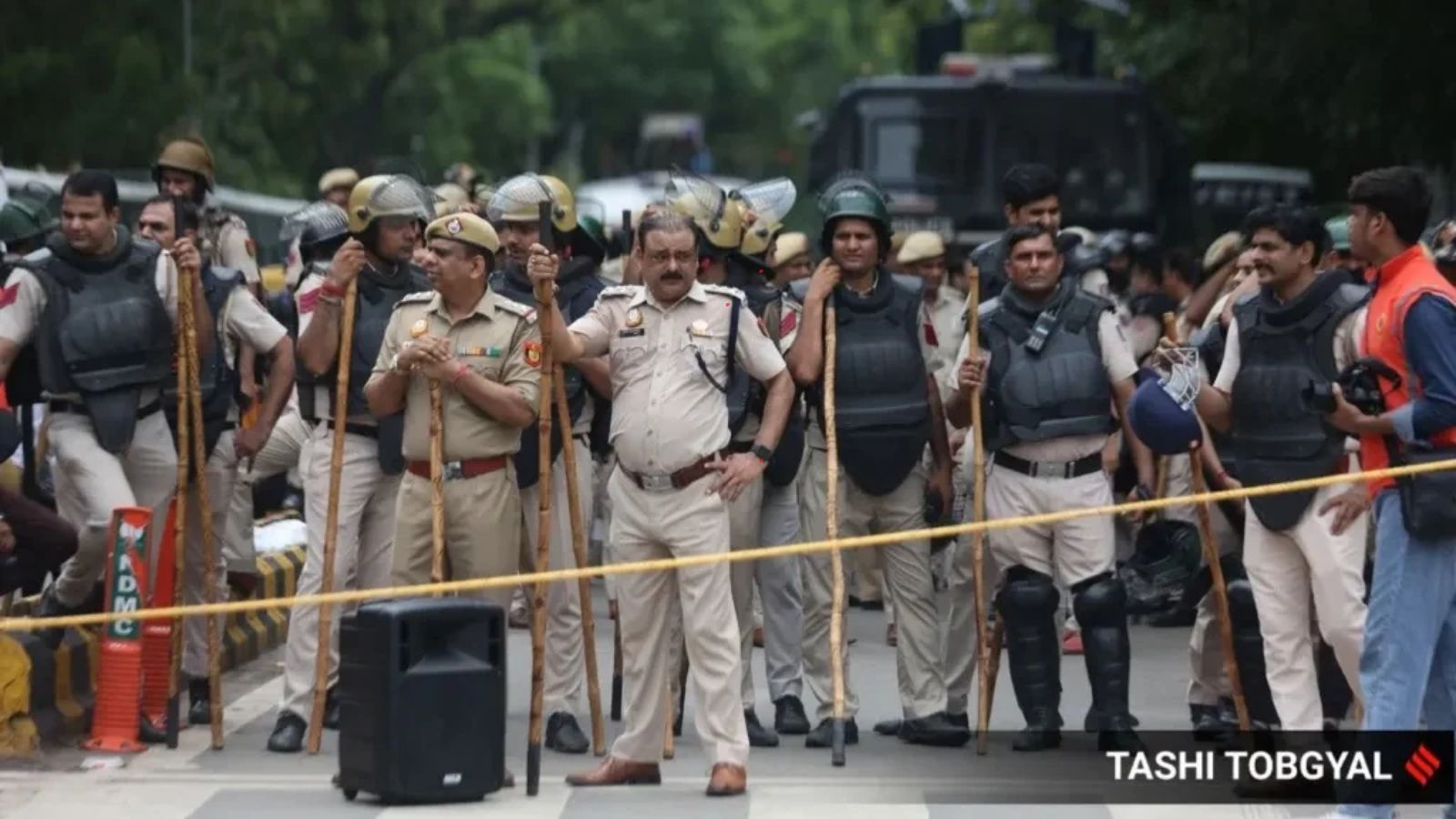
The Supreme Court on Tuesday said it will examine if Delhi Police surveillance of Jantar Mantar protesters infringes on privacy. The court is looking at whether this monitoring amounts to negative state interference. Judges noted that the Identification of Prisoners Act, 1920, currently allows the use of iris scans by police.
Supreme Court examines whether Delhi Police surveillance of Jantar Mantar protesters could amount to negative state interference and infringe privacy.
The Supreme Court on Tuesday said it will examine whether the surveillance allegedly carried out by the Delhi police during the protests at Jantar Mantar against the Special Intensive Revision (SIR) of electoral rolls and Chief Election Commissioner Gyanesh Kumar would amount to negative state interference, even as it pointed out that the amendment to the Identification of Prisoners Act, 1920, allows use of iris scans.