
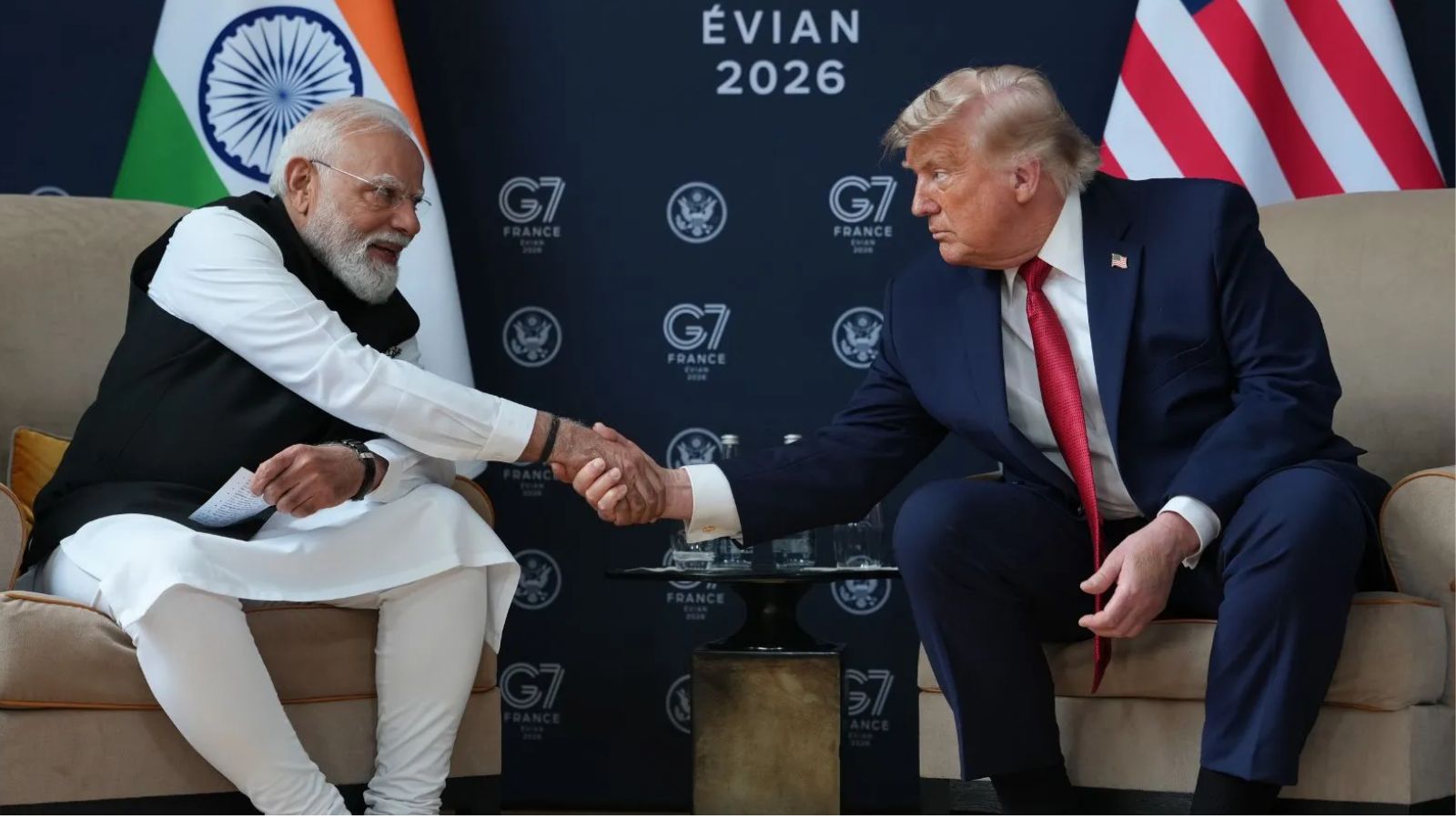
US-India ties are at a low ebb, but the relationship has endured worse during the Cold War. Today, bilateral trade is around $240 billion and India has purchased over $20 billion in military equipment from the US. These factors added ballast to the relationship that both sides must now value.
US-India ties are at a particularly low ebb, but the relationship has endured worse during the Cold War. In 1966, for example, President Lyndon Johnson, piqued over India's strident criticism of the Vietnam War, resorted to what came to be known colloquially as the "ship-to-mouth" policy: He withheld much-needed food aid. Also recall President Richard Nixon's infamous "tilt policy" toward Pakistan during the 1971 East Pakistan crisis and Washington's coercive diplomacy against India.
These and other unfortunate episodes during the Cold War certainly contributed to a palimpsest of distrust that continues to weigh down US-India relations. India had developed a distrust of the US as early as 1954 following the US-Pakistan defence pact under the Eisenhower administration. The US, in turn, despite maintaining a polite diplomatic façade and even briefly coming to India's assistance after the Sino-Indian border war of 1962, was not really interested in India. The latter's policy of non-alignment, its inward-facing economy and its lack of cultural ties to the US made New Delhi marginal to Washington's overall strategic calculus. Neither side put much stock in these adverse turns in the relationship.
Today, however, a downturn in US-India relations has ramifications beyond bilateral ties. Over the last three decades, the two countries, regardless of which party was in office in New Delhi and Washington, DC, has worked to build and strengthen the relationship, turning it into a multi-faceted partnership that has economic, strategic and cultural components. Despite ongoing differences, and with a trade deal still in abeyance, US-India bilateral trade is around $240 billion -- hardly a trivial sum.
The relationship also has a significant security component: Over the last two decades, India has purchased over $20 billion in military equipment from the US. In turn, it has significantly reduced its weapons acquisitions from its historical supplier, Russia. Additionally, while its future is a bit clouded, India remains committed to the Quadrilateral Security Dialogue (Quad), which includes the US, Australia and Japan. Finally, between 5 and 6.5 million Indians or people of Indian origin reside in the US. Also, unlike in the past, several influential members of the US Congress are of Indian origin. At least one of them has presidential ambitions.
All these factors have added a certain ballast to the relationship that the two sides can only ignore at their peril. While President Donald Trump's mercurial policies have, no doubt, raised fears of US abandonment of India, their long-term adverse repercussions may be exaggerated. Given the interdependence that has emerged between the two capitals, albeit asymmetric, it will ill-serve both countries if they choose to steadily disengage from each other.
Accordingly, especially from the standpoint of New Delhi, it may be best for it to bide its time, avoid making any inflammatory statements that could further roil an already fraught situation and wait until a new administration assumes office after the 2028 presidential election. Given the damage that mostly Trump's choices have inflicted on the relationship, any government that is in office in New Delhi after the new president assumes office in January 2029 will proceed with a degree of circumspection. It will, without a doubt, carefully examine any overture that the new president makes toward India. Even with any residual goodwill that remains in India, it will not readily embrace the new administration.
you may like
This caution, of course, would be wholly understandable. However, given the sheer, painstaking effort that both parties have invested over the last three decades or so, turning its back on the US would be feckless and foolhardy. Despite India's efforts to diversify its foreign policy choices in the wake of the uncertainty that Trump's policies have created, the US, in all likelihood, will remain an indispensable partner. No other country will be a viable substitute given its continued economic vibrancy, its military prowess and its cultural effervescence. These elements will endure long after Trump leaves office, even though some of his legacies will remain. Focusing on the lasting elements of America's strengths and setting aside the shortcomings of Trump's policies still offers the best hope for a mutually beneficial partnership.
The writer is a senior fellow and directs the Huntington Programme on US-India Relations at the Hoover Institution, Stanford University