
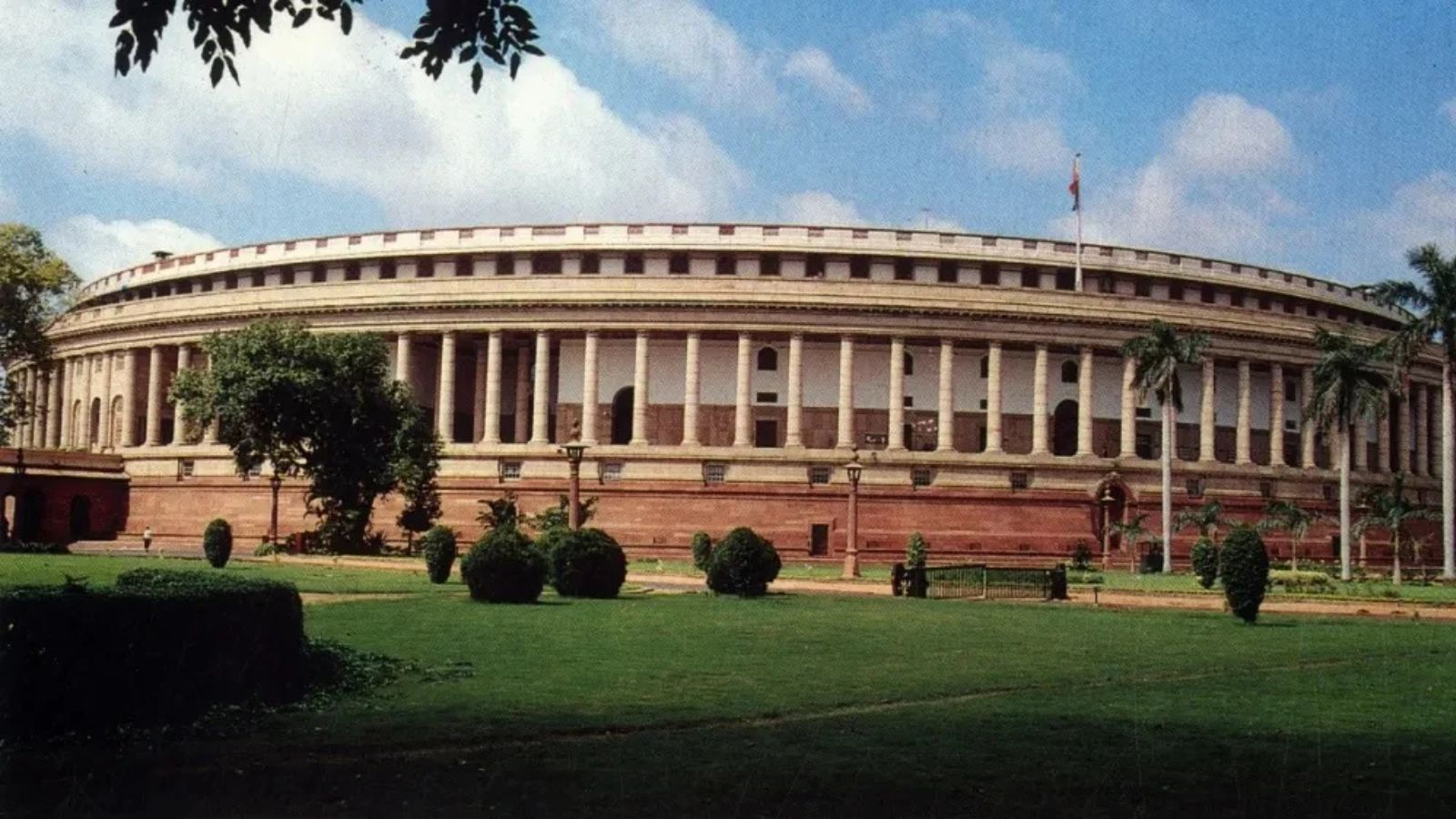
Parliament’s adjournment without prorogation crossed the 100-day mark on Sunday, marking the longest break in history. The Monsoon Session ended on August 13. Government sources said the Winter Session is on track, adding they have "required numbers" to pass key legislation like the proposed delimitation package for women’s reservation.
Longest adjournment in parliamentary history fuels speculation of delayed Winter Session even as sources in the government stress that the session is on track and it has "required numbers" to pass key legislation.
The longest period of sine adjournment of Parliament has breached the 100-day mark amid speculation around a special session for yet another push to the BJP-led NDA government's "delimitation package", which includes the implementation of 33% reservation for women.
Sunday marked the 101st day since the Monsoon Session was adjourned sine die on August 13. With the customary year-end window for announcing the Winter Session approaching, questions have emerged over whether the government will convene a special sitting before the regular session.
The previous two longest periods of adjournment sine die without prorogation were recorded during Congress governments in the 1980s. The current spell is the longest since the BJP-led NDA first came to power in 2014 and, indeed, the longest in Parliament's history.
Interestingly, both the earlier instances and the current one occurred during the respective Eighth Session -- the Eighth Lok Sabha under the Congress government and the 18th Lok Sabha under the BJP-led NDA government.
In 2025, the Winter Session was held from December 1 to 19, with 15 sittings. Parliament passed eight Bills and held special discussions on the 150th anniversary of the national song Vande Mataram and electoral reforms.
Government sources have indicated that the Winter Session is on track and that the government has the support of more than the required number of Lok Sabha MPs to meet the two-thirds majority needed to pass a Constitutional amendment for the proposed delimitation package.
There has also been speculation about a three-day sitting, possibly as the second part of the Monsoon Session, which has not yet been prorogued. Such a sitting could be held ahead of the Winter Session.
Under Article 85 of the Constitution, the President is empowered to summon Parliament. The convention is to provide around 15 days notice for a regular session. The Constitution also requires that no more than six months elapse between two consecutive sittings of Parliament.
A special sitting, however, can be convened at shorter notice. If a session has been adjourned sine die but not prorogued, it technically remains in existence. Under Rule 15 of the Rules of Procedure and Conduct of Business in Lok Sabha, the Speaker can reconvene the House after it has been adjourned sine die.
The distinction between adjournment and prorogation is significant. An adjournment ends a sitting of the House, while an adjournment sine die ends its sittings without specifying a date for the next one. Neither, by itself, brings the session to an end.
Prorogation, on the other hand, formally terminates a session through an order issued by the President under Article 85(2) of the Constitution. It ordinarily follows an adjournment sine die, although the two are legally distinct.
The President exercises the power to prorogue Parliament on the advice of the Prime Minister. Prorogation can technically take place at any time, including while the House is sitting, though the usual practice is to prorogue it after an adjournment sine die.
The Monsoon Session of the 18th Lok Sabha began on July 20 and was adjourned sine die on August 13. By comparison, the 2023 Monsoon Session, which ran from July 21 to August 21 and had 21 sittings, was prorogued the following day.
According to Practice and Procedure of Parliament, authored by M N Kaul and S L Shakdher, a House may be adjourned from day to day, for more than a day, or sine die during a session.
The Speaker can also summon a sitting of the Lok Sabha before the date to which it has been adjourned or at any time after it has been adjourned sine die. Thus, an adjournment sine die does not, by itself, prevent the House from meeting again.
you may like
The 1987 and 1989 precedents
The longest previous period of adjournment sine die without prorogation in Lok Sabha history lasted 76 days, in 1987, during the Eighth Session of the Eighth Lok Sabha. The second-longest, lasting 61 days, was recorded in 1989 during the 14th Session of the same Lok Sabha.
The 1987 episode unfolded against the backdrop of the Bofors controversy, following allegations of kickbacks in connection with India's 1986 agreement with Swedish arms manufacturer Bofors AB for the supply of Howitzer guns.
The Eighth Session began on February 23, 1987, and was adjourned sine die on May 12 amid disruptions over the controversy. The Speaker subsequently exercised the power available under the proviso to Rule 15 to reconvene the House. The Lok Sabha met again from July 27 to August 28.