
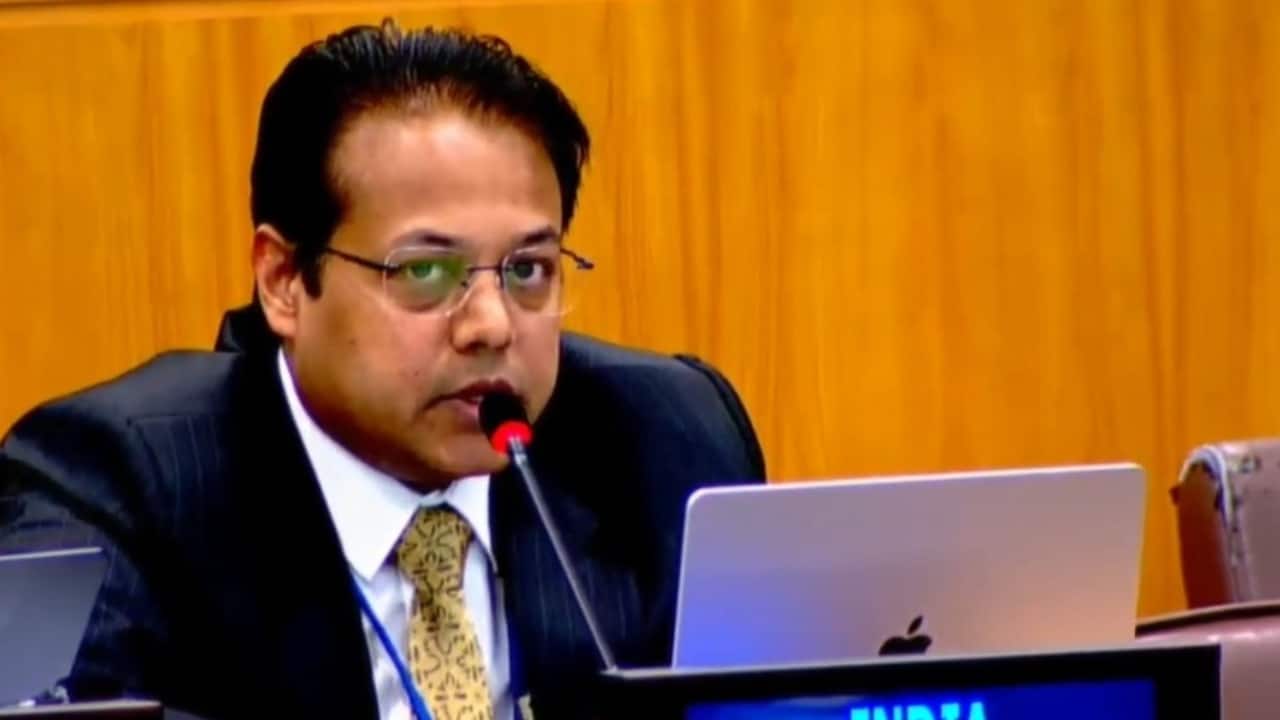
India rejected a UN report on Friday that made claims about its youth. Diplomat Anuj Swarup said the report used unverified information and lacked evidence. "It is hearsay dressed up as a UN report, and my delegation rejects it outright," he said. India said such arbitrary writing hurts UN credibility.
Delhi Capitals appoint Chaminda Vaas as fast-bowling coach ahead of IPL 2027
India has strongly rejected a report by a United Nations special rapporteur on freedom of peaceful assembly and association, accusing the expert of relying on anonymous and unverified claims to make sweeping allegations about the country's young population.
Speaking at a meeting of the UN General Assembly's Third Committee in New York on Friday, Indian diplomat Anuj Swarup said reports based on unverifiable information were damaging the credibility of the world body and its institutions.
"A sweeping charge against the world's largest youth population, resting on anonymous and unverified claims is not evidence," Swarup said, taking exception to the report by Special Rapporteur Gina Romero on the Rights to Freedom of Peaceful Assembly and of Association.
"This level of arbitrary report writing is precisely the reason that the United Nations and its institutions have lost credibility," he added.
Describing the report as hearsay presented as an official UN document, Swarup said, "It is hearsay dressed up as a UN report, and my delegation rejects it outright."
The report stated that "young people from India reported retaliation or stigmatisation for discussing mental health or gender justice". However, the footnote supporting the claim referred to a "submission" without identifying its source.
"A mandate holder who relies on anonymous inputs to generalise for 1.4 billion people does a disservice to the very mandate she holds," said Swarup, a first secretary at India's UN mission in Geneva.
India Questions UN Human Rights Mechanism
Friday's criticism marked the second time this week that India had warned that arbitrary reporting was undermining the credibility of the UN human rights system.
On Wednesday, Swarup accused UN High Commissioner for Human Rights Volker Turk of applying double standards in his assessment of responses to protests.
"Violent responses to protests in our neighbourhood, as well as in the West, have gone uncommented" in Turk's reports, he said.
"Such double standards contribute to loss of trust" in the high commissioner, Swarup, added.
Responding to Romero's report on Friday, the Indian diplomat also questioned its assessment of youth-led political activity in the country. He pointed out that the report itself acknowledged that young Indians had created a satirical political movement.
"In which repressive state does a satirical youth party question the government, marches on the capital and then sits across the table with senior national leaders?" he asked, referring to the Cockroach Janta Party (CJP).
Swarup also said Romero appeared to have overlooked Turk's remarks at the Human Rights Council last month, when he referred to the importance of engaging with young leaders in the context of youth-led movements in India.
India Cites Government Response To Student Protests
Turk said on September 7, "The recent protests in India showed the best response is dialogue with youth leaders, not the excessive use of force."
He described India's handling of student protests over examination irregularities as a "true testament of democracy in action".
"When students protested this summer over irregularities in public examinations, the government engaged constructively with the youth," Turk said.
He also pointed to changes introduced through the Public Examinations Act, saying Parliament had amended the law within weeks. The changes doubled punishments for paper leaks, alongside a wider examination overhaul and the creation of fast-track courts in every state specifically to prosecute those involved in examination fraud.
India cited these developments to challenge the report's portrayal of the country's response to youth-led movements.
UN Rapporteur Defends Her Assessment
Responding to Swarup's criticism, Romero acknowledged India's democratic institutions and opportunities for public participation, but maintained that concerns about protests among young people remained relevant.
"India is the biggest democracy in the world" and "they have several participatory bodies and scenarios to include the voices of youths," she said.
"But also, we have youths in the streets protesting," Romero added, reiterating her criticism.
Romero, a Colombian activist, was appointed special rapporteur by the UN Human Rights Council. Special rapporteurs are independent experts who serve in their personal capacities, are not UN staff members and do not receive a salary for their work.
(With IANS inputs)
Stay informed on all the latest news, real-time breaking news updates, and follow all the important headlines in india news and world news on Zee News.