
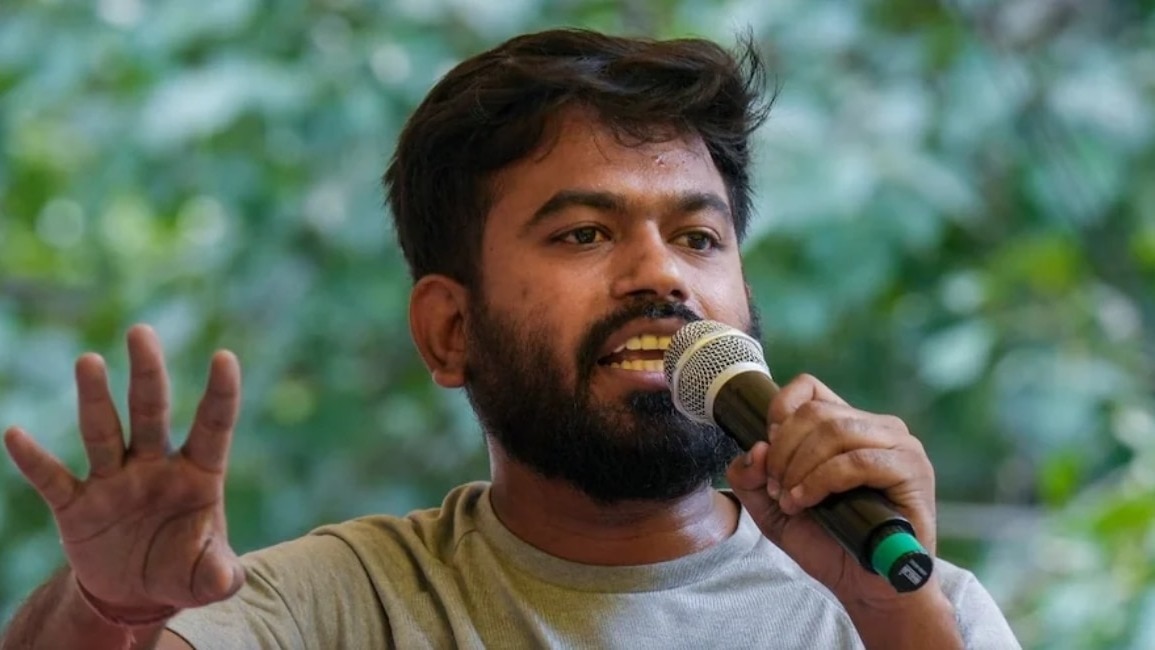
Abhijeet Dipke questioned immigration officials for stopping youth leader Saurav Das from travelling abroad. Dipke asked why the government stopped Das while fugitive businessmen like Vijay Mallya fled India. "Is Saurav Das a criminal or an economic offender?" he asked. He urged parties to focus on jobs instead of religious politics.
Abhijeet Dipke questioned immigration officials stopping Saurabh Das from travelling abroad. Cockroach Janata Party chief also raised questions over Election Commission's impartiality, backed Sonam Wangchuk and called for elections to focus on jobs, education and inflation.
Cockroach Janata Party founder Abhijeet Dipke has criticised the Centre over its decision to stop youth leader Saurav Das from travelling abroad, while accusing the government of diverting attention from pressing issues such as unemployment, inflation and education.
Speaking to the media in Chhatrapati Sambhajinagar, Dipke said Das had been invited to address the Oxford Union and the London School of Economics (LSE) on his party's movement and ideology, inspired by Mahatma Gandhi and Dr Babasaheb Ambedkar. However, immigration officials stopped the 27-year-old at the airport.
Comparing the incident with the cases of fugitive businessmen Vijay Mallya, Nirav Modi and Mehul Choksi, Dipke questioned why a young political activist was prevented from travelling when people accused of bank frauds worth thousands of crores had left the country. "Is Saurav Das a criminal or an economic offender that he was stopped from travelling abroad?" he asked.
QUESTIONS OVER PASSPORT DISCREPANCY
Dipke said the reported reason for stopping Das concerned a discrepancy over his place of birth in his passport. He questioned why the issue was not flagged when the document was issued in 2019, especially since Das had travelled abroad twice subsequently.
"If there was something wrong with his passport, why was the issue not raised when it was issued in 2019?" he asked.
TEMPLE-MOSQUE POLITICS VS JOBS, EDUCATION
On the upcoming Assembly elections in five states, Dipke said his party's objective was not to make or bring down governments but to shift political discourse towards issues affecting young people.
He argued that election campaigns should focus on education, unemployment, jobs, schools, colleges and hospitals rather than religious polarisation. Pointing to global advances in artificial intelligence, semiconductors and renewable energy, he said India needed to prepare its young population for emerging opportunities.
"How will temple-mosque politics provide jobs to young people or better education to children?" he asked.
Dipke announced a public meeting in Nagpur on November 26, Constitution Day, where his party would raise questions about the Election Commission's impartiality and the independence and accountability of democratic institutions.
QUESTIONS ELECTION COMMISSION OVER POLL DATA
Dipke also questioned the Election Commission's handling of voting figures during the 2024 Lok Sabha elections, particularly the data from the final hours of polling in Maharashtra, Haryana and Jammu and Kashmir.
Citing Maharashtra Deputy Chief Minister Eknath Shinde's Assembly constituency, he claimed that around 89,000 votes were cast in the final hour and demanded greater transparency in the publication of polling figures.
TARGETS CENTRE OVER JOBS, INFLATION
Backing Congress leader Rahul Gandhi's remarks on the economy and unemployment, Dipke alleged that rising living costs were outpacing income growth.
He claimed unemployment was at its highest level in 40 years, while salaries were not rising proportionately with expenses on education, healthcare and everyday essentials, making it difficult for ordinary families to save.
Taking a swipe at Prime Minister Narendra Modi, Dipke questioned why he was asking industrialists to create jobs and increase salaries instead of explaining his government's own employment record.
"The public wants to know from the Prime Minister how many people his government has given jobs to and whose salaries it has increased," he said.
BACKS SONAM WANGCHUK
Dipke also criticised the government's handling of Ladakh-based educationist and climate activist Sonam Wangchuk. He said the government should learn from Wangchuk's contribution to education, adding that his school model could inspire institutions across the country.
Questioning the reported cancellation of Wangchuk's school's licence and his house arrest, Dipke said the government should recognise his contribution rather than take action against him.