
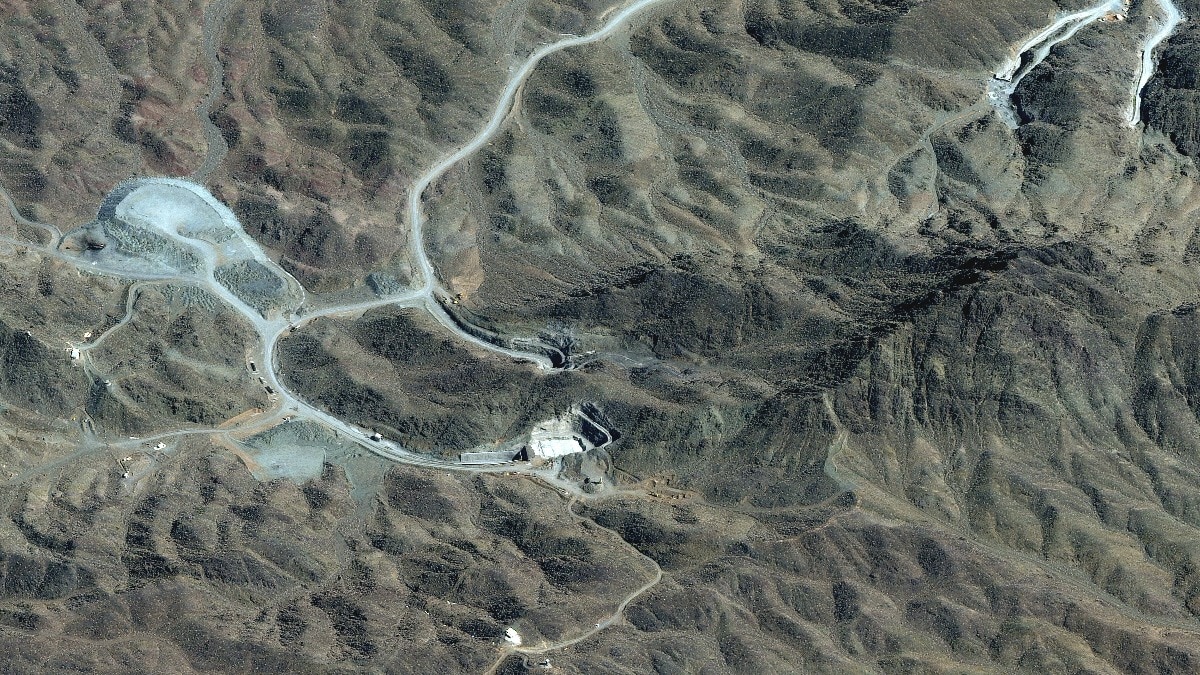
ഇറാനിലെ പിക്ആക്സ് പർവ്വതത്തിൽ ആണവാക്രമണം നടത്തുമെന്ന് ഡൊണാൾഡ് ട്രംപ് ഭീഷണി മുഴക്കിയത് വലിയ ആശങ്കയാണ് സൃഷ്ടിക്കുന്നത്. ഇത്തരമൊരു ആക്രമണം നടന്നാൽ റേഡിയോ ആക്ടീവ് ഫലങ്ങൾ ഇന്ത്യയെ ബാധിക്കുമോ എന്ന ചർച്ചകൾ സജീവമാണ്. ദൂരവും കാലാവസ്ഥയും കണക്കിലെടുക്കുമ്പോൾ വലിയ ഭീഷണിയില്ലെന്ന് പ്രതിരോധ വിദഗ്ധർ ചൂണ്ടിക്കാട്ടുന്നു.
US President Donald Trump said he might strike Iran's Pickaxe Mountain. His loyalist and former Fox News host, Tucker Carlson, claimed a nuclear strike was on the anvil. Can the radioactive fallout reach India? Experts share their views on the possibilities.
The drums of nuclear confrontation are beating once again in the US. On Monday, Donald Trump loyalist and former Fox News host Tucker Carlson claimed the US was considering a nuclear strike on Iran's Pickaxe Mountain, a suspected underground nuclear site. Trump also did not shy away from the prospect of at least some form of strike. If Trump goes ahead, the consequences could extend far beyond Iran, with radioactive fallout potentially reaching Pakistan and even northwestern India under certain weather conditions.
But there is a big if. Located in Iran's central Isfahan province, Pickaxe Mountain is roughly 2,500 km from India. Defence expert Sandeep Unnithan said the extent of the fallout would depend on several factors, like the nuclear weapon's explosive yield, the nature of the detonation and prevailing weather conditions.
Even if the conditions are met, experts said the exposure would be diluted over the distance.
WILL TRUMP NUKE IRAN?
Before that, the key question is whether Trump will take the gamble. In recent months, the US President has repeatedly threatened to bomb Pickaxe Mountain if Iran failed to agree to a deal to end the war. However, he has held back on strikes so far.
This time, there has been considerable buzz that the US and Israel might strike Iran with greater force after the midterm elections in America.
The spectre of strikes on Pickaxe Mountain was floated by Trump himself. Speaking to reporters on Monday, Trump said the US had destroyed much of Iran's nuclear capabilities, but still needed to target one or two remaining sites.
"We might have to go after Pickaxe. We can do that in one hour, as soon as we want, at any time we want," Trump told Fox News.
The same day, Carlson, the former Fox News host, suggested that Trump may be days away from ordering a nuclear strike. Carlson said a nuclear strike was the only military option as conventional US weapons would not be able to penetrate the "300 feet of solid granite" protecting underground tunnels at the site.
"The target would be Pickaxe Mountain... where Israeli intelligence claims the Iranian government has restarted its nuclear enrichment program," the conservative political commentator said. However, he did not provide any evidence.
His alarmist claims also involved India and Pakistan.
Carlson said a US strike could spread radioactive contamination across the Persian Gulf. This, he underlined, risked triggering a nuclear conflict involving Russia, India, Pakistan and North Korea, and potentially lead to World War III.
He also alleged that Trump was being "pressured" almost daily by Israeli Prime Minister Netanyahu to strike Pickaxe. "Under pressure from Netanyahu, the Trump administration may be within days of launching a nuclear strike on Iran," Carlson said.
However, the alarmist claims by the Trump loyalist have been widely derided on social media.
Carlson has not named any US official to back his claims. His warnings rely largely on anonymous sources. A couple of weeks ago, Trump struck a different note in an interview with Newsmax. "I wouldn't use nuclear. We don't have to," Trump said.
WHAT IS IRAN'S PICKAXE MOUNTAIN?
The back-to-back remarks by Trump and Carlson have brought Iran's Pickaxe Mountain into focus.
Intel agencies believe Iran has stored part of its enriched uranium stockpile, used to make nuclear weapons, at the fortified facility. However, much of it is hearsay.
The facility, buried 328 feet under a large mountain, is shrouded in mystery and speculation.
It is, in fact, deeper than Iran's two other key nuclear enrichment complexes at Fordo and Natanz, which were bombed last year. For the bombing, the US used its bunker-buster bombs or GBU-57s. However, they can penetrate only 60 feet.
This is why a nuclear strike might be the only option to destroy Pickaxe Mountain.
CAN FALLOUT OF NUCLEAR STRIKE REACH INDIA?
Its radioactive fallout, however, could spread across the Gulf, Afghanistan and Pakistan, with lower concentrations potentially reaching parts of India, geopolitical expert Mario Nawfal said.
Nawfal shared a model-based projection of a hypothetical US nuclear strike on Pickaxe Mountain. As per the projection, parts of northwest India, including Punjab, Rajasthan, J&K and Gujarat, could receive lower concentrations of radioactive fallout.
However, this would depend on several factors, including how much surrounding material, such as rock, soil, and debris, is drawn into the explosion, as well as wind patterns.
Radioactive particles can travel hundreds of miles, although their concentration and radiation intensity decline as they spread.
According to the International Atomic Energy Agency (IAEA), while larger radioactive particles tend to settle closer to the explosion site, smaller particles can remain suspended in the air for much longer and travel greater distances.
Now, if the US does nuke Pickaxe Mountain and winds carry the radioactive cloud eastwards, Afghanistan and Pakistan are likely to be most affected, defence expert Sandeep Unnithan told IndiaToday.in. In fact, the model predicts higher risk in Pakistan's northern and western areas.
Depending on the direction and speed of winds, radioactive particles could potentially travel further towards northwestern India.
"If a nuclear weapon is detonated over Iran, a majority of the radioactivity would be confined to the immediate vicinity of the blast," Unnithan said.
"Some of the radioactivity would travel eastwards - because of the winds - into Pakistan and northwestern India. But the quantities of these would be diluted - to what are called 'trace levels' - the minutest quantities," he further said.
Another key factor is rain, which can influence where radioactive particles are deposited. Regions receiving heavy rain may see localised areas of higher contamination.
Major General SB Asthana (retd) said any nuclear option would be "catastrophic" for Iran immediately and also for the US thereafter.
"There will be several implications. The radioactive waves will travel to its allies like Pakistan, Kuwait, Jordan etc. It will also open the option for Russia to strike Kyiv with nuke and finish the war," Asthana tweeted.
Thus, before Trump decides to press the nuke button to strike Iran, he will have to keep in mind that it would not remain a localised disaster. The fallout, both radioactive and geopolitical, could have wider consequences beyond Iran's borders.