
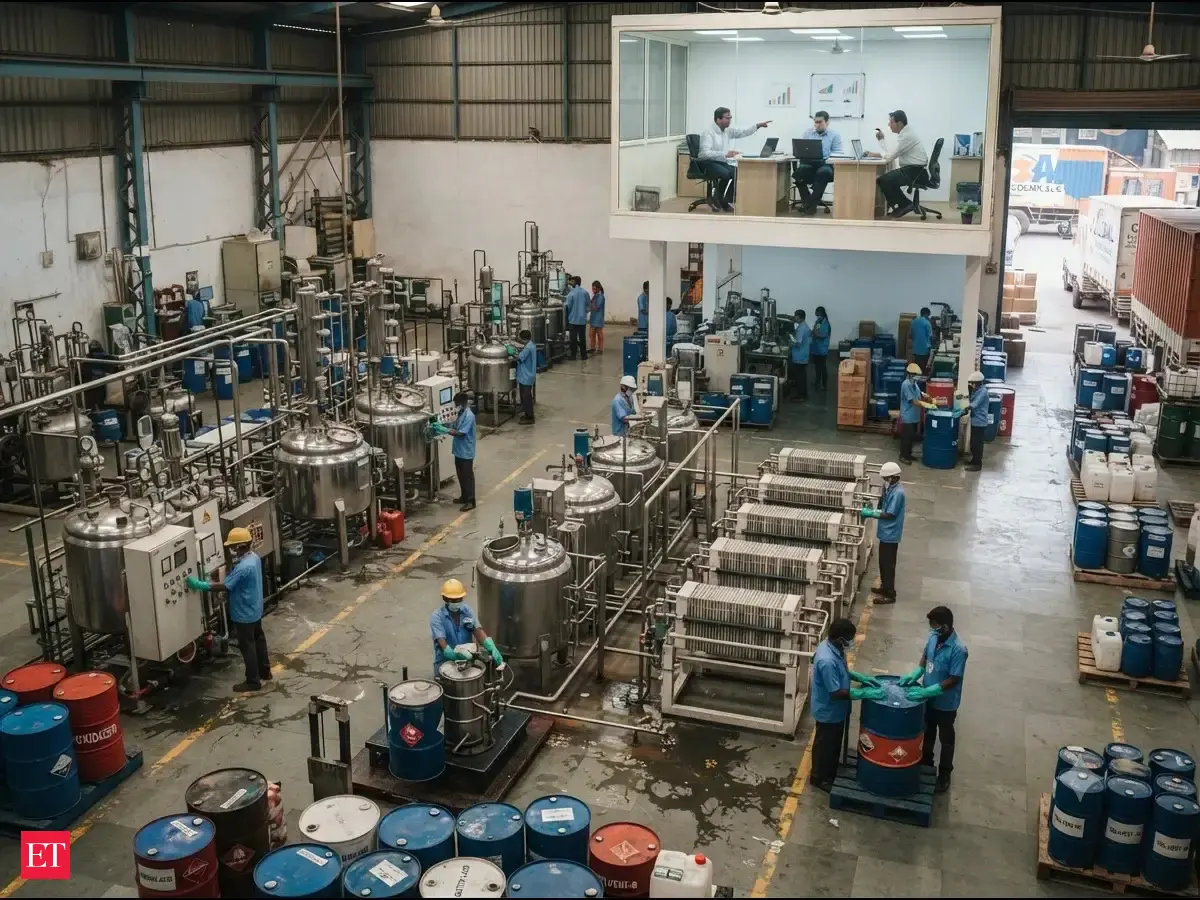
PM Modi questioned India Inc on November 19-20 about why profits rose while worker pay lagged. Data shows factory profits hit Rs 11.6 lakh crore in 2024-25, yet many employees remain on contract. The government now wants companies to share their gains more widely to help boost real worker incomes.
For India Inc, the next phase of manufacturing growth will be judged not merely by factories built, margins earned or shareholder returns, but also by the quality of jobs and the incomes they generate. The real test of India's industrial ambitions is whether prosperity reaches the factory floor.
PM Modi's sharp comments on corporates' profits and employee salary/hiring have created a major flutter in India, with a set of pointed questions that the PM targeted at India Inc bosses bringing the stark difference between company bottom lines and worker pay under the scanner again.
The comments, made at the November 19-20 FICCI centenary convention, came amid an increasing govt push to make Indian industry share the benefit of profits more widely.
Modi questioned whether companies had raised salaries or hired more people after getting substantial tax concessions. He also challenged India Inc to do more for its employees.
India's companies are making more and more profit, data shows. But there remains a huge gap between this profit and how much of it makes its way into the hands of the people working in these companies' factories, offices and production lines. The PM's remarks brought this imbalance into sharp focus.
A reality checkThe PM's questions put the spotlight on two related questions: a) Is India's manufacturing growth creating proportionate gains for workers, and b) Are shareholders, corporate balance sheets and senior management benefiting disproportionately at the cost of workers?
On this count, industry data shows a mixed picture.
According to the Annual Survey of Industries for 2024-25, profits accounted for 50.3% of the value added by factories, while employee compensation made up roughly a third.
More than 40% of factory workers were employed on contract, showing the precarious situation of a major section of the manufacturing workforce.
In 2024-25, factory employment rose 7.2% to 2.1 crore, while total emoluments rose 12.1% to Rs 8 lakh crore. Factory profits increased 7.7% to Rs 11.6 lakh crore.
Job growth during the period was estimated at 5.6%. These numbers also indicated that compensation is growing, but the distribution of manufacturing gains has remained uneven.
Modi's grouse with India Inc explained: Why is it sitting on windfall?
The PM's comments are being seen as a nudge to India Inc to raise real incomes of workers.
It may be noted here that stagnant real income growth has been one of the biggest worries for India over the past few years (since Covid, to be precise). According to the 2025 Economic Survey, India Inc's profits jumped to a 15-year high in 2024, but growth in employee expense fell.
Only half the answerFor manufacturing companies, there is a factor that makes it a more complicated matter than just a plain profit-vs-salary debate.
RBI data for FY26 for listed manufacturers show that these businesses recorded a 10.8% sales growth, against 6% in the preceding year. However, raw material expenses soared 12%, taking their share of sales to 57.6% from 55.7%. Employee costs rose 10.7%, broadly keeping their proportion of sales stable.
This suggests that rising input costs, rather than an across-the-board margin bonanza, may have come to be a very important consideration.
This is just half the answer, though. The point to note is that company filings do not offer a standardised median shop-floor wage measure that could've shown how much ordinary workers gained compared to senior execs or managers.
Where did tax savings go?PM Modi's questions specifically brought the issue of corporate tax cut into focus. So, there is a need to examine whether this relief, given since 2019, has had any impact on the profit-vs-salary matter.
In 2019, the basic corporate tax rate was cut from 30% to 22%, with a lower rate for eligible new manufacturing companies, as the govt sought to encourage private investment, capacity-building and hiring.
Seven years hence, while there are lots of data on dividends and debt reduction, there is no consolidated info that can show how much of India Inc's savings went into new factories, R&D or employee training.
Companies have used stronger balance sheets to reduce borrowing and boost their reserves, data shows. However, establishing whether tax relief has led to additional investment, salary rises or hirings at a scale that the govt had hoped for, remains difficult. So, just half the answer again.
What India Inc saysIndian industry has its own explanation for being cautious on wage budgets.
One of these reasons is automation, which is changing factory economics, allowing companies to expand output without proportionately increasing headcount.
Global tariff uncertainty is also complicating investment and employment decisions, particularly for exporters.
Reuters reported in November that Indian garment manufacturers were diversifying away from the US after tariff increases disrupted orders and squeezed margins.
Meanwhile, textile manufacturers have been dealing with higher labour and raw material costs, prompting greater automation and operational efficiencies.
The bottom lineYet, these factors cannot sufficiently explain the disconnect between corporate gains and workers' purchasing power.
This is important, because better-paid employees can also become a source of stronger domestic demand, creating a virtuous cycle of consumption, investment and production.
Even as manufacturing growth soars, questions are rising as to why India Inc is only touting things like the number of factories built, margins earned or shareholder returns, and avoiding a parameter that matters more. Modi's question puts that reality into perspective.