
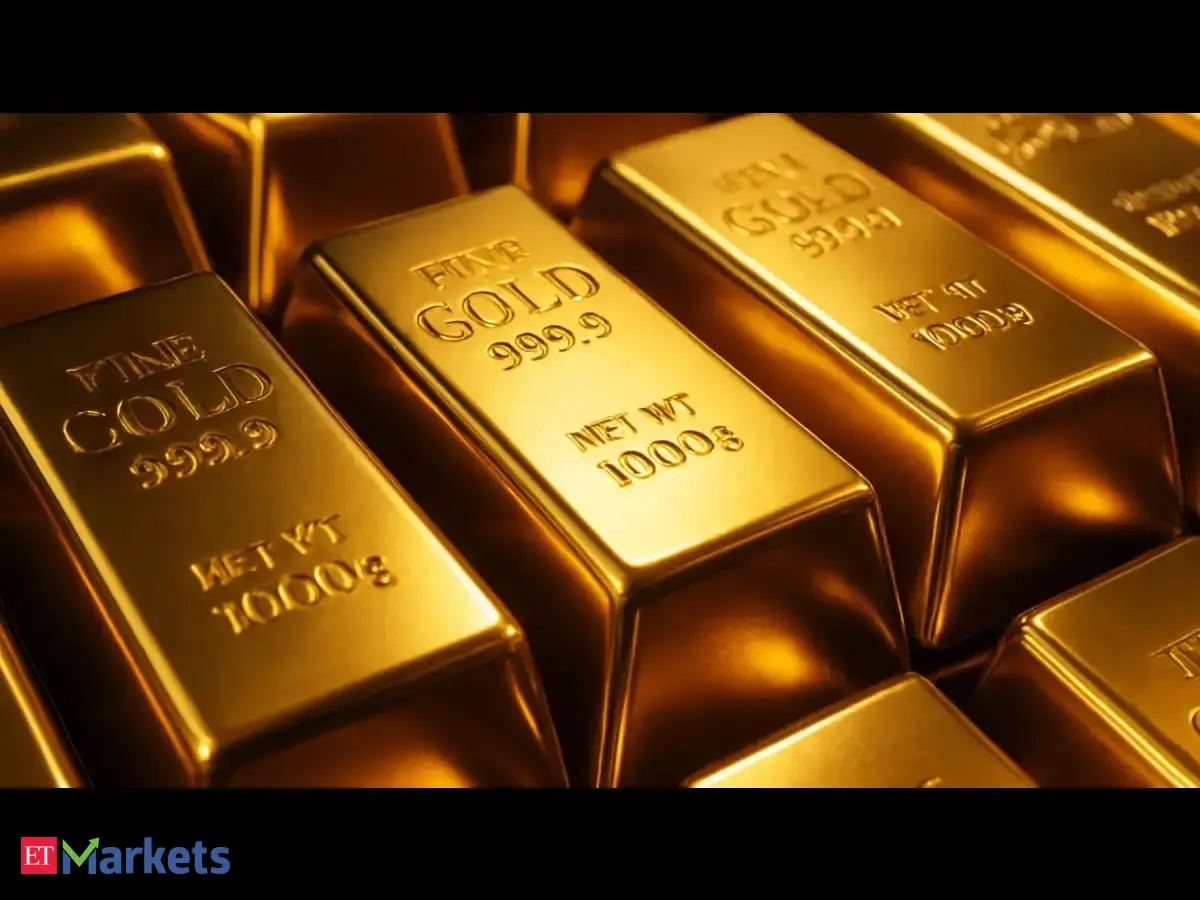
Gold has fallen to around $3,510 an ounce after hitting a record $5,594.82 earlier in 2026. This puts the metal on track for its first annual loss in five years. A stronger dollar, higher bond yields, and profit-booking continue to pressure prices, ending a long period of strong market gains.
Synopsis
Gold has fallen to around $3,510 an ounce after hitting a record $5,594.82 earlier in 2026, putting it on track for its first annual loss in five years. A stronger dollar, elevated bond yields, profit-booking and weaker safe-haven demand continue to pressure prices.
International gold prices have witnessed one of the most dramatic reversals in recent history. London spot gold began the year near $4,331 per ounce and extended its powerful rally during the first quarter, touching a record high of $5,594.82 per ounce amid strong safe-haven demand and robust investment inflows.
However, the precious metal failed to sustain those elevated levels and subsequently entered a prolonged corrective phase. Prices have now slipped to near $3,510 per ounce, wiping out a significant portion of the gains accumulated earlier this year.
The recent selloff has not only altered investor sentiment but has also raised questions about the sustainability of gold's long-term bull run. After posting annual gains for four consecutive years, gold is now on track to record its first yearly loss, as a combination of changing monetary policy expectations, shifting risk appetite, and widespread profit-booking continues to weigh heavily on prices.
Drivers Behind Gold's Multi-Year Rally and 2026 Peak
Gold's remarkable rally over the past several years was largely driven by a combination of economic uncertainty, geopolitical tensions, central bank purchases, and expectations of easier monetary policies worldwide. Persistent inflation concerns following the pandemic, coupled with conflicts in Eastern Europe and the Middle East, enhanced gold's appeal as a safe-haven asset. In addition, aggressive purchases by emerging-market central banks helped tighten physical supplies and provided long-term support to prices.
Live Events
The rally accelerated sharply during the first quarter of 2026. Investors increasingly anticipated interest-rate cuts by major central banks, particularly the US Federal Reserve, which lowered the opportunity cost of holding non-yielding assets like gold. Concerns over slowing global economic growth, volatile equity markets, and uncertainty surrounding international trade and fiscal policies also boosted safe-haven inflows. Exchange-traded funds witnessed renewed buying interest, while speculative funds aggressively increased bullish positions, pushing London spot gold to record highs.
Gold's Performance in 2026: From Record Highs to Correction
Gold experienced a highly volatile year, beginning with strong bullish momentum before undergoing a sharp correction. Prices gained almost 30% during the first quarter. However, sentiment gradually shifted during the second half of the year. A strengthening US dollar, improving risk appetite across financial markets, and reduced geopolitical anxieties prompted investors to reduce exposure to gold.
Market expectations regarding the pace of Federal Reserve easing also changed, resulting in higher real yields that pressured the metal. Profit-booking by funds and diminishing ETF inflows further contributed to downside pressure. Physical demand from key consuming nations remained mixed, limiting support during corrections. As a result, prices steadily retreated from record highs and eventually fell below $3,600 per ounce, placing gold on course for its first annual decline in five years.
What Triggered the Fall Below $3,600?
The latest decline appears to have been triggered by a convergence of bearish macroeconomic and technical factors. A stronger US dollar increased the cost of gold for holders of other currencies, reducing international demand. At the same time, rising Treasury yields improved returns on fixed-income assets, diminishing the attractiveness of holding non-interest-bearing gold.
Investor sentiment also shifted toward riskier assets as global equity markets remained resilient and recession concerns eased. This reduced safe-haven demand and encouraged investors to rotate capital away from precious metals. Additionally, traders aggressively booked profits following gold's exceptional rally earlier this year. From a technical perspective, the breach of several key support levels triggered stop-loss selling and accelerated downside momentum. Speculative funds subsequently reduced long positions, amplifying price declines. Weakness in ETF holdings and subdued physical demand from major Asian consumers further contributed to the selloff.
Outlook: Can Gold Regain Its Shine?
Gold's near-term outlook remains cautious to bearish as prices continue to trade well below key support levels following the sharp correction from record highs. The break below $3,850 per ounce highlights weakening market sentiment and suggests that sellers remain firmly in control. A stronger US dollar, elevated real bond yields, and fading safe-haven demand are likely to continue limiting recovery attempts in the near term. From a technical perspective, $4,100 per ounce has emerged as a critical resistance level, and as long as prices remain below this threshold, the broader momentum is expected to stay negative with the risk of further corrective declines.
Despite the current weakness, the long-term outlook for gold remains constructive, supported by geopolitical uncertainties, ongoing central bank diversification into gold reserves, and the potential for monetary policy easing by major central banks. However, a durable recovery may require renewed investment demand, softer bond yields, and a revival in safe-haven buying interest. Until such conditions emerge, the market is likely to remain under pressure, with the near-term bias favouring the bears despite supportive structural fundamentals over the longer horizon.
(Hareesh V is a Head of Commodity Research at Geojit Investments)
(You can now subscribe to our ETMarkets WhatsApp channel)
(What's moving Sensex and Nifty Track latest market news, stock tips, Budget 2025, Share Market on Budget 2025 and expert advice, on ETMarkets. Also, ETMarkets.com is now on Telegram. For fastest news alerts on financial markets, investment strategies and stocks alerts, subscribe to our Telegram feeds .)
Subscribe to ET Prime and read the Economic Times ePaper Online.and Sensex Today.
Top Trending Stocks: SBI Share Price, Axis Bank Share Price, HDFC Bank Share Price, Infosys Share Price, Wipro Share Price, NTPC Share Price
...moreless
KYC and KYB: Zydus Lifesciences – From the chemist’s counter to US pharmacies. Part 1 of 3
What would it take for the world to stop needing the Strait of Hormuz?
Hidden export winners: The unlikely products finding real buyers abroad
India’s USD25 bn copper drive moves from building smelters to securing mines
Why IndiGo could land a sharp rebound in profit despite a sluggish aviation market
Gold still rules, but with a difference: How young India is redefining wedding jewellery