
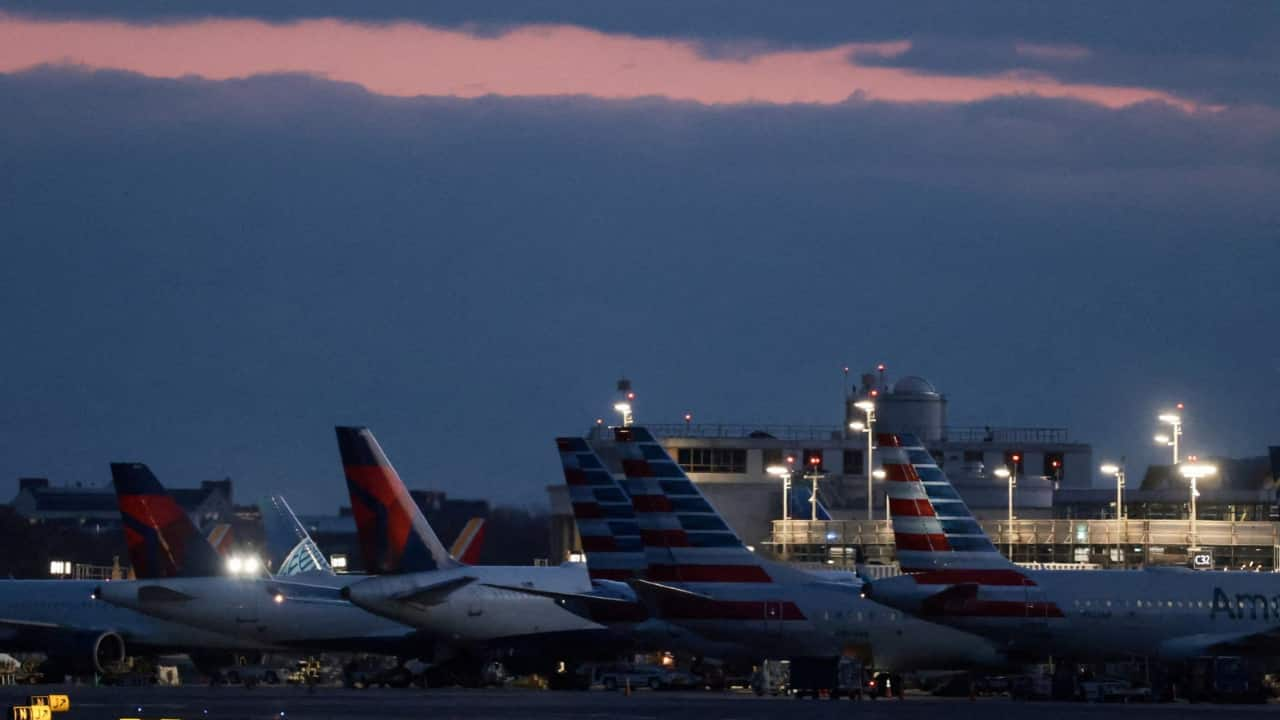
The US Federal Aviation Administration lifted a nationwide ground stop on Friday after four hours. While flights resumed, many passengers still face delays and cancellations. Transportation Secretary Sean Duffy said, "Operations were gradually returning to normal." Airlines now work to fix schedules as the disruption continues for several days.
The US Federal Aviation Administration (FAA) has lifted a nationwide ground stop after more than four hours, allowing departing flights to resume across the country. However, passengers continue to face cancellations and delays as airlines work to restore their schedules. The ground stop was imposed at 3:54 pm Eastern Time (20:54 GMT) on Friday and lifted at around 8:15 pm ET (01:15 GMT on Saturday). It was the longest nationwide flight suspension since the September 11, 2001, attacks. Although flights have resumed, the disruption is expected to continue for several days as airlines reposition aircraft and crews stranded at airports across the country.
Transportation Secretary Sean Duffy said operations were gradually returning to normal but warned that passengers would continue to see delays and cancellations as carriers worked to restore their schedules. More than 4,700 flights were cancelled and 10,000 delayed on Friday, according to FlightRadar24. FlightAware reported more than 2,500 cancellations in the US on Saturday, with hundreds of additional flights delayed. What happened during the nationwide ground stop? The FAA ordered all departing flights within the US to remain on the ground on Friday after a telecommunications outage affected air route traffic control centres.
More than 3,500 aircraft were in the air when the order was issued. Flights already airborne were allowed to continue to their destinations, while some aircraft were diverted. The outage caused intermittent communication and radar gaps in systems used by air traffic controllers to manage aircraft moving across the country. The FAA imposed the ground stop as a precautionary measure, citing safety concerns. Duffy said the airspace reopened at around 8:15 pm ET, but warned that flights would not resume immediately. Departures would depend on the availability of pilots and flight attendants, as airlines worked to get aircraft and crews back into position.
What caused the FAA outage? Trump administration officials said new technology being integrated into the country's air traffic control system overloaded older equipment, disrupting communications between control centres. Duffy said outdated switches, routers and telecommunications infrastructure could not handle the data load. Homeland Security Secretary Markwayne Mullin said the FAA had been adding new technology to an ageing system, with the older equipment unable to cope with the changes. The outage has renewed concerns about the condition of US aviation infrastructure. A Government Accountability Office report published in September had flagged ageing equipment, including copper cables dating back to the 1960s, and warned that delays in modernising the system could lead to further disruptions.
Duffy called for $50 billion in funding to overhaul the air traffic control system. This followed an earlier request for an additional $30 billion to complete the modernisation effort. Mullin said there was no indication that the outage was caused by a cyberattack. Microsoft also said it had no indication that the incident was connected to a service disruption affecting Outlook and other services on Thursday. What about international flights? International flights were handled on a case-by-case basis during the ground stop, with some allowed to depart while restrictions remained in place. The disruption also affected flights bound for the US from overseas.
European aviation authorities suspended US-bound departures from their member states at the FAA's request on Friday evening. Air Canada also cancelled flights between the US and Canada. In the UK, several flights to the US from Heathrow Airport were cancelled or delayed, while Manchester Airport said it did not expect significant disruption. Flights from Gatwick Airport were operating normally. San Francisco International Airport said flights heading across the Pacific, including services to Hawaii and Asia, were cleared to depart from Friday evening. Airlines have since begun restoring services, but passengers travelling internationally have also been advised to check directly with their carriers for updates.
When will US flights return to normal? Duffy warned that it would take time for airlines to recover from the disruption, as aircraft and crew members were left in the wrong locations after departures were suspended. Delta Air Lines, United Airlines and other carriers said they were resuming operations but cautioned that delays and cancellations could continue. American Airlines said it was working to operate as many remaining flights as possible, while JetBlue said it would resume flights on Saturday morning. Duffy said he expected the system to be operating normally by the Thanksgiving travel rush later this month.
The Thanksgiving period is one of the busiest times of the year for air travel in the US, adding urgency to efforts to restore regular flight schedules. What are passengers' rights if flights are cancelled or delayed? Under US Department of Transportation rules, passengers are entitled to a refund if their flight is cancelled or significantly changed and they choose not to travel. A delay of three hours or more for a domestic flight and six hours or more for an international flight is generally considered a significant change. Airlines must also offer alternative travel arrangements. Passengers who accept a replacement flight are not entitled to a refund for the original ticket.
However, airlines are generally not required to pay additional compensation for disruptions caused by air traffic control problems. US rules also do not require carriers to provide meal vouchers or hotel accommodation in such cases, although some airlines may offer assistance. Passengers travelling from the UK have additional protections. Airlines must provide reasonable food and drink, communication facilities and, where necessary, overnight accommodation and transport to and from the hotel when flights are delayed or cancelled. For now, passengers have been advised to check their flight status with their airlines before travelling to the airport and to keep track of rebooking options as schedules are restored.