
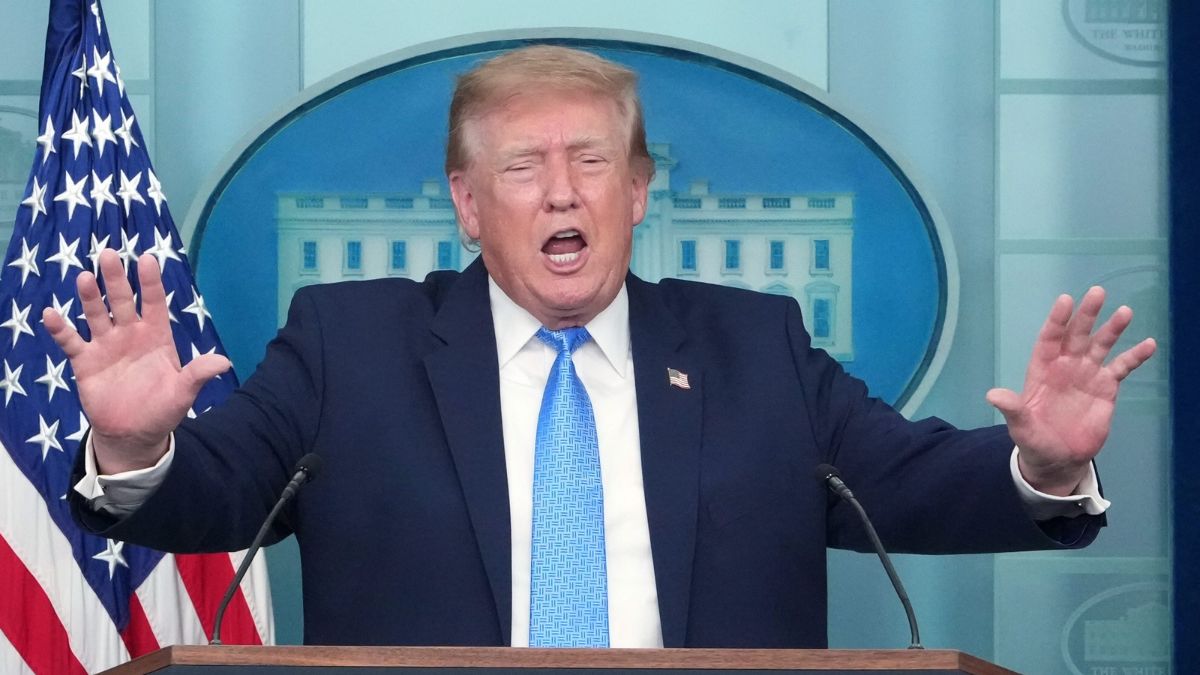
US President Donald Trump threatened a "tremendous tax" on American firms building data centres abroad during a November 20 briefing. He said, "We're not going to allow our companies to build data centers outside of our country." This move could impact India, which relies on US tech for AI growth.
US President Donald Trump has threatened to impose a "tremendous tax" on American companies that build data centres outside the United States.
Trump made the remarks during a White House press briefing on November 20, after returning from his Asia trip. "We're not going to allow our companies to build data centers outside of our country. We're not going to allow that to happen," Trump said.
He threatened to impose a "tremendous tax" on companies building data centres abroad, linking the proposal to the US effort to compete with China in artificial intelligence (AI).
The US President, however, did not specify the tax rate, which companies would be affected or when the measure could take effect. No formal policy or implementation plan has been announced.
The remarks could have implications for India, which is seeking to attract global investment in data centres and expand its AI computing infrastructure.
Why could Trump's data centre threat matter for India?
India's data centre industry has expanded with growing demand for cloud computing, digital services and AI applications. These facilities provide the computing power and storage infrastructure required by businesses, government departments and technology companies.
According to the Ministry of Electronics and Information Technology (MeitY), India's installed data centre capacity increased from 375 megawatts in 2020 to around 1,575 MW in 2026.
In a response submitted to the Lok Sabha on August 5, the ministry identified Mumbai, Navi Mumbai, Chennai, Hyderabad, Bengaluru, Delhi-NCR and Gujarat as key data centre locations. Andhra Pradesh, Madhya Pradesh, Chhattisgarh and West Bengal were identified as emerging destinations.
The government said private companies decide where to establish data centres based on factors such as demand, operating costs, power availability, skilled workers and long-term business viability. It does not provide subsidies for setting up these facilities.
US technology companies are part of India's cloud ecosystem. The PIB's October 29 note on the sector listed Google Cloud India, Oracle India, Microsoft India and Amazon Web Services India among international cloud service providers empanelled in the country. Indian companies such as Jio Platforms, Tata Consultancy Services, RailTel, AdaniConneX and Yotta Data Services were also listed.
If US firms face higher costs for building facilities overseas, they could reconsider investments, delay projects or direct more capital towards domestic facilities.
However, the impact on India would depend on the scope of the proposed tax. Trump's remarks specifically referred to American companies. They do not indicate that Indian companies building data centres in India would face such a tax.
Could India's AI infrastructure plans face delays?
India's data centre expansion is closely linked to its ambition to become a larger player in AI. Training and running AI models require advanced processors, servers, storage systems and reliable electricity.
The government's note outlined the scale of its infrastructure plans:
* Current capacity: Around 1.57 gigawatts as of August 2026.
* 2030 target: Capacity could rise to nearly 8 GW.
* Investment pipeline: Around $70 billion in investments were underway, with another $90 billion in announced projects.
These figures represent ongoing and announced investments, not money already fully deployed. Projects may take years to secure land, power connections, equipment and regulatory approvals before becoming operational.
India is also trying to make computing resources more accessible to start-ups, researchers and academic institutions through the IndiaAI Mission, which has an approved outlay of Rs 10,371.92 crore.
According to the PIB note, more than 45,000 graphics processing units (GPUs) have been onboarded for a common AI computing facility. GPUs are specialised processors used to train and run AI models.
The government is also expanding domestic cloud infrastructure through initiatives such as MeghRaj, which provides cloud services to government departments. The PIB said the initiative had expanded to 2,330 government departments by September 2026.
These efforts could help India reduce its dependence on overseas computing resources. However, domestic capacity alone may not meet every requirement. International companies can bring capital, specialised equipment, technical expertise and access to global cloud platforms.
A policy discouraging US firms from building overseas facilities could therefore affect the pace of foreign investment and potentially the availability and cost of some cloud and computing services.
That does not mean India's AI ambitions will automatically suffer. Domestic companies are also investing in data centres, while government initiatives aim to expand computing access. The actual impact will depend on whether Trump's threat becomes formal policy and how companies respond.