
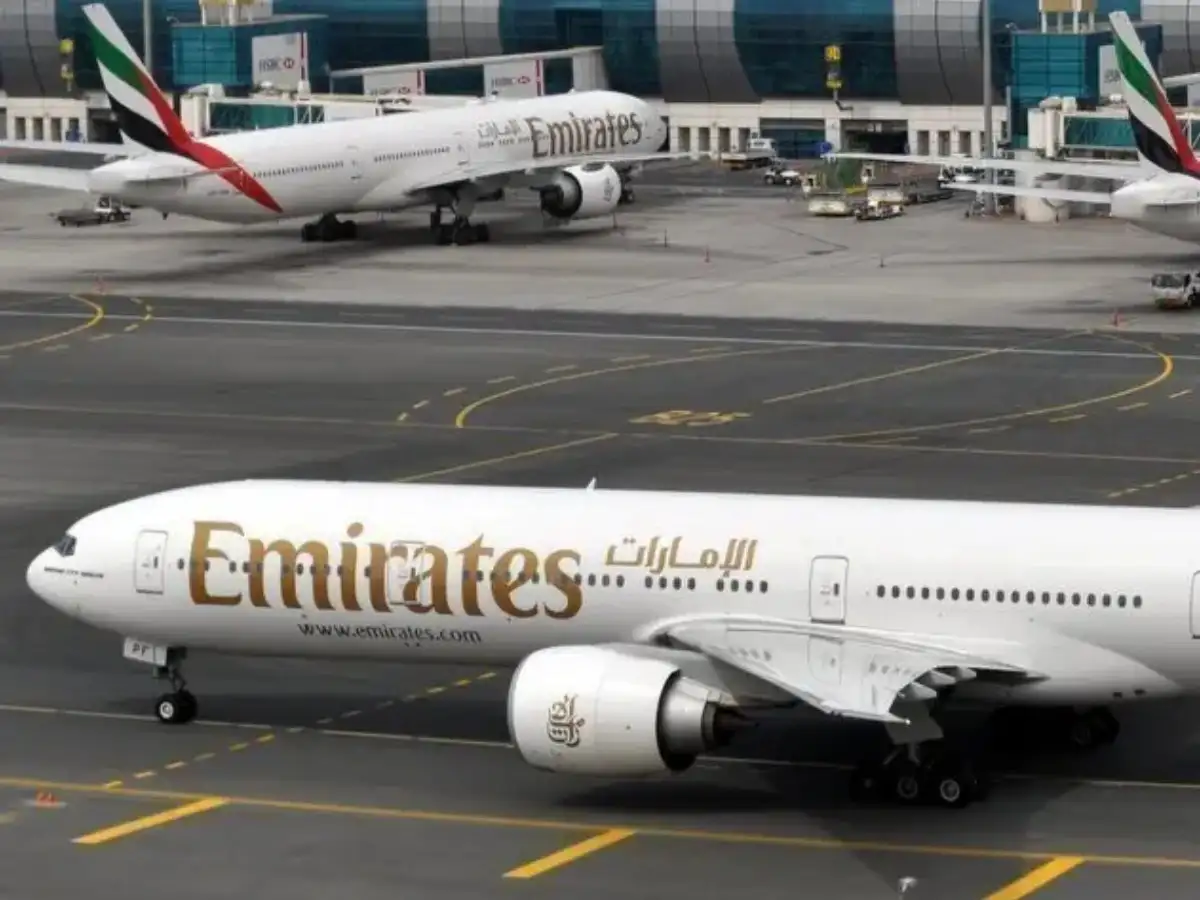
TIME named Emirates the world’s best airline for 2027 in its inaugural global rankings. Qatar Airways and Air New Zealand followed in the top three. Indian carriers also got recognition, with IndiGo securing sixth place and Air India Express ranking 37th in the Most Reliable Airlines category for the year.
TIME has named Emirates the world's best airline for 2027 in its inaugural global rankings, followed by Qatar Airways and Air New Zealand. The rankings, compiled with Statista, assess passenger experience and operational performance across international carriers. Indian airlines also feature in the results, with IndiGo securing sixth place and Air India Express ranking 37th in the Most Reliable Airlines category.
Emirates has been named the world's best airline for 2027, securing the top position in TIME's inaugural global airline rankings, followed by Qatar Airways and Air New Zealand. Singapore Airlines and Cathay Pacific Airways complete the top five, while Indian carriers IndiGo and Air India Express have secured positions in the Most Reliable Airlines category.
The rankings, released by TIME in partnership with data and business intelligence company Statista, assess airlines on passenger experience and operational performance. The evaluation combines passenger surveys conducted between July and September 2026 with independent flight data analysis covering more than 30 million flights, provided by aviation analytics company OAG.
Emirates secured an overall score of 94.29, narrowly ahead of Qatar Airways, which scored 94.16. Air New Zealand followed with 93.47, Singapore Airlines with 93.32 and Cathay Pacific Airways with 92.63.
Delta Air Lines, South African Airways, China Southern Airlines, Air China and American Airlines completed the overall top 10.
The list also includes separate rankings for passengers' choice, the most reliable airlines, business travel, long-haul travel, family-friendly services and value for money. These categories assess different aspects of airline performance and passenger experience.
World's top 10 airlines for 2027
Emirates, which is headquartered in Dubai, secured the overall first position and also topped the Best Airlines for Business Travel category. Its performance in the rankings comes amid continued investment in premium cabins, onboard services and its expanding premium economy offering.
Qatar Airways ranked second overall, followed by Air New Zealand in third place. Singapore Airlines and Cathay Pacific Airways took the fourth and fifth positions, respectively.
The complete top 10 overall rankings are:
Rank
Airline
Score
Emirates
94.29
Qatar Airways
94.16
Air New Zealand
93.47
Singapore Airlines
93.32
Cathay Pacific Airways
92.63
Delta Air Lines
92.17
South African Airways
92.16
China Southern Airlines
92.03
Air China
91.99
American Airlines
91.89
Alaska Airlines, FlySafair, Southwest Airlines, Turkish Airlines and Finnair followed in positions 11 to 15. LOT Polish Airlines ranked 16th, British Airways 17th, Shandong Airlines 18th, JetBlue 19th and Etihad Airways 20th.
China Eastern Airlines, United Airlines, Philippine Airlines, Iberia and Shenzhen Airlines completed the top 25.
Indian airlines in TIME's 2027 rankings
Indian airlines have secured recognition in the operational reliability category, with IndiGo ranking sixth and Air India Express taking the 37th position.
IndiGo's sixth-place finish puts it among the world's 10 most reliable airlines. Its reported score was 99.50, placing it behind five international carriers in the category.
Ireland-based Ryanair topped the reliability ranking with 99.80, followed by Southwest Airlines at 99.72, United Airlines at 99.59, Delta Air Lines at 99.58 and American Airlines at 99.55.
IndiGo was followed by China Southern Airlines, easyJet, China Eastern Airlines and LATAM Airlines in positions seven to 10.
Air India Express also featured in the category at 37th position. The Indian carrier's appearance gives the country two entries in the reliability rankings.
The reliability category is based on operational flight data, including punctuality and cancellation rates. It is separate from the overall ranking, which combines passenger feedback and operational performance.
Neither IndiGo nor Air India Express featured in the overall top 100 airlines recognised by TIME.
Most Reliable Airlines for 2027
Ryanair secured the first position in the reliability category, ahead of four major US carriers. The ranking highlights the importance of operational consistency, particularly as airlines deal with rising costs, aircraft availability challenges and pressure to maintain flight schedules.
The top 10 most reliable airlines are:
Rank
Airline
Score
Ryanair
99.80
Southwest Airlines
99.72
United Airlines
99.59
Delta Air Lines
99.58
American Airlines
99.55
IndiGo
99.50
China Southern Airlines
99.46
easyJet
99.22
China Eastern Airlines
99.21
LATAM Airlines
99.18
Turkish Airlines ranked 11th, followed by Wizz Air at 12th, Air China at 13th, Alaska Airlines at 14th and British Airways at 15th. Emirates secured 16th position in this category.
Passengers' Choice airlines for 2027
Qatar Airways topped the Passengers' Choice category, which is based on travellers' overall satisfaction and their willingness to recommend an airline.
Emirates ranked second, followed by Air New Zealand, Singapore Airlines and Cathay Pacific Airways.
South African Airways secured sixth place, while Swiss airline Edelweiss ranked seventh. FlySafair, Delta Air Lines and Air China completed the top 10.
The top 10 Passengers' Choice airlines are:
Rank
Airline
Qatar Airways
Emirates
Air New Zealand
Singapore Airlines
Cathay Pacific Airways
South African Airways
Edelweiss
FlySafair
Delta Air Lines
Air China
Best airlines for business travel
Emirates secured the first position in the Best Airlines for Business Travel category, followed by Qatar Airways and Delta Air Lines.
China Southern Airlines ranked fourth, while Air China secured fifth place. American Airlines, British Airways, China Eastern Airlines, United Airlines and Iberia completed the top 10.
The category highlights airlines that perform well in serving business travellers, including those looking for comfort, convenience and a quality onboard experience.
The top 10 are:
Rank
Airline
Emirates
Qatar Airways
Delta Air Lines
China Southern Airlines
Air China
American Airlines
British Airways
China Eastern Airlines
United Airlines
Iberia
LATAM Airlines ranked 11th, followed by Korean Air, Qantas Airways, Air France and KLM Royal Dutch Airlines in positions 12 to 15.
All Nippon Airways, Lufthansa, Air Canada, Japan Airlines and SWISS completed the top 20.
Best airlines for long-haul flights
Virgin Atlantic took the top position in the Best Airlines for Long-Haul Flights category, followed by Emirates and Singapore Airlines.
Qatar Airways ranked fourth, while Turkish Airlines secured fifth place. Air China, Cathay Pacific Airways, LATAM Airlines, KLM Royal Dutch Airlines and Iberia completed the top 10.
The category is particularly relevant for international travellers undertaking longer journeys, including passengers travelling between India and destinations in North America, Europe, Australia and other regions.
The top 10 airlines are:
Rank
Airline
Virgin Atlantic
Emirates
Singapore Airlines
Qatar Airways
Turkish Airlines
Air China
Cathay Pacific Airways
LATAM Airlines
KLM Royal Dutch Airlines
Iberia
Korean Air ranked 11th, followed by Etihad Airways, American Airlines, British Airways and United Airlines in positions 12 to 15. Delta Air Lines, Air France, Lufthansa, SWISS and Qantas Airways completed the top 20.
Best value and family-friendly airlines
Emirates also topped TIME's Best Value Airlines category with a score of 88.60, narrowly ahead of South African Airways, which scored 88.58. The category assesses value for money among full-service and premium airlines.
Qatar Airways was named the world's most family-friendly airline, scoring 93.55. South African Airways ranked second with 92.01, while Emirates secured third place with 91.61.
Turkish Airlines and Singapore Airlines took fourth and fifth positions, respectively. JetBlue, KLM Royal Dutch Airlines, Cathay Pacific Airways, British Airways and China Eastern Airlines completed the top 10 family-friendly airlines.
How TIME and Statista determined the rankings
TIME partnered with Statista to evaluate airlines on passenger satisfaction and operational performance. The assessment drew on two main sources: an international passenger survey and independent flight data provided by OAG.
The passenger survey was conducted between July 27 and September 4, 2026, using an online access panel. Respondents were asked to evaluate up to five airlines they had travelled with during the preceding three years.
Passengers assessed several aspects of their flying experience, including cabin comfort, service quality, entertainment and connectivity, food and beverages, value for money and family friendliness. Overall satisfaction and the likelihood of recommending an airline to others were also considered.
The survey covered 17 countries, including Australia, Brazil, Canada, China, France, Germany, Italy, Japan, South Africa, South Korea, Spain, Sweden, Switzerland, the Netherlands, the United Kingdom and the United States.
The operational assessment covered more than 30 million flights operated between July 2025 and June 2026. OAG supplied data on punctuality, cancellation rates, destinations and passenger volumes.
To qualify for the overall evaluation, airlines had to carry at least three million passengers annually. They also needed sufficient passenger survey responses and operational data to support a reliable assessment. A quality control review screened airlines for recent severe safety incidents, including critical safety violations or major accidents.
Airlines face rising costs despite growth in air travel
The rankings come at a time when the aviation industry is dealing with a combination of rising fuel expenses, supply chain challenges, aircraft delivery backlogs and changing passenger travel patterns.
Although global air travel has recovered following the pandemic, airlines continue to face pressure on their operating margins. The International Air Transport Association (IATA) expects passenger traffic to grow year on year, with industry revenues exceeding $1 trillion.
However, in June 2026, IATA revised its annual industry profit forecast to $23 billion on total revenues of $1.17 trillion, translating into a net profit margin of just 2%. This was around half the figure forecast before the war in Iran.
"[Airlines] are running on real thin margins. Profit per passenger IATA gives is about $4.50," says Seçkin Özkul, assistant professor and director of the University of South Florida Supply Chain Innovation Lab. "The revenues are in the couple of hundreds, but then they are paying a lot of things out."
According to IATA's June report, airline revenues are projected to increase by around 9.5% in 2026, supported by higher passenger and cargo yields. However, expenses are expected to grow by 13.1%, outpacing revenue growth.
Fuel expenses remain a major concern, while maintaining and replacing older aircraft adds to operating costs.
"Older planes cost more because of higher amounts of maintenance, and also they burn more fuel," Özkul says.
Airlines are also increasing their reliance on ancillary revenue, which includes additional charges for seat selection, baggage, meals and lounge access. In 2025, airlines generated close to $160 billion through these services, accounting for nearly 16% of their overall revenue, compared with around 9% in 2016.
Another strategy is to maximise passenger occupancy so that fixed operating costs are spread across more travellers.
"That's why they sometimes run into issues that they oversell," Özkul says, "because they have amazing industrial engineers who calculate the possibilities of people missing the planes."
Airlines focus on premium travel and operational efficiency
The pressure on airline profitability has also influenced how carriers compete for passengers. Low-cost airlines typically offer a basic flying experience at competitive fares and charge separately for additional services. Larger full-service airlines, meanwhile, are expanding premium offerings while retaining basic economy options to attract price-conscious travellers.
Ryanair, which topped the Most Reliable Airlines category, is one example of a low-cost carrier that relies on operational efficiency to maintain its performance.
"Because they are a low cost airline, their margins are possibly even thinner than what we're talking about," Özkul says "They have to optimize to the minute of their flights, and they have to keep those operations in such a tight schedule to deliver on the reliability."
At the other end of the market, airlines are increasingly focusing on first-class, business-class and premium-economy passengers, who are willing to pay more for comfort and convenience.
A 2026 report by McKinsey also found that on popular transatlantic routes, "a business-class cabin might now contribute nearly as much revenue as an economy cabin while using far less space on the plane and delivering higher margins."
Emirates' performance across the overall, business travel and value categories reflects this focus on premium services. The airline continues to expand its premium economy offering and work with tourism partners across the Indian Ocean, Europe, Southeast Asia and the UAE to develop travel packages for passengers.
For Indian travellers, IndiGo's sixth-place position in the reliability category is the most prominent domestic aviation result in TIME's 2027 rankings. Air India Express also features at 37th, while the broader global rankings are led by Emirates, Qatar Airways and Air New Zealand.