
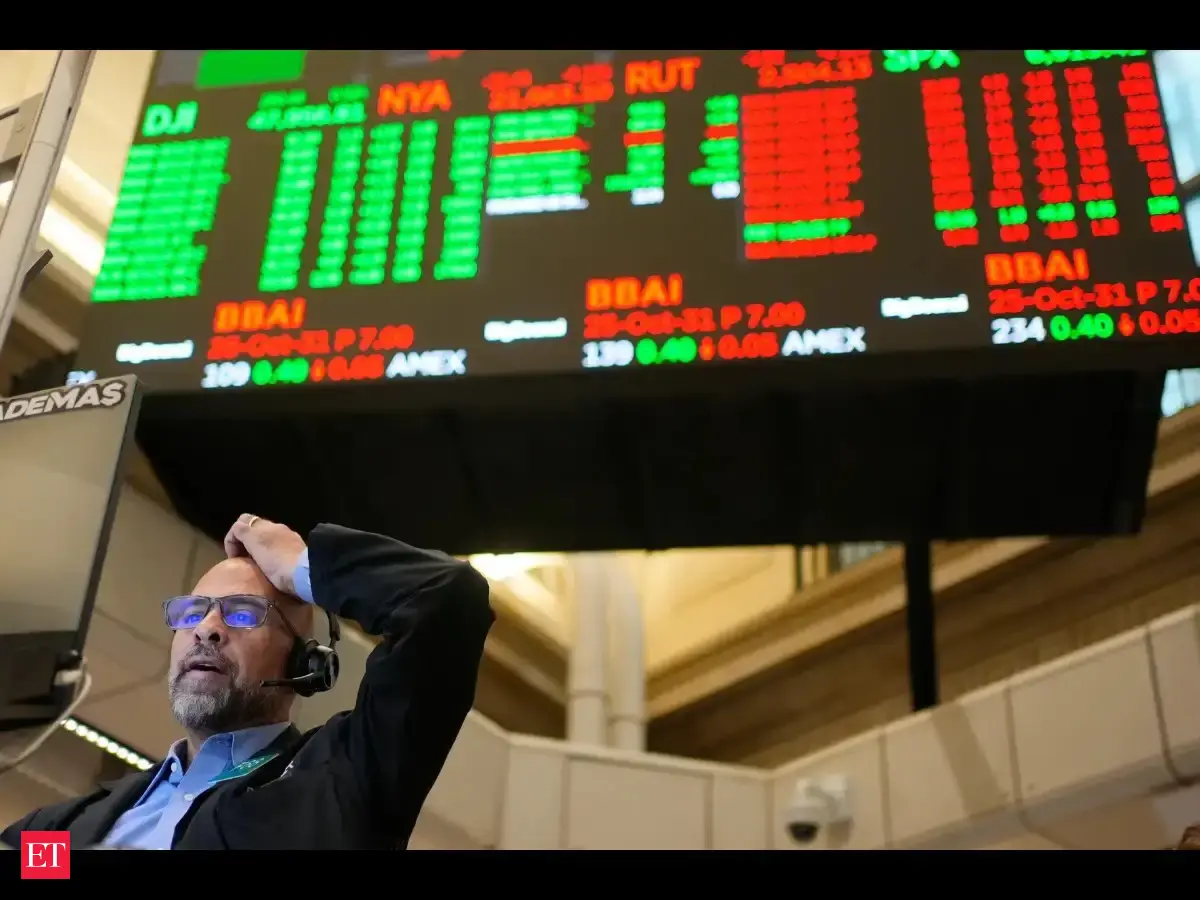
The Nasdaq and S&P 500 fell on Friday as investors moved away from AI stocks. Nvidia slumped 46 per cent and Broadcom dropped 12 per cent, hurting the market. Jim Awad said, "You have a confluence of short-term negative factors." Many investors now use value stocks to find safer returns.
S&P 500, Nasdaq were down on Friday as US Stock Market investors were looking for safe havens.
Nasdaq and S&P 500 have dragged US Stock market down today. The Nasdaq composite was down over 4 per cent for its third decline of 2 per cent or more this week, its biggest weekly decline since last year's Liberation Day rout. Nasdaq is now down almost 2 per cent in 2026, relinquishing an annual gain of almost 19 per cent through early October. Friday's volatile trading highlights the shift in fortunes on Wall Street since the Nasdaq hit its last high on October 6. A handful of AI-related heavyweights had accounted for most of the S&P 500's gains for much of 2026, masking underwhelming returns from the index's other components.
But the median S&P 500 stock now is up almost 7 per cent in 2026. That beats the 2 per cent year-to-date gain in the S&P 500, which has been hobbled of late by a 46 per cent slump in Nvidia and deep declines in other AI stocks, including a 12 per cent drop in Broadcom on Friday, as per Reuters report.
The rotation away from tech is making winners out of a sector that has long been overlooked: value stocks that trade at lower multiples to their earnings and net worth than the growth stocks that soared during the AI boom.
Wall Street Value Stocks
The S&P 500 value index is up 8 per cent in 2026, compared to a 2 per cent drop in the S&P 500 growth index. The switch puts cautious value investing on track to beat growth for the first time since 2022, when inflation fears sent Wall Street into its worst slump since the 2008 financial crisis, Reuters reported.
You Might Also Like:
Vix Index: Wall Street's fear gauge CBOE Volatility Index jumps to highest point since March, S&P 500 hints entering correction mode
Value stocks represent shares of prominent companies. These stocks have comparatively lower price-to-earnings (P/E) ratio, generally holds stable cash flows and balance sheets.
Many analysts and portfolio managers said they did not view the AI trade as impaired. Instead, they said, an occasional washout can improve valuations and draw in investors with a longer-term perspective.
"You have a confluence of short-term negative factors," said Jim Awad, senior managing director at Clearstead Advisors LLC in New York. He pointed to questions about the health of the underlying business at Nvidia, the onetime market leader whose shares have been in free fall since the Nasdaq composite hit its most recent record in October, shedding more than $2.2 trillion of market value.
"The fundamentals have not deteriorated as much as the stock prices have," Awad said. "I would view it just as a normal violent correction in a long-term upward trend in AI spending and in the markets."
You Might Also Like:
Gold price today: Gold rate witnesses bloodbath, silver down too, Check predictions for next week
Meanwhile, the flight to value stocks and Treasury notes, which rallied sharply on Friday, is the latest sign of markets grappling with the extent to which a slowing buildout of AI infrastructure will hit US growth - a debate that has been going on all year, if not to this extreme.
"This is your classic flight-to-safety trade. So as investors are getting a little bit more concerned about the AI trade, they're moving out of those stocks and into Treasury securities," said Lawrence Gillum, chief fixed-income strategist at LPL Financial. "Anytime there's been some sort of hiccup in the AI trade, we've seen the Treasury market rally on the back of that."