
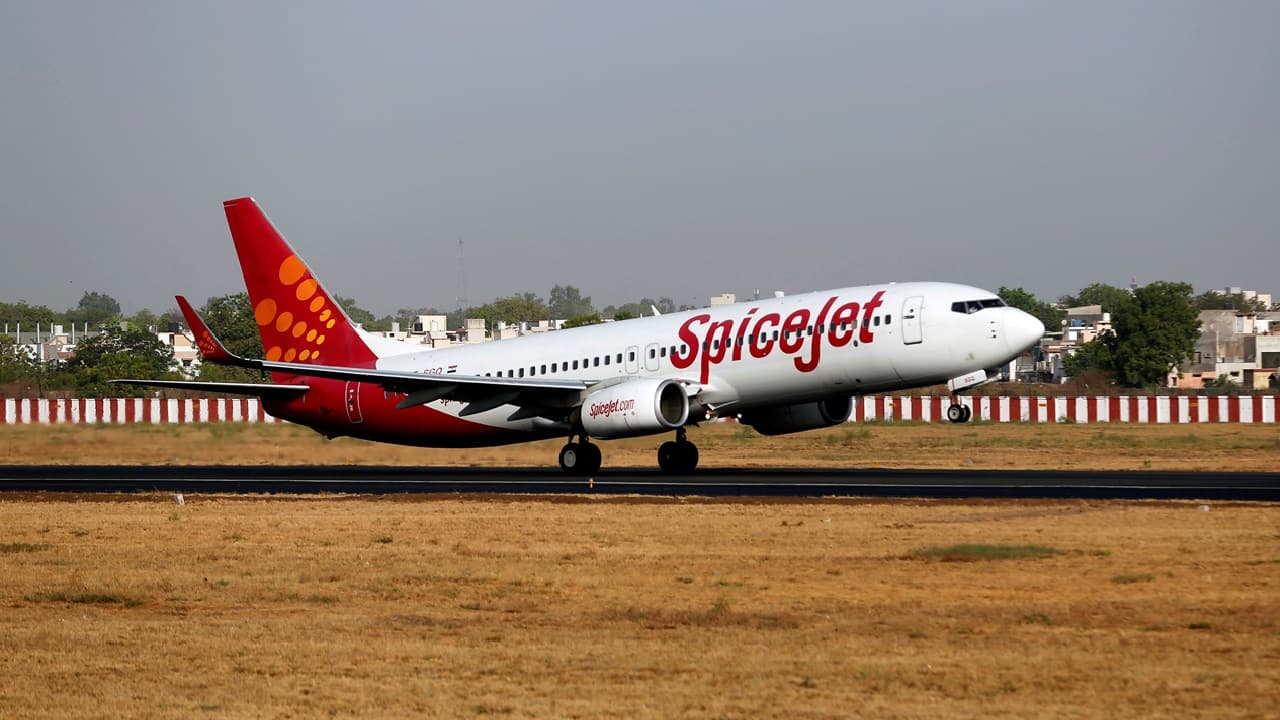
The Federation of Indian Pilots asked the government to increase financial surveillance of airlines on November 22. This move follows SpiceJet’s worsening liquidity issues and frequent flight disruptions. Pilots said the current situation highlights the need to identify financial distress early to prevent it from affecting airline safety and operations.
The Federation of Indian Pilots (FIP) has asked the government to step up financial surveillance of Indian airlines and introduce early-warning mechanisms to identify carriers at risk of financial distress, as SpiceJet's worsening liquidity position continues to disrupt its operations. In a letter to the civil aviation minister dated November 22, the pilots' body called for an immediate financial and safety assessment of SpiceJet, along with a review of the Directorate General of Civil Aviation's (DGCA) existing framework for assessing the impact of financial stress on airline safety. The demand comes days after the DGCA issued a show-cause notice to SpiceJet over deteriorating operational performance, rising cancellations and delays, grounded aircraft, delayed payments and other regulatory concerns.
The airline has been given seven days to respond. SpiceJet's board had also approved a proposal on November 18 to raise up to Rs 5,500 crore through equity and debt-linked instruments, including qualified institutional placements, rights issues and preferential allotments, subject to requisite approvals. FIP seeks annual financial checks The FIP said the current situation at SpiceJet highlights the need to examine whether financial distress at airlines is being identified early enough to prevent it from affecting operations and safety. The organisation pointed to a DGCA Civil Aviation Requirement (CAR), Section 3, Series S, Part I, which provides a framework to assess the impact of financial stress on the safety of airline operations.
According to the FIP, the framework was originally issued in 2010 and the government had subsequently said DGCA was conducting an annual assessment of the impact of financial stress on safety. The pilots' body has now sought a mandatory annual financial health and safety-risk assessment for every scheduled airline, with quarterly monitoring for carriers showing signs of financial distress. It said such assessments should go beyond balance sheets and examine an airline's actual cash flows, outstanding liabilities, lessor dues, statutory payments, employee salaries and vendor payments. The proposed assessment should also establish whether an airline has sufficient financial capacity to maintain its fleet and meet safety-related obligations.
The FIP has proposed that these assessments be conducted by a dedicated team comprising aviation safety professionals, financial experts, chartered accountants and operational specialists. SpiceJet faces specific financial scrutiny For SpiceJet, the FIP has called for an immediate review covering its actual available cash and working capital, outstanding employee salaries, statutory and airport dues, ATF payments and lessor liabilities. The review should also examine engine support and critical spare availability, aircraft insurance, crew strength and compliance with flight-duty-time requirements.
The FIP has asked the regulator to compare SpiceJet's approved schedules with the actual availability of serviceable aircraft and crew and assess its ability to return grounded aircraft to service. The proposed Rs 5,500 crore fundraise should also be examined, including its source, timing and proposed utilisation, the pilots' body said. The FIP further wants DGCA to assess SpiceJet's safety management system, fatigue-risk management and employee safety-reporting environment. If the airline cannot demonstrate the financial and operational capacity to safely operate its approved schedule, its capacity should be suitably regulated, it said.
The demand comes as SpiceJet's operational footprint has sharply contracted. The airline's domestic market share fell to 0.6% in October 2026, according to the FIP letter, while recent reports indicate that the carrier is operating only a fraction of its approved winter schedule. Calls for broader aviation cost relief The FIP has also sought measures to reduce the structural cost burden on Indian airlines, including rationalisation of state VAT on aviation turbine fuel (ATF), consideration of bringing ATF under GST and a review of the central tax component on fuel. The organisation said CARE Ratings had estimated ATF accounted for around 36% of SpiceJet's overall cost structure in FY25.
It also pointed to airport, landing, parking and navigation charges as additional cost pressures. The pilots' body has asked the government to consider extending or reintroducing relief on landing and parking charges where justified, as well as structured payment arrangements for accumulated airport dues. It has also proposed structured payment arrangements between oil marketing companies and airlines, including limited credit facilities subject to safeguards. However, the FIP said any government-backed working-capital support should be limited to fundamentally viable airlines and linked to independent financial due diligence, a time-bound revival plan, promoter contribution, transparent utilisation of funds and priority settlement of employee salaries and statutory dues.
The pilots' body also made clear that government assistance should not become an unconditional bailout for inefficient management or a means of indefinitely financing accumulated commercial losses. The FIP has additionally proposed a centralised financial monitoring system covering all scheduled airlines, annual independent financial audits, quarterly financial stress assessments for airlines crossing specified thresholds and mechanisms to ensure timely payment of salaries to pilots and other operational personnel. The organisation has sought a stakeholder meeting involving the Ministry of Civil Aviation, DGCA, Airports Authority of India, AERA, airlines and the FIP to discuss the financial sustainability and safety of Indian aviation.