
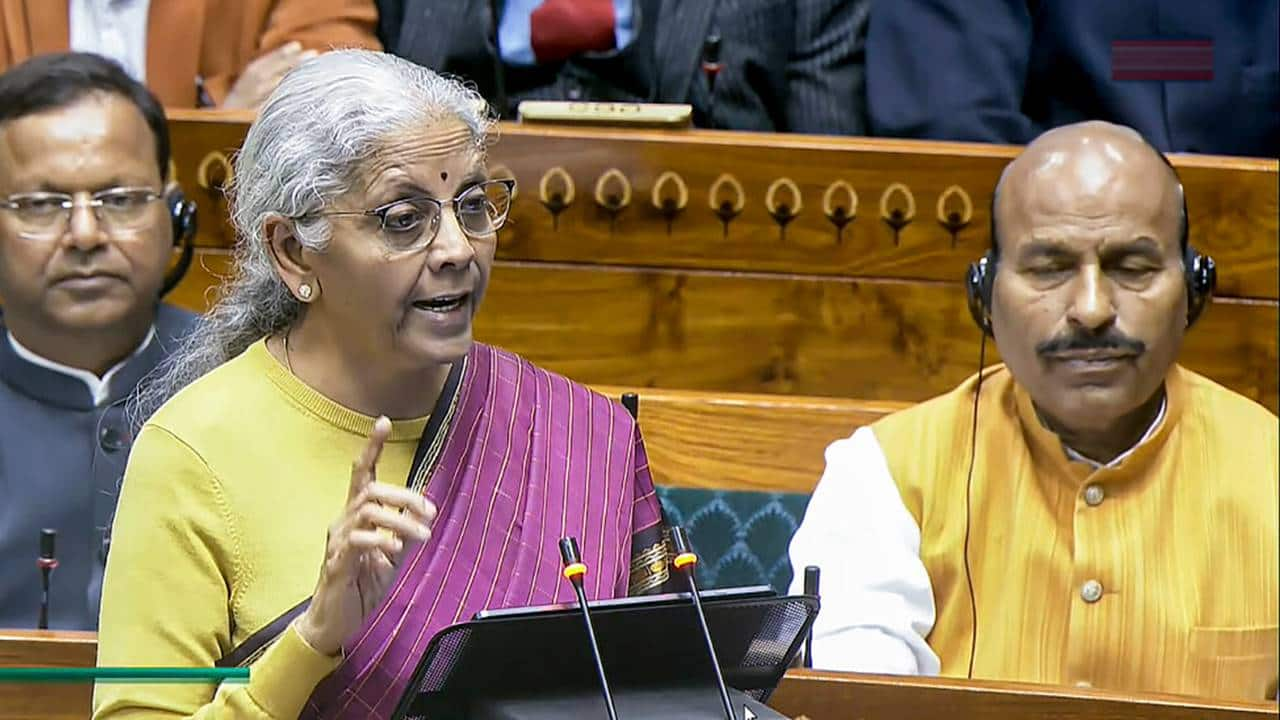
Union Finance Minister Nirmala Sitharaman said on November 2 that India’s consumption story remains intact after GST 2.0 reforms. She noted that demand recovery has triggered private sector investment. "I am seeing industry come out and invest," she said. The government is now focusing on skilling youth for modern industry needs.
Union Finance Minister Nirmala Sitharaman on November 2 said India's consumption story remained intact, with the demand recovery following the rollout of next-generation Goods and Services Tax (GST) reforms beginning to translate into private sector investment. She also underlined the need for a stronger skilling push to bridge the gap between industry requirements and the capabilities of young people entering the workforce, particularly as businesses increasingly adopt artificial intelligence (AI). Speaking at the Financial Express Leadership Awards in Mumbai, Sitharaman said she was seeing companies come forward to invest, although they were being selective about the sectors in which they were deploying capital.
"I am seeing industry come out and invest," she said, adding that the improvement in consumption and demand following GST 2.0 had become visible. She said this had given companies greater confidence about domestic demand and triggered investment activity. The finance minister said the recovery in consumption was reflected in the latest GST figures and cautioned against overstating the implications of the numbers. "I still think India's consumption story will be intact," she said, adding that the government was closely watching the indicators. Sitharaman also pointed to imports of raw materials by companies engaged in exports as evidence of economic activity.
Even when businesses import inputs and pay Integrated GST (IGST), it reflects demand for imported materials needed for production, she said. The willingness of companies to import inputs was an indication that industrial activity was taking place. Her comments come against the backdrop of the government's September 2025 GST overhaul, which was designed to reduce the tax burden on households, simplify the indirect tax structure and support consumption. The 56th meeting of the GST Council, chaired by Sitharaman on September 3, 2025, approved the next-generation GST reforms. The revised rates came into effect from September 22, 2025.
It rationalised the earlier four principal slabs of into two main rates of 5 percent and 18 percent, alongside a special 40 percent rate for select luxury and demerit goods. Beyond the consumption outlook, Sitharaman identified the employability of young people as an important area of government intervention, saying the mismatch between industry expectations and the skills of fresh graduates remained a concern. She said industry leaders had repeatedly told her that graduates coming out of colleges often lacked the skills required for their jobs, forcing companies to spend months training them before they could become productive.
The government, she said, had already started addressing the issue through initiatives in the last two Budgets and would continue to invest time and resources in making young people job-ready. She also highlighted the need to prepare India's workforce for the adoption of AI. While encouraging both large and small businesses to embrace AI to improve productivity, she said the country would also need trained manpower capable of working with the technology and deploying it effectively. "I am all for it," she said, referring to industry adopting AI, but stressed that school and college curricula needed additional inputs to prepare young people for the changing requirements of the labour market.
The objective, she said, was to bridge the expectations gap between industry, entrepreneurs and youth entering the job market. On presenting her 10th Budget Reflecting on her journey as finance minister since presenting her first Budget in July 2019, Sitharaman described the responsibility of presenting the annual exercise as overwhelming. She said every Budget had brought new challenges and that the experience of the past years had enriched her understanding of policymaking. Feedback received during and after successive Budgets, she added, had provided important lessons. The Budget-making process involved extensive consultations beyond the formal pre-Budget meetings, with inputs coming from several levels, including the Prime Minister.
"Responsibility to deliver something that will make a change to people's lives is top on my mind," she said.